

on July 06, 2026

The difference between a clinical and cosmetic claim is defined by whether a product asserts impact on skin appearance alone or suggests measurable changes to skin structure or function. This distinction shapes how regulators classify products, how brands write their labels, and how much you should trust what you read on the bottle. Understanding the difference clinical vs cosmetic claim makes in real life helps you shop with confidence and avoid being misled by marketing language that sounds more scientific than it actually is. Fromwithin believes you deserve that clarity.
What is the difference between clinical and cosmetic claims?
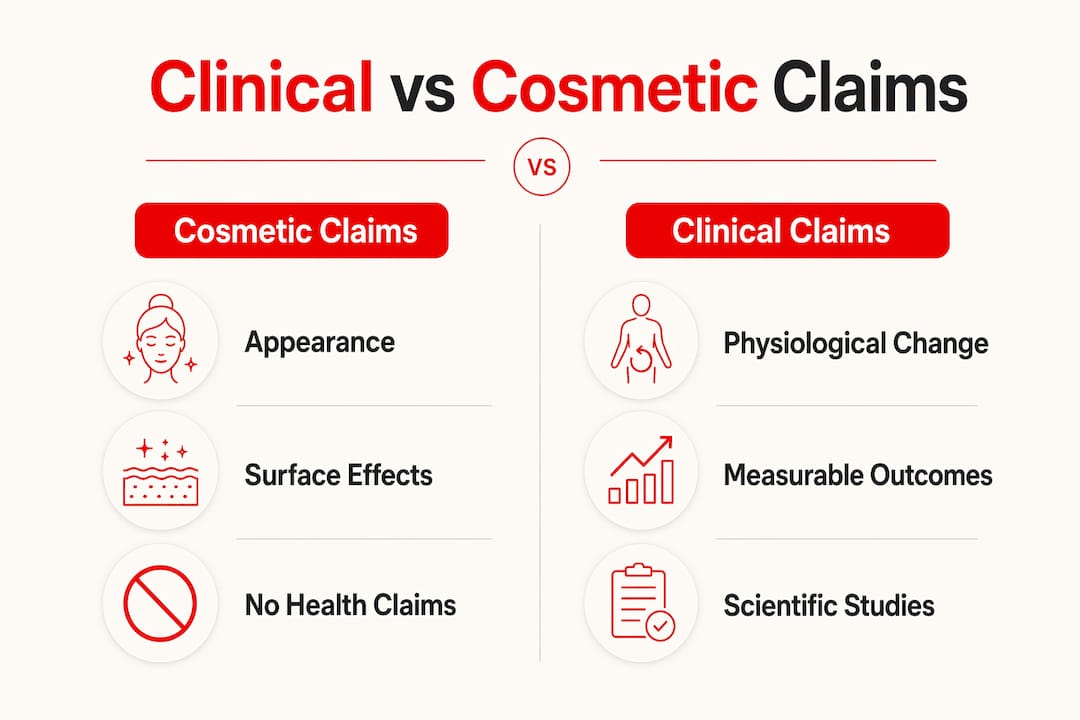
A cosmetic claim describes what a product does to your appearance. A clinical claim implies that a product changes how your body works at a biological level. That single distinction determines whether a product falls under cosmetic regulations or gets classified as a drug.
The FDA regulates cosmetics under the Federal Food, Drug, and Cosmetic Act. Under that framework, a cosmetic product is defined as one intended to cleanse, beautify, promote attractiveness, or alter appearance without affecting the body’s structure or function. The moment a product claims to do more than that, it crosses into drug territory and faces a much stricter set of requirements.

This matters to you as a shopper because the two categories carry very different levels of evidence. Cosmetic claims do not require clinical trials. Clinical claims, by contrast, are expected to be backed by controlled studies with measurable outcomes. Knowing which type of claim you are reading tells you how much proof actually exists behind the words on the label.
What exactly constitutes a cosmetic claim?
Cosmetic claims focus on surface-level, temporary changes to how your skin looks or feels. They do not assert any change to how your skin functions at a cellular or structural level.
Accepted cosmetic claims include phrases like:
- “Hydrates skin”
- “Improves skin tone”
- “Reduces the appearance of fine lines”
- “Softens and smooths skin”
- “Cleanses and refreshes”
- “Enhances radiance”
Notice the careful wording. “Reduces the appearance of fine lines” is a cosmetic claim. “Reduces fine lines” edges toward a clinical claim because it implies actual structural change. That one word, “appearance,” carries real regulatory weight.
Cosmetic claims also cannot include health-related language. Saying a product “treats acne” or “heals dry skin” implies a therapeutic function. The FDA does not allow cosmetics to make those assertions. A product that does so risks being reclassified as a drug, which triggers safety testing, manufacturing standards, and approval processes that most cosmetic brands are not set up to handle.
Pro Tip: When you scan a label, look for the word “appearance.” If the claim says it changes how something looks rather than how it works, you are reading a cosmetic claim. That is not a bad thing. It just means the product is honest about its scope.
How are clinical claims defined and regulated?
A clinical claim implies that a product produces a measurable, physiological change in the skin or body. This is where the language gets more serious and the evidence bar gets higher.
Clinical skincare targets measurable correction of skin issues over time, using active delivery systems designed to produce sustained physiological benefits. That is a fundamentally different goal from a moisturizer that makes your skin feel soft for a few hours.
Two phrases you will see constantly on product packaging are “clinically tested” and “clinically proven.” They sound similar. They are not the same thing.
- “Clinically tested” means the product was included in a study. It says nothing about what the study found.
- “Clinically proven” means the study demonstrated efficacy under controlled conditions with objective measurements.
The FTC’s prior substantiation doctrine requires that “clinically proven” claims be backed by properly designed studies. That means controls, clear methodology, and results that hold up to scrutiny. A brand cannot simply run a small consumer survey and call the product “clinically proven.”
Self-reported consumer data are not the same as objective clinical evidence, even though brands use them heavily in marketing. When a label says “9 out of 10 women agreed their skin felt softer,” that is a consumer perception survey. It is not a clinical trial.
Pro Tip: Ask yourself: does the brand publish the study? A genuinely “clinically proven” product should be able to point you to the research. If the only evidence is a consumer survey, treat the claim with healthy skepticism.
How does marketing language blur the line?
This is where things get genuinely tricky. The FDA does not just look at the label when deciding how to classify a product. Marketing materials including social media and website content can cause the FDA to reclassify a product from cosmetic to drug based on intended use. That includes Instagram captions, blog posts, and even customer testimonials that a brand republishes.
The legal concept here comes from 21 CFR 201.128, which defines intended use broadly. If your brand’s website says a moisturizer “restores the skin barrier at a cellular level,” that single phrase can shift the entire product into drug classification territory.
Specific words that trigger this reclassification include:
- “Rebuilds” (as in “rebuilds collagen”)
- “Activates” (as in “activates skin repair”)
- “Restores” (as in “restores skin function”)
- “Repairs” (as in “repairs damaged cells”)
- “Stimulates” (as in “stimulates collagen production”)
Structure and function language like “rebuilds collagen” or “restores skin barrier” can legally reclassify a cosmetic as a drug. That is not a technicality. It is a meaningful signal about what the product is actually claiming to do.
For you as a shopper, this is useful information. When you see those verbs on a label or a brand’s social media, you are reading a claim that implies biological action. Ask whether the brand has the clinical evidence to back it up. If they do not, the language is marketing, not science.
How can you evaluate product claims as a shopper?
Reading labels critically is a skill, and it gets easier once you know what to look for. Here is a practical framework for evaluating any skincare or wellness product claim.
Check the verb
The verb in a claim tells you almost everything. “Hydrates” is cosmetic. “Repairs” is clinical. “Improves the appearance of” is cosmetic. “Increases collagen production” is clinical. Train yourself to notice the verb first.
Distinguish “tested” from “proven”
Brands use “clinically tested” to gain credibility while avoiding the stringent evidence requirements that “clinically proven” demands. Consumers commonly read both phrases as equivalent. They are not. “Tested” means a study existed. “Proven” means the study showed results. Always ask which one you are actually reading.
Look for the study
A product making a “clinically proven” claim should be able to reference the study. Look for a published paper, a named research institution, or at minimum a description of the study design. Vague references to “dermatologist testing” without any detail are a red flag.
Know your regulatory bodies
The FDA governs cosmetics and drugs in the United States. The FTC governs advertising claims. Both agencies have the authority to act against misleading claims. When a brand makes a clinical claim, consumer protection standards require that the evidence actually exists. You can search the FDA’s website and the FTC’s database for enforcement actions if you want to verify a brand’s track record.
Understand what “clinical skincare” means as a category
Clinical skincare as a product category focuses on function and targeted outcomes rather than sensory qualities like scent or texture. A product positioned as clinical skincare is signaling that its formulation prioritizes active delivery and measurable results. That is different from a product that simply uses the word “clinical” in its marketing copy. Understanding collagen’s role in skin structure helps you recognize when a brand’s claim about collagen is grounded in biology versus buzzwords.
Pro Tip: When a product claims to support collagen, look for the mechanism. Does it provide collagen peptides that the body can absorb? Or does it just say “collagen-boosting” without explaining how? The specificity of the explanation is a good proxy for the quality of the evidence.
Key Takeaways
The difference between clinical and cosmetic claims comes down to one question: does the product claim to change how your skin looks, or how it works?
| Point | Details |
|---|---|
| Cosmetic claims describe appearance | Phrases like “hydrates skin” or “reduces the appearance of fine lines” are cosmetic, not clinical. |
| Clinical claims require evidence | “Clinically proven” demands controlled studies; “clinically tested” only means a study existed. |
| Verbs signal the claim type | Words like “rebuilds,” “activates,” or “restores” imply biological action and can trigger drug classification. |
| Marketing materials count | Social media posts and website copy factor into FDA classification, not just the product label. |
| Consumer surveys are not clinical proof | Self-reported data from user panels do not meet the FTC’s substantiation standard for “clinically proven.” |
What I’ve learned from reading labels for years
I’ll be honest with you. The first time I really paid attention to label language, I felt a little cheated. Products I had trusted for years were using “clinically tested” in a way that technically meant almost nothing. One small study, no controls, no published results. The phrase was doing a lot of work for very little evidence.
What changed my perspective was understanding that cosmetic claims are not inherently weaker. A product that honestly says “softens and smooths skin” and actually delivers that result is doing exactly what it promises. The problem is not cosmetic claims. The problem is clinical-sounding language used to imply a level of evidence that does not exist.
I think the most useful thing you can do is stop treating “clinical” as a quality signal and start treating it as a question. Clinical according to whom? What study? What did it measure? When you ask those questions, the answers tell you a lot about a brand’s integrity. Fromwithin, for example, is transparent about the Wellnex® peptides in its collagen products and the absorption mechanism behind them. That kind of specificity is what separates genuine clinical grounding from marketing language dressed up in a lab coat.
The biological mechanisms behind collagen and elastin are real and well-documented. A brand that explains those mechanisms clearly, rather than just using the word “clinical,” is one worth trusting.
— From
Fromwithin’s approach to skin support that’s worth your trust
If reading this article made you want to find products that are honest about what they do and why, you are in the right place.
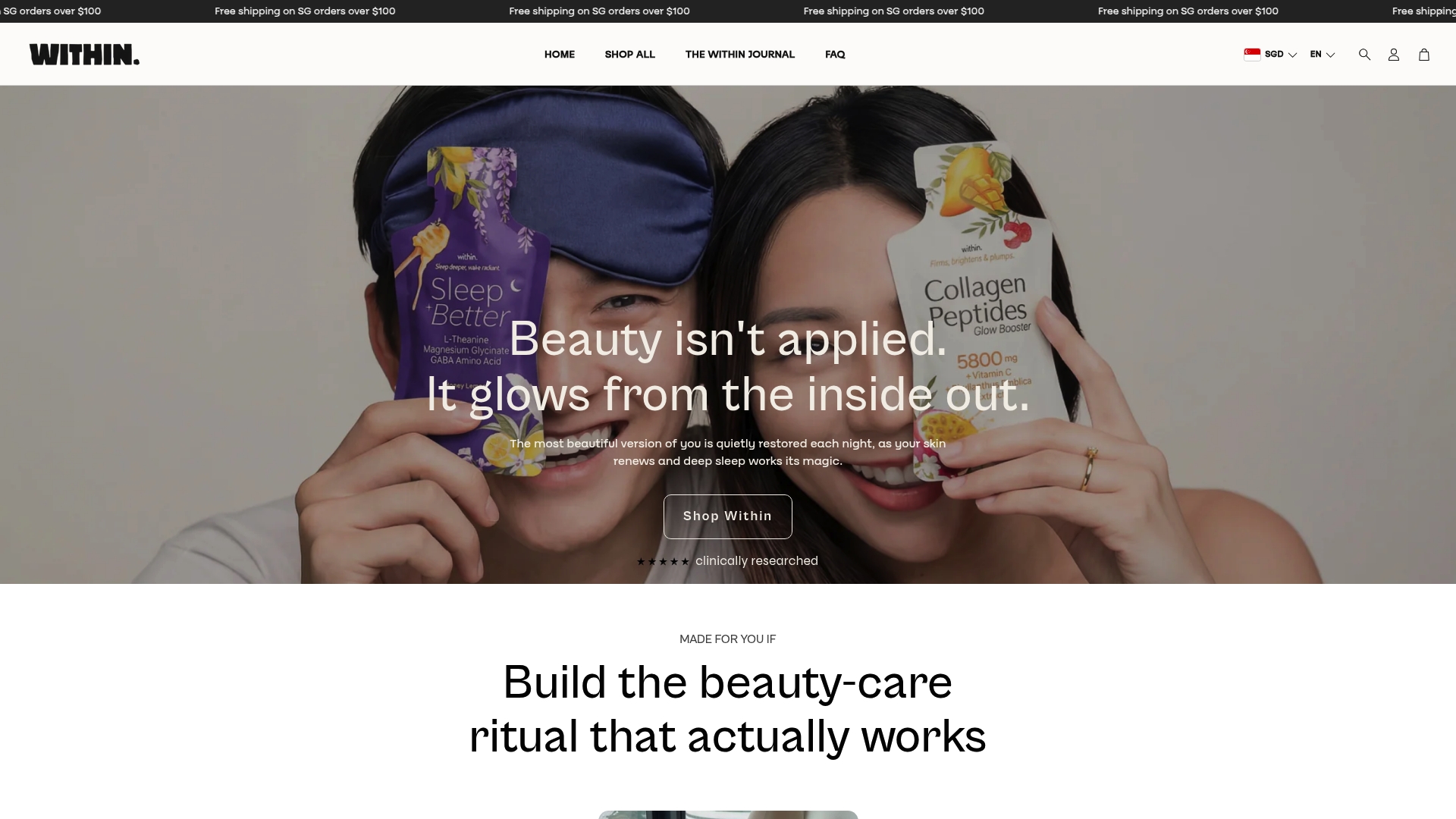
Fromwithin’s collagen supplements are built around Wellnex® peptides, a patented form of collagen that absorbs directly into the bloodstream for maximum efficacy. The brand is clear about what its products support: skin elasticity, appearance, and bounce. That is a cosmetic benefit grounded in real biology, not a clinical claim without evidence. If you want skin support that is transparent about its ingredients and honest about its results, Fromwithin’s collagen range is a genuinely good place to start.
FAQ
What is the main difference between a clinical and cosmetic claim?
A cosmetic claim describes a change in appearance, such as “hydrates skin.” A clinical claim implies a measurable change in the body’s structure or function and requires scientific evidence to support it.
Does “clinically tested” mean a product is proven to work?
No. “Clinically tested” only means the product was included in a study. “Clinically proven” means the study demonstrated efficacy under controlled conditions, which is a significantly higher standard.
Can a cosmetic product be reclassified as a drug?
Yes. The FDA can reclassify a cosmetic as a drug if its marketing materials, including social media and website copy, imply that the product affects the body’s structure or function.
What words on a label suggest a clinical claim?
Words like “rebuilds,” “activates,” “restores,” “repairs,” and “stimulates” suggest biological action. These are structure and function claims that go beyond cosmetic scope and may require drug-level substantiation.
How do I know if a “clinically proven” claim is real?
Look for a referenced study with a named institution, a described methodology, and objective measurements. Consumer perception surveys and self-reported data do not meet the FTC’s standard for “clinically proven.”
