

on August 12, 2026

Collagen supplements can help some people with digestive symptoms like bloating and constipation, but the evidence is limited, early-stage, and highly product-dependent. The most promising human signal comes from a small open-label study using 20 g/day of Peptan collagen peptides over eight weeks, where most completers reported reduced bloating and improved bowel habits. A randomized crossover trial, on the other hand, found no change in primary gut injury markers at 10 g/day. Ongoing registered trials on Clinicaltrials are still working to produce the controlled human data the field genuinely needs.
Here is what you should know before you try collagen for your gut:
- Strongest human signal: Reduced bloating and improved bowel habits reported in a small, single-arm digital study (Gutme!) using Peptan at 20 g/day for eight weeks.
- Main caveat: Effects are product- and dose-dependent. Not all collagen hydrolysates behave the same way in your gut, and no large placebo-controlled trial has confirmed these benefits yet.
Key Takeaways
Human evidence for collagen and gut health is promising but limited: the strongest signals come from small, early-stage studies, and product choice and dose matter more than most people realize.
| Point | Details |
|---|---|
| Evidence is early-stage | The best human signal is a small open-label study (Gutme!); no large placebo-controlled trial has confirmed gut benefits yet. |
| Dose used in studies | The Gutme! study used 20 g/day for 8 weeks; registered trials are testing 2.5–10 g/day against placebo. |
| Product choice matters | Two collagen hydrolysates in the same in vitro model produced completely different fermentation profiles, so not all products are interchangeable. |
| Safety caveat | High-dose collagen may not suit everyone; people with gout, kidney issues, or chronic conditions should consult a clinician before use. |
| Fromwithin option | Fromwithin’s Wellnex® collagen peptides use a named, clinically studied peptide profile, making self-trial results easier to interpret. |
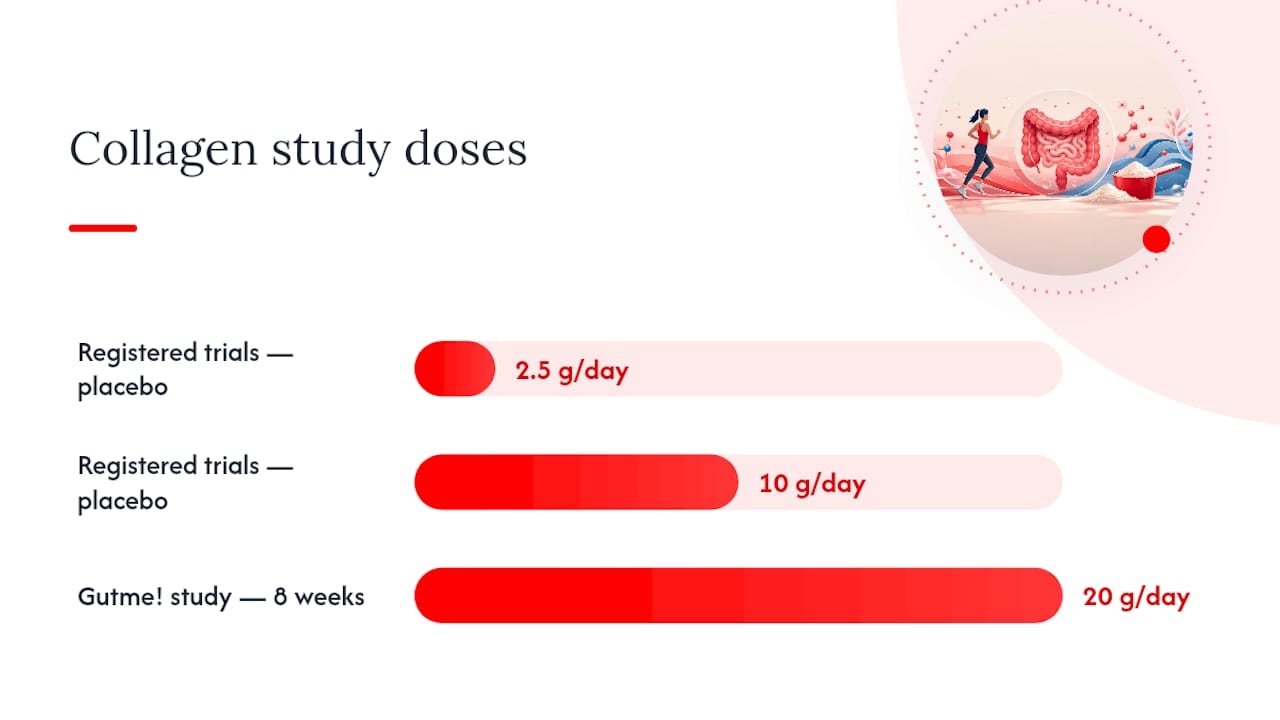
Table of Contents
- How collagen and gut health are connected: the proposed mechanisms
- What randomized trials and human studies actually show
- What animal and lab studies reveal — and where to be careful
- How collagen affects your gut microbiome and SCFAs
- Typical doses used in studies and realistic timelines
- Known risks, side effects, and who should be cautious
- How collagen compares to better-evidenced gut interventions
- A practical checklist for trialing collagen safely
- Why peptide profile and formulation matter more than you might think
- Our honest take on collagen for gut support
- Fromwithin’s collagen option for gut-conscious supplementers
- Sources
How collagen and gut health are connected: the proposed mechanisms
Collagen is the most abundant structural protein in the human body. When you take a collagen supplement, you are almost never consuming intact collagen. You are consuming collagen hydrolysates (also called collagen peptides), which are collagen proteins broken down through enzymatic or chemical hydrolysis into shorter amino acid chains. Your gut digests these further, and the resulting peptides and free amino acids are what actually interact with your digestive system.
So why do researchers think these peptides might support gut health? A few plausible pathways have been studied in lab and animal models:
- Tight junction support: Proteins like occludin and ZO-1 hold the cells of your gut lining together. Some collagen-derived peptides appear to influence the expression of these proteins in cell studies, which could theoretically help maintain a healthy gut barrier.
- Anti-inflammatory signaling: Glycine, one of collagen’s most abundant amino acids, has been shown in lab settings to suppress NF-κB, a key driver of gut inflammation.
- Mucosal repair signals (GLP-2): Some animal research suggests collagen peptides may stimulate GLP-2, a hormone that supports intestinal mucosal growth and repair.
- Amino acid supply: Glycine, proline, and hydroxyproline are the dominant amino acids in collagen. These are conditionally essential in states of gut stress or injury, meaning your body may need more of them than it can produce on its own.
- Colonic fermentation: Peptides that reach the large intestine are fermented by gut bacteria, producing short-chain fatty acids (SCFAs) and branched-chain fatty acids (BCFAs). Whether this is beneficial depends heavily on which peptides arrive and which bacteria are present.
Pro Tip: “Collagen” is not a single intervention. The source (bovine, marine, porcine, poultry), the hydrolysis method, and the resulting peptide profile all change how your gut processes it and what fermentation products are generated. Two products labeled “collagen peptides” can behave very differently in your colon.
The mechanisms above are biologically plausible and supported by cell and animal data. But plausible is not the same as proven in humans, and that distinction matters a lot when you are deciding whether to spend money on a supplement.
What randomized trials and human studies actually show
Human evidence on collagen for digestive health is still in its early stages. Here is a summary of the key studies and what they found.
| Study | Design | Population | Dose | Main Outcomes | Main Limitations |
|---|---|---|---|---|---|
| Gutme! (PMC, 2022) | Phase 2 open-label, single-arm, 8 weeks | Overweight adult women | 20 g/day Peptan | Most completers reported reduced bloating, improved bowel habits; some noted changes within 2 weeks | No control group, small sample, low completion rate, self-reported outcomes |
| Exercise RCT (Springer, 2022) | Randomized crossover, 8 days | Healthy adults undergoing high-intensity running | 10 g/day collagen peptides | No change in I-FABP or GI symptoms vs. control; smaller post-exercise LPS rise in collagen arm | Very short duration, exercise-specific context, small sample |
| NCT06937801 | Randomized, double-blind, placebo-controlled | Adults with GI symptoms | Not yet published | GSRS scores, microbiome, permeability markers | Planned; results not yet available |
| NCT07586930 (registered) | Randomized, placebo-controlled, dose-finding | Healthy adults (aspirin challenge model) | 2.5, 5, 10 g/day for 45 days | Intestinal permeability (lactulose:mannitol), microbiome, plasma GLP-2, GSRS | Registered; results not yet available |
What does this tell us? A few honest takeaways:
- The Gutme! open-label study is the most cited positive human signal, but its single-arm design means we cannot rule out placebo effect, dietary changes, or other confounders.
- The exercise RCT used a validated gut injury marker (I-FABP) and found no significant difference, though the smaller LPS rise in the collagen arm is an interesting secondary signal worth watching.
- Two registered trials are actively working to fill the evidence gap, testing permeability, microbiome composition, and GLP-2 in controlled designs. One of them, NCT07586930, will test three doses against placebo over 45 days, which should give us much cleaner dose-response data.
The honest summary: human evidence suggests possible benefits for bloating and bowel habits in some people, but no trial has yet confirmed this with a placebo control and adequate sample size. Treat current findings as early signals, not conclusions.
What animal and lab studies reveal — and where to be careful
Animal and in vitro studies give us mechanistic clues that human trials have not yet confirmed. They also flag some cautions worth knowing.
What the positive signals look like:
- A 16-day rat study found that a high-collagen peptide diet increased the abundance of beneficial bacteria including Lactobacillus and Allobaculum, and raised fecal acetate and propionate, both considered beneficial SCFAs.
- An in vitro dynamic GI model showed that one collagen hydrolysate (CH-OPT) increased propionic acid, butyric acid, and valeric acid in the ascending colon reactor, alongside antioxidant activity in fermentation products.
- Some collagen-derived peptides appear to modulate microbiome-linked pathways relevant to systemic inflammation in cell models.
Where the cautions come in:
- The same rat study that showed microbiome benefits also reported changes in serum valerate and an increased liver index that the authors described as potentially harmful at high intake levels.
- The in vitro GI model found that CH-OPT increased hydrogen sulfide (H2S) in the ascending colon, a gas that in excess can be irritating to the gut lining.
- A second collagen hydrolysate tested in the same model (CH-GL) showed no major fermentation effects at all, confirming that product choice is not a minor detail.
Key finding from the MDPI in vitro model: CH-OPT increased propionic, butyric, and valeric acids in the ascending colon reactor, while CH-GL produced no significant fermentation changes, demonstrating that collagen hydrolysate identity, not just dose, determines colonic output.
The takeaway from animal and lab work is nuanced. There are real mechanistic signals here, but they are dose-dependent, species-dependent, and product-dependent. High doses that look beneficial in one marker can look problematic in another. None of this translates directly to a human taking a standard serving of collagen powder.
How collagen affects your gut microbiome and SCFAs
One of the more interesting areas of collagen research involves what happens when collagen peptides reach your large intestine and get fermented by your gut bacteria. The short answer: it depends entirely on which collagen product you use.
The MDPI dynamic GI model study tested two different collagen hydrolysates using human fecal matter in a simulated colon environment. The results were striking in how different they were:
- CH-OPT increased H2S, propionic acid, butyric acid, valeric acid, and several BCFAs in the ascending colon, while decreasing ammonia (NH4), a generally favorable sign for protein fermentation quality.
- CH-GL produced no major fermentation changes in the same model.
The rat study added another layer: a high-collagen peptide diet shifted microbiota composition toward Lactobacillus, Unidentified-Prevotellaceae, Allobaculum, and Parasutterella, and increased fecal acetic and propionic acids. But it also altered serum valerate in ways the researchers flagged as potentially concerning.
What does this mean for you practically?
- SCFAs like acetate, propionate, and butyrate are generally considered beneficial for gut health, supporting colonocyte energy, gut barrier integrity, and immune regulation.
- BCFAs and H2S are more ambiguous. Small amounts of H2S are normal and even protective, but elevated levels can be irritating.
- The fact that two collagen hydrolysates produced completely different fermentation profiles in the same model is the clearest evidence yet that product selection genuinely matters for gut outcomes.
Whether these microbiome and fermentation shifts translate into meaningful clinical benefits for humans is still an open question. The human trials needed to answer it are underway, but results are not yet available.
Typical doses used in studies and realistic timelines
If you are thinking about trying collagen for digestive support, knowing what doses researchers actually used is a good starting point.
Doses used across studies:
- 20 g/day: Used in the Gutme! study and commonly recommended by practitioners interviewed in that research. This is the highest dose tested in a gut-focused human study.
- 10 g/day: Used in the exercise RCT over 8 days.
- 2.5, 5, and 10 g/day: The three arms being tested in the registered NCT07586930 trial, designed specifically to find the lowest effective dose for gut permeability.
Timeline guidance:
Practitioners interviewed in the Gutme! study typically recommended 6–8 weeks before evaluating results, though some participants in the qualitative phase reported noticing changes in bowel habits within days. The more cautious and evidence-aligned expectation is 4–8 weeks of consistent use before drawing conclusions.
Here is a simple self-trial timeline based on study designs:
- Week 0: Log your baseline symptoms (bloating frequency, stool consistency, bowel frequency). Use a consistent scale.
- Weeks 1–2: Start your chosen dose. Note any early changes or tolerability issues (gas, bloating from the supplement itself).
- Week 4: First check-in. Compare against your baseline log. Are symptoms trending in any direction?
- Week 8: Full evaluation. This is the minimum window most practitioners and study designs use to assess gut-related changes.
- Stop rule: If symptoms worsen meaningfully at any point, stop and consult a clinician.
On format and dosing: Most gut-focused studies used powder form, which dissolves easily in water or other liquids. Some studies split the dose across the day rather than taking it all at once, though no study has directly compared split versus single dosing for gut outcomes specifically.
Known risks, side effects, and who should be cautious
Collagen supplements are generally well-tolerated, but there are real considerations to weigh before starting.
Common tolerability issues:
- Some people experience bloating or gas when starting collagen, particularly at higher doses. This may relate to colonic fermentation of peptides, especially with hydrolysates that produce more fermentation activity.
- If you already have a sensitive gut or IBS, the fermentation-dependent effects discussed above mean your response could go either way.
Allergen and source considerations:
- Collagen supplements are derived from animal sources: bovine (cow), marine (fish), porcine (pig), or poultry. If you have a fish or shellfish allergy, marine collagen is a clear risk.
- Always check labels for additives, sweeteners, or fillers that could independently affect digestion.
Medical cautions:
- High protein intake from collagen adds to your total daily protein load. For people with gout or a history of kidney stones, this is worth discussing with a clinician. Harvard Health specifically flags gout as a reason to consult a doctor before use.
- Animal studies at high doses showed liver index changes and potentially harmful SCFA shifts, which is a reason to avoid very high doses without clinical guidance.
- Collagen supplements are not regulated as drugs in the United States, so third-party testing for purity matters.
A note on safety: Collagen is generally safe for healthy adults at typical study doses, but if you have a chronic condition, gout, kidney issues, are pregnant, or take multiple medications, check with your clinician before adding a high-protein supplement to your routine. This article is general information, not medical advice.
How collagen compares to better-evidenced gut interventions
Collagen is not the first thing most gastroenterologists or registered dietitians reach for when someone has digestive symptoms. Here is an honest look at where it sits relative to established options.
Evidence strength, roughly ranked:
- Dietary fiber and prebiotic foods (oats, legumes, chicory, garlic, onion): The most consistently supported intervention for bowel regularity, microbiome diversity, and SCFA production. Multiple large trials and decades of data.
- Dietary pattern changes (Mediterranean-style eating, reducing ultra-processed foods): Strong evidence for reducing gut inflammation and improving microbiome composition.
- Probiotics (specific strains for specific conditions): Evidence is condition- and strain-specific. Lactobacillus rhamnosus GG and Saccharomyces boulardii have the most robust data for certain GI conditions.
- Collagen peptides: Limited human evidence, promising early signals for bloating and bowel habits in small studies, no large placebo-controlled trial yet.
When might collagen make sense as an add-on?
- If you have already addressed fiber intake, dietary patterns, and any medication-related constipation, and still have persistent bloating or irregular bowel habits, adding collagen as a time-limited trial is a reasonable next step.
- It is not a replacement for established interventions. Think of it as something to layer in, not lead with.
Evaluation criteria to use for any gut intervention:
- How strong is the human evidence? (RCTs > open-label studies > animal data)
- What is the safety profile for your specific health history?
- What does it cost, and is that cost justified by the evidence?
- Can you track a measurable outcome (symptom score, bowel frequency) to know if it is working?
- How long does the evidence suggest you need to try it before expecting a signal?
A practical checklist for trialing collagen safely
If you want to try collagen for digestive support, here is a step-by-step approach that mirrors what clinical trials actually measure.
- Log your baseline. Before you start, spend one week tracking bloating frequency (0–10 scale), stool consistency (Bristol Stool Scale), and bowel frequency. This gives you something real to compare against.
- Choose your product carefully. Look for a product that specifies its hydrolysate type, source, and peptide markers. Products with published clinical data on their specific peptide profile give you more confidence than generic “collagen powder.”
- Start at a study-aligned dose. The Gutme! study used 20 g/day; the registered dose-finding trial tests 2.5–10 g/day. Starting at 10 g/day and increasing if well-tolerated is a reasonable approach.
- Check in at week 2. Note any early tolerability issues. If bloating or gas worsens significantly, reduce the dose or stop.
- Evaluate at week 4. Compare your symptom log to baseline. Any meaningful trend?
- Full assessment at week 8. This is the minimum window most practitioners and study designs use. Make a clear decision: continue, adjust, or stop.
- Stop rules: Worsening symptoms, new GI symptoms, or any concerning health changes are reasons to stop and consult a clinician.
- Consult a clinician if: You have a chronic GI condition, gout, kidney issues, are pregnant, or are on multiple medications.
Pro Tip: When tracking your self-trial, use the same tools clinical trials use: the Gastrointestinal Symptom Rating Scale (GSRS) is a validated questionnaire you can find online and complete weekly. If clinical testing is available to you, I-FABP and LPS are the gut integrity markers researchers use. Consistent tracking over weeks is what separates a useful self-experiment from a vague impression.
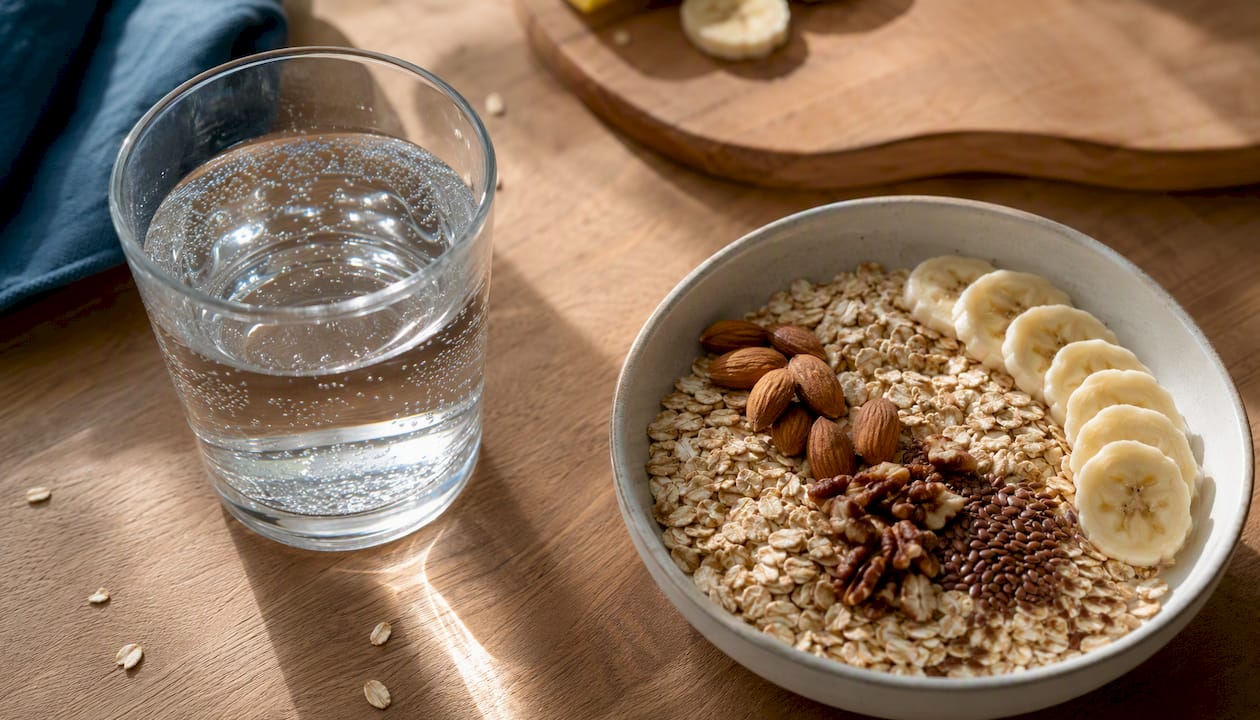
Combining collagen with adequate hydration and maintaining your fiber intake is also sensible. Fiber feeds the bacteria that produce beneficial SCFAs, and collagen peptides may add to that fermentation substrate. The two are not competing; they can work alongside each other.
Why peptide profile and formulation matter more than you might think
Not all collagen products are the same, and this is not just marketing language. The science genuinely supports it.
When collagen is hydrolyzed, it breaks into a diverse mix of peptides of varying lengths and amino acid sequences. The specific peptide profile that results depends on the source animal, the enzyme used, the hydrolysis conditions, and the manufacturer’s process. Two products can both be labeled “hydrolyzed collagen” and produce completely different fermentation outputs in your colon, as the MDPI in vitro model demonstrated clearly.
What to look for on a product label:
- Source: Bovine, marine, porcine, or poultry. Each has a different amino acid ratio and peptide profile.
- Hydrolysate or peptide terminology: “Hydrolyzed collagen,” “collagen peptides,” and “collagen hydrolysate” are all broadly equivalent, but products with named, proprietary peptide markers (like Wellnex® or Peptan) have published data you can actually look up.
- Dose per serving: Compare against study doses. A product delivering 2.5 g per serving is a different intervention than one delivering 10 g or 20 g.
- Third-party testing: In the United States, supplements are not FDA-approved before sale. Look for NSF International or USP certification on the label.
Pro Tip: Working with a product that uses a clinically studied peptide, like Fromwithin’s Wellnex® collagen peptides, means you can reference the actual research behind that specific formulation rather than extrapolating from a different product’s study. That is a meaningful difference when you are trying to set realistic expectations.
Choosing a product with transparent ingredient information and a named peptide profile is one of the most practical steps you can take to make your self-trial more informative. Generic collagen powder from an unknown source gives you very little to work with if you are trying to understand your results.
Our honest take on collagen for gut support
Here is where we land after looking at all of this evidence carefully. The signals are real, but they are early. A small open-label study showing that most completers felt better after eight weeks of Peptan is genuinely encouraging. The fact that a registered trial is now testing three doses against placebo with validated permeability markers tells you the scientific community takes this seriously enough to invest in proper controlled research.
What we do not love is the way collagen is sometimes marketed as a gut-healing solution when the human evidence is still thin. The animal and in vitro data are interesting, but they are not a substitute for well-designed human trials. And the product-dependence finding from the MDPI model is a real warning: buying the cheapest generic collagen powder and expecting the same results as a clinically studied hydrolysate is not a reasonable assumption.
Our position is cautious optimism. If you have addressed the basics (fiber, hydration, dietary patterns) and still want to explore collagen for digestive support, a structured 8-week trial with a quality peptide product and consistent symptom tracking is a reasonable, low-risk experiment. Go in with realistic expectations, track your outcomes, and talk to a clinician if you have any underlying health conditions.
Fromwithin’s collagen option for gut-conscious supplementers
If you are ready to try a collagen product with a clinically studied peptide profile, Fromwithin’s Wellnex® collagen peptides are formulated with transparency in mind: named peptide markers, clear dosing, and no unnecessary additives.

Fromwithin’s collagen is a good fit for health-conscious adults who want a product they can actually trace back to published research, rather than a generic powder with no peptide data. When you start your trial, use the 8-week checklist above, track your bloating and bowel habits weekly, and give the formulation a fair window to work. You can also browse the full skin and wellness collection if you are interested in supporting your skin alongside your gut. Visit the Fromwithin collagen page to review the full ingredient list and find the right format for your routine.
Sources
These are the primary studies and resources referenced throughout this article. Each one is worth reading if you want to go deeper.
- Effect of a Daily Collagen Peptide Supplement on Digestive Symptoms in Healthy Women: 2-Phase Mixed Methods Study - PMC
- Gastrointestinal Digestion Model Assessment of Peptide Diversity and Microbial Fermentation Products of Collagen Hydrolysates
- Effect of a high-collagen peptide diet on the gut microbiota and short-chain fatty acid metabolism
- Considering collagen drinks and supplements? - Harvard Health
- Clinicaltrials
