

on August 04, 2026

Yes, men should consider collagen supplementation, and the evidence is clearest for joint comfort, tendon resilience, and connective-tissue repair. The key condition for success is simple: take hydrolyzed collagen peptides at a research-supported dose, consistently, for a duration aligned with clinical trials. Sporadic dosing won’t replicate what trials achieved. Pair it with vitamin C when targeting tendons, or with resistance training when the goal is body composition. That combination is where the research is strongest.
Here’s the short version for men who want to act now:
- Best-supported outcomes: joint comfort and function, tendon/ligament healing, and modest skin elasticity improvements
- Dose range backed by trials: 10–15 g/day of hydrolyzed collagen peptides
- Minimum trial period: 8–12 weeks; most meaningful changes appear after 3 months of consistent use
- Key pairings: vitamin C (~50 mg) for tendon synthesis; resistance training for body-composition support in older men
- Muscle expectations: collagen is an adjunct, not a replacement for leucine-rich proteins like whey
Stat to know: A systematic review pooling 15 randomized controlled trials found that doses at the higher end of trial ranges elevated collagen synthesis markers more than lower doses, and that joint improvements were most consistent across all populations studied.
Fromwithin’s Collagen Peptides Glow Booster, formulated with patented Wellnex® peptides, is the brand’s recommended starting point for men looking for a research-aligned, transparently dosed option.
Table of Contents
- What collagen actually does for men’s joints, tendons, and skin
- Which form of collagen is right for your goals?
- How much to take, when to take it, and what to pair it with
- What the clinical research actually shows
- Who should be cautious and what to watch for
- How to read a collagen label and pick a product that actually works
- Key Takeaways
- The honest case for collagen as a men’s supplement
- Fromwithin’s Collagen Peptides Glow Booster fits the research
- Useful sources
What collagen actually does for men’s joints, tendons, and skin
Collagen is the most abundant structural protein in the human body, making up the bulk of tendons, ligaments, cartilage, and skin. Your body produces it naturally, but that production declines with age, which is why consistent supplementation starts to matter more in your 30s and beyond.
Where the evidence is strong:
- Joint comfort and function. This is the most consistently supported benefit across trials. Men with knee discomfort, active adults with joint wear, and older men with early-stage cartilage degradation all showed measurable improvements in pain scores and mobility when taking collagen peptides alongside exercise.
- Exercise recovery — Collagen supports the connective tissues that take the most mechanical load during training. For men who train regularly, this means less downtime from overuse injuries and better structural resilience over time.
- Skin elasticity. Some evidence supports improved skin hydration and firmness, though male-specific skin trials are fewer than those in women. The benefit is real but modest, and it’s a secondary outcome for most men.
Where expectations should stay realistic:
Direct muscle hypertrophy in young, trained men is not well supported by collagen alone. Collagen is low in leucine, the amino acid that most directly triggers muscle protein synthesis. Its value for body composition is indirect: it supports the connective tissues that let you train harder and more consistently.
Stat to know: Most meaningful joint trials used doses within the range studied for periods ranging from several weeks to months. Shorter trials and doses below 10 g/day produced inconsistent results.
Pro Tip: If you already hit your daily protein targets through food and whey, use collagen specifically for connective-tissue support and injury prevention, not as your primary protein source.

Which form of collagen is right for your goals?
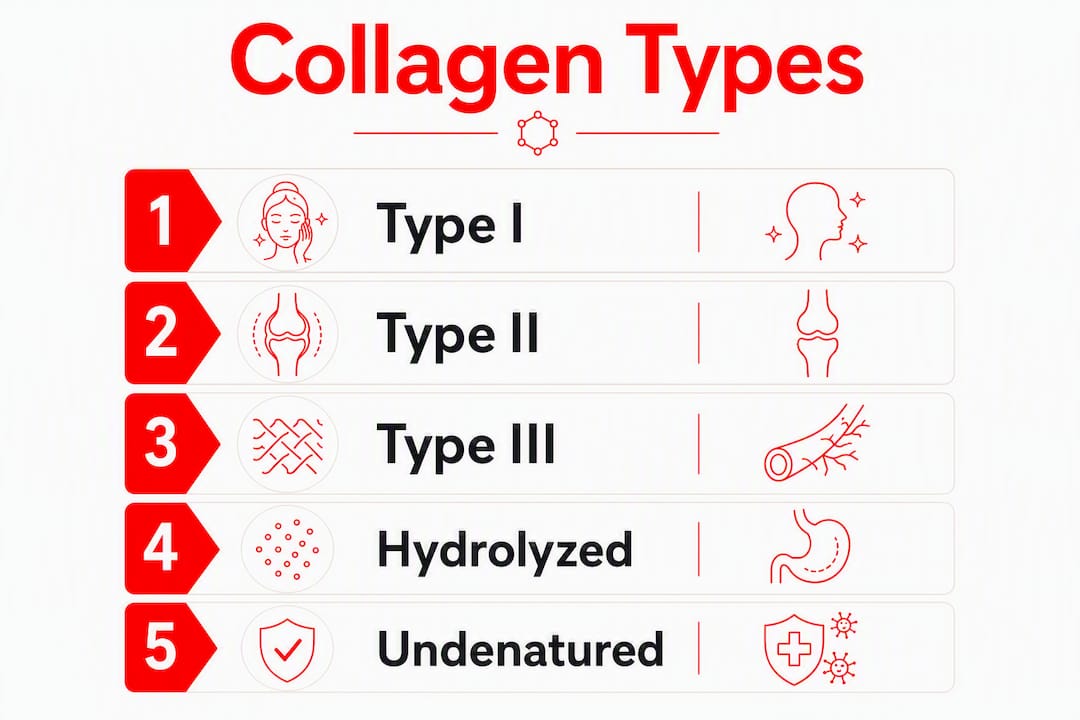
Not all collagen supplements are built the same, and the type and source you choose should match your primary goal.
Collagen types and what they target
Type I and Type III are the most abundant in the body and are found in skin, tendons, bones, and ligaments. Most bovine and marine collagen supplements are predominantly Type I/III, making them the go-to for joint support, tendon resilience, and skin elasticity.

Type II is the primary collagen in cartilage. Undenatured Type II collagen (often sourced from chicken sternum) works through a different mechanism, modulating the immune response to cartilage degradation rather than providing raw amino-acid building blocks. If osteoarthritis is your main concern, undenatured Type II is worth a closer look.
Hydrolyzed collagen peptides are the research standard for supplements. The hydrolysis process breaks collagen into smaller peptide chains that absorb more readily into the bloodstream. Clinically oriented guidance consistently recommends hydrolyzed forms over gelatin or non-hydrolyzed collagen for bioavailability.
Source comparison
| Source | Primary type | Best for | Absorption notes | Allergy/dietary note |
|---|---|---|---|---|
| Bovine (hide) | Type I/III | Joints, tendons, skin | Well-studied; widely available | Avoid if beef-restricted |
| Marine (fish skin/scales) | Type I | Skin, joints | Smaller peptides; often cited for absorption | Avoid with fish/seafood allergy |
| Chicken (sternum) | Type II (undenatured) | Cartilage, osteoarthritis | Lower dose needed (40 mg); different mechanism | Generally well tolerated |
| Porcine (pig skin) | Type I/III | Joints, skin | Similar profile to bovine | Avoid if pork-restricted |
Pro Tip: If you have a fish or shellfish allergy, stick with bovine collagen. If sustainability or absorption is your priority and you have no seafood allergy, marine collagen is a reasonable choice. For knee cartilage specifically, undenatured Type II at 40 mg/day is a distinct protocol from the 10–15 g/day hydrolyzed peptide approach.
How much to take, when to take it, and what to pair it with
Getting the dose and timing right is where most men leave results on the table. Here’s what the trials actually used.
Daily dose targets by goal:
- Joint support: 10–15 g/day of hydrolyzed collagen peptides, taken consistently
- Tendon synthesis: 15 g approximately 60 minutes before exercise, paired with ~50 mg of vitamin C
- Resistance-training support (older men): 15 g/day alongside a structured training program
Simple daily routines that work:
- Pre-workout protocol: Mix 15 g collagen peptides with a vitamin C source (orange juice, a supplement, or a product that includes it) about an hour before your session. Shaw et al.'s mechanistic trial showed this timing elevated collagen synthesis markers in tendons.
- Morning with coffee or breakfast: If tendon synthesis isn’t your primary goal, timing matters less. Taking it consistently with a morning meal builds the habit that drives results.
- Post-workout with a complete protein: Collagen pairs well with whey or another leucine-rich protein. The collagen handles connective-tissue support; the complete protein handles muscle repair.
Protocol quick-reference:
| Goal | Dose | Timing | Key cofactor |
|---|---|---|---|
| Joint comfort | 10–15 g/day | Any time; consistency matters | Vitamin C helpful |
| Tendon synthesis | 15 g | ~60 min pre-exercise | Vitamin C (~50 mg) |
| Body composition (older men) | 15 g/day | Alongside resistance training | Resistance exercise |
| Skin elasticity | 10 g/day | Any time | Vitamin C |
Pro Tip: Check the serving size on any product you buy. A 5 g serving is likely underdosed for joint outcomes based on trial data. Look for products that deliver 10–15 g per serving or give clear multi-scoop instructions to reach that range.
What the clinical research actually shows
The evidence base for collagen is growing, but it’s not uniform across all outcomes. Here’s an honest read of the most relevant trials.
Systematic review findings. A systematic review across 15 RCTs found that collagen peptide supplementation most consistently improved joint functionality and reduced joint pain in active adults. The review noted that 15 g/day produced stronger collagen-synthesis effects than lower doses, and that most meaningful improvements required at least 3 months of consistent use.
Tendon and connective tissue. Clinical evidence from tendon trials supports combining collagen supplementation with rehabilitative strengthening exercises for conditions like Achilles tendinopathy. The combination outperformed exercise alone on pain and function scores.
Muscle and body composition. The Zdzieblik et al. 12-week RCT in sarcopenic older men found that 15 g/day of collagen peptides combined with resistance training produced significantly greater increases in fat-free mass and strength than resistance training alone. This is a meaningful finding, but the population matters: older men with sarcopenia, not young trained athletes. Extrapolating these results to a 28-year-old who already lifts and eats enough protein is a stretch.
Pivotal trials at a glance:
| Study | Population | Dose | Duration | Key outcome |
|---|---|---|---|---|
| Systematic review (PMC8521576) | Active adults, mixed | 5–15 g/day | 8–12 weeks | Joint pain and function most consistently improved |
| Zdzieblik et al. | Sarcopenic older men | 15 g/day | 12 weeks | Greater FFM and strength vs. resistance training alone |
| Shaw et al. | Healthy young men | 15 g pre-exercise | Acute/mechanistic | Elevated tendon collagen synthesis markers |
| Tendon/Achilles trials | Active adults with tendinopathy | 10–15 g/day | 8–12 weeks | Improved tendon pain and function scores |
Stat to know: Across the systematic review’s pooled data, joint improvements were most consistent when trials used 10–15 g/day for at least 8–12 weeks. Trials shorter than 8 weeks rarely showed significant changes.
Who should be cautious and what to watch for
Collagen supplements are generally well tolerated. Most adverse effects reported in trials are mild and GI-related, such as bloating or a feeling of fullness, and they tend to resolve as the body adjusts.
That said, a few specific situations call for more care.
Allergy and sourcing flags:
- Fish or shellfish allergy: Marine collagen is a hard no. Stick with bovine or porcine options.
- Dietary restrictions: Bovine collagen is not appropriate for those avoiding beef; porcine for those avoiding pork. Halal- and kosher-certified options exist but require label verification.
- Undisclosed calcium in marine products: Some marine collagen products contain calcium from bone meal. If the label doesn’t clearly state the source, this can contribute to hypercalcemia in men who already supplement with calcium.
Medical conditions to flag with your doctor:
- Kidney disease: Collagen adds to your daily protein load. Men with chronic kidney disease who are managing protein intake should count supplemental collagen and discuss it with their nephrologist.
- IBD or ulcerative colitis: Active inflammatory bowel disease can affect how the gut processes supplemental proteins. Discuss timing and form with a gastroenterologist before starting.
If you are managing a chronic condition, taking multiple medications, or have significant kidney disease, talk with your clinician before adding any new supplement, including collagen. No clinical trial evidence supports collagen affecting testosterone levels, and WebMD’s consumer guidance places the safe supplemental range at 2.5–15 g/day for most adults.
Interactions with common supplements:
- Omega-3s and creatine: No known negative interactions. These can be taken alongside collagen without concern.
- Whey protein: Collagen and whey complement each other. Take collagen pre-workout for tendon support and whey post-workout for muscle repair.
- Statins: No direct interaction with collagen is established in the literature, but men on statins who experience muscle-related side effects should mention any new supplement to their prescribing physician.
How to read a collagen label and pick a product that actually works
Most collagen products on shelves are underdosed. Industry synthesis and clinical guidance consistently flag that 5 g servings fall short of the 10 g minimum effective dose for joint outcomes. Here’s what to check before you buy.
Must-check label fields:
- Grams per serving: Look for 10–15 g. A 5 g serving requires two scoops to reach trial-level dosing, and many men don’t do that.
- “Hydrolyzed collagen” or “collagen peptides” stated explicitly: If the label just says “collagen,” it may not be hydrolyzed, and absorption is less predictable.
- Collagen type(s) listed: Type I/III for joints and skin; Type II (undenatured) for cartilage/osteoarthritis.
- Source species named: Bovine, marine, chicken, or porcine should be stated clearly.
- Vitamin C content: Especially relevant if you’re using a pre-workout tendon protocol. Some products include it; others don’t.
- Added sugars and fillers: Minimal is better. Flavored products often add sugar; check the total per serving.
Label signal quick-reference:
| Label cue | What it signals |
|---|---|
| 5 g per serving | Likely underdosed for joint trials; need 2–3 servings |
| 10–15 g per serving | Research-aligned for joint and tendon support |
| “Hydrolyzed” or “peptides” stated | Better absorption; matches trial formulations |
| Collagen type listed | Transparency; lets you match type to goal |
| Third-party tested (USP, NSF, Informed Sport) | Independent verification of label accuracy |
| Vitamin C included | Convenient for tendon synthesis protocol |
| Source species unnamed | Red flag; harder to assess allergen risk |
Pro Tip: To compare products on value, calculate cost per 10 g of collagen rather than cost per serving or per container. A cheaper product with 5 g servings often costs more per effective dose than a pricier one with 15 g servings.
Key Takeaways
Men who take hydrolyzed collagen peptides at 10–15 g/day, consistently for at least 8–12 weeks, and pair them with vitamin C or resistance training, get the most out of what the clinical evidence actually supports.
| Point | Details |
|---|---|
| Dose matters | Use 10–15 g/day of hydrolyzed collagen peptides; 5 g servings are underdosed for joint outcomes. |
| Consistency is non-negotiable | Most trials required at least 8–12 weeks; sporadic use won’t replicate RCT results. |
| Pair for your goal | Take with vitamin C ~60 min pre-exercise for tendons; combine with resistance training for body composition in older men. |
| Set realistic muscle expectations | Collagen supports connective tissue, not direct hypertrophy; keep leucine-rich proteins as your primary muscle fuel. |
| Fromwithin’s approach | Fromwithin’s Collagen Peptides Glow Booster uses patented Wellnex® peptides with ingredient transparency and research-aligned dosing. |
The honest case for collagen as a men’s supplement
Here’s a perspective worth sitting with: the wellness industry has done collagen a disservice by marketing it almost exclusively as a beauty product for women. The result is that a lot of men dismiss it entirely, or only pick it up when a partner recommends it, without realizing that the strongest clinical evidence for collagen has nothing to do with skin glow. It’s about joints, tendons, and the connective tissue that keeps you moving without pain.
Think about what actually limits most men’s training over time. It’s rarely muscle. It’s the knee that aches after leg day, the Achilles that flares up during a running block, the shoulder that never quite healed from that old injury. Collagen’s glycine, proline, and arginine profile makes it a direct structural input for those tissues. That’s not marketing language; it’s basic biochemistry.
The muscle-building claims are where I’d urge caution. The Zdzieblik trial is real and well-designed, but it studied sarcopenic older men, not 35-year-olds who already eat enough protein and lift regularly. If you’re in that second group, collagen won’t move the needle on hypertrophy. What it can do is keep the connective tissue healthy enough that you stay consistent, and consistency is what actually builds muscle over years.
The skin and hair benefits are real too, though the male-specific evidence is thinner. If you’re noticing signs your skin needs more collagen, that’s a legitimate reason to supplement. Just don’t let it be the only reason, because the joint and tendon case is far more compelling for most men.
Fromwithin’s Collagen Peptides Glow Booster fits the research
If you’ve read this far, you know what to look for: hydrolyzed peptides, 10–15 g per serving, transparent sourcing, and third-party testing. Fromwithin’s Collagen Peptides Glow Booster is built around exactly those criteria.
The product uses patented Wellnex® peptides, which are absorbed directly into the bloodstream for maximum bioavailability. The formula is designed with ingredient transparency at its core, so you know what you’re getting per serving and where it comes from. For men focused on joint and connective-tissue support, the clinical-dose alignment means you’re not guessing whether you’ve taken enough. The format is a convenient liquid shot with no chalky aftertaste, which makes daily consistency a lot easier to maintain.
One practical note: if you have an active medical condition, kidney disease, or IBD, check with your clinician before starting. For everyone else, the protocol is straightforward. Start with one serving daily, pair it with vitamin C if your primary goal is tendon support, and give it a full 12 weeks before evaluating results. Visit the Fromwithin collagen page to review serving details, sourcing information, and purchase options.
This article is published by Fromwithin and reflects the brand’s product recommendations. It is general wellness information, not medical advice. Confirm any supplement decisions with a qualified healthcare professional, particularly if you have an existing health condition.
Useful sources
The studies and references below are the primary sources behind the claims in this article. If you want to read the actual trial data, these are the best places to start.
- Systematic review: collagen peptides, body composition, and joint recovery (PMC8521576) — Pools 15 RCTs; the strongest single source for dosage guidance and joint outcome evidence.
- Zdzieblik et al., sarcopenic men + resistance training RCT (PubMed 26353786) — 12-week trial showing fat-free mass and strength gains in older men; key for body-composition claims.
- Shaw et al., pre-exercise collagen and tendon synthesis (PubMed 27852613) — Mechanistic pilot supporting the 15 g + vitamin C pre-workout tendon protocol.
- Clinical evidence: collagen for tendon and connective tissue repair (PMC6356409) — Summarizes tendon trial evidence including Achilles tendinopathy outcomes.
- Healthline: top benefits of collagen — Consumer-friendly overview of joint, skin, and muscle evidence with honest notes on evidence variability.
- WebMD: collagen health benefits and dosing — Lay guidance on safe dosing range (2.5–15 g/day) and general benefit summary.
- DrRuscio: collagen benefits for men — Clinically oriented discussion of hydrolyzed forms and source tradeoffs for male readers.
- PMC6073484 — Supporting RCT data on collagen and joint outcomes in active adults.
- PMC6566836 — Additional trial evidence on collagen peptides and connective tissue markers.
- Fromwithin collagen product page — Brand’s ingredient transparency and product positioning for the Collagen Peptides Glow Booster.
Always consult a qualified healthcare professional for personalized advice before starting any new supplement regimen.
