

on August 09, 2026

Yes, you can absolutely add collagen to your coffee, and the science backs it up. Hydrolyzed collagen peptides, the form used in most supplements, are already broken into short amino acid chains during processing. They stay stable in hot beverages at normal brewing temperatures and dissolve smoothly without changing your coffee’s flavor. A randomized cross-over clinical trial found similar pharmacokinetic endpoints whether collagen peptides were consumed in water or coffee, meaning your morning cup is a perfectly practical delivery vehicle.
Here’s what you need to know before you start:
- Benefits are real but gradual. Clinical trials suggest skin hydration and elasticity improvements after several weeks at moderate daily doses, and joint support benefits after longer use at higher daily doses.
- A practical starting dose is 5 g per day (roughly one scoop), stirred or frothed directly into your coffee.
- Safety note: If you have a fish allergy, avoid marine collagen. If you’re pregnant, breastfeeding, or managing kidney disease, check with your clinician before adding any new supplement.
This guide covers every angle with clinical evidence and practical mixing tips so you can make an informed, confident choice.
Key Takeaways
Hydrolyzed collagen peptides are stable in hot coffee, absorb similarly whether taken in water or coffee, and offer clinically supported benefits for skin and joints when used consistently at the right dose.
| Point | Details |
|---|---|
| Heat stability confirmed | Collagen peptides degrade around 150°C, well above normal coffee brewing temperatures. |
| Absorption unaffected by coffee | A clinical trial found similar uptake whether peptides were taken in water or coffee. |
| Dose tied to your goal | Use 5 g/day for skin outcomes; aim for 10 g/day for joint support. |
| Commit to 12 weeks | Most trial evidence shows meaningful changes between 6 and 24 weeks of consistent use. |
| Fromwithin Glow Booster | Uses patented Wellnex® peptides with transparent sourcing, designed for daily coffee use. |
Table of Contents
- What types of collagen work best in coffee?
- What does the science actually say about collagen coffee benefits?
- Does hot coffee destroy collagen peptides?
- How to mix collagen into your coffee without clumps
- How much collagen should you add, and when?
- Safety, allergies, and who should check with a clinician first
- When might you actually notice a difference?
- How collagen coffee fits into a balanced morning routine
- Is collagen coffee right for you? A quick checklist
- Why we recommend a researched peptide product
- Fromwithin Collagen Peptides Glow Booster
- Sources
What types of collagen work best in coffee?
Collagen is the most abundant structural protein in the human body, forming the scaffolding of skin, tendons, cartilage, and bone. Your body makes it naturally, but production slows with age, which is why supplementation has attracted so much research attention.
The form that matters most for beverages is hydrolyzed collagen, also called collagen peptides. During manufacturing, intact collagen is broken down into short chains of amino acids, primarily glycine, proline, and hydroxyproline. These specific amino acids are the building blocks your body uses for connective tissue repair. Because the chains are already short, they dissolve readily in hot liquids and absorb efficiently in the gut. Gelatin, by contrast, is only partially hydrolyzed and gels when cooled, making it a poor choice for coffee.
Source type shapes taste, allergen profile, and the collagen types you get:
| Source | Collagen types | Taste notes | Best for | Allergy flag |
|---|---|---|---|---|
| Bovine (cow) | I and III | Neutral to mild | Skin, hair, nails, gut | None typical |
| Marine (fish) | I | Faint fish in light roasts | Skin, bioavailability | Fish/shellfish allergy |
| Porcine (pig) | I and III | Neutral | Skin, connective tissue | Pork dietary restrictions |
Type I and III collagen are the dominant types in skin and connective tissue. Type II is cartilage-specific and more common in joint-targeted formulas, usually taken separately rather than stirred into coffee.
Pro Tip: Choose an unflavored bovine hydrolyzed peptide powder for the most neutral taste experience. Marine collagen can add a faint oceanic note that clashes with light-roast coffees, though it’s barely noticeable in dark roasts or lattes.
What does the science actually say about collagen coffee benefits?
The evidence for collagen supplementation is strongest for skin and joint outcomes, with bone density showing early signals in longer studies. Here’s how the clinical picture breaks down:
| Outcome | Trial dose range | Typical timeframe |
|---|---|---|
| Skin elasticity and hydration | a moderate daily dose | several weeks |
| Joint pain and function | a higher daily dose | longer duration |
| Bone density support | moderate to higher doses | long-term use |
| Hair and nail strength | moderate doses | several months |
Skin studies tend to use smaller doses and show measurable changes relatively quickly. Joint trials consistently use higher doses and longer durations. Bone density research is promising but requires the longest commitment to see meaningful signals.
A note on study size: Many skin trials involve small sample groups, so results are encouraging but not definitive. The joint and bone data comes from larger, longer trials and carries more statistical weight.
One thing worth knowing: collagen peptides are not a complete protein for muscle building. They lack sufficient leucine and other essential amino acids for muscle protein synthesis. Think of them as connective-tissue support, not a post-workout shake. If hypertrophy is your goal, pair collagen with whey or another complete protein source.
You can read more about the cellular mechanisms behind skin outcomes in Fromwithin’s collagen and skin health overview.
Does hot coffee destroy collagen peptides?
Short answer: no. Laboratory data indicates collagen proteins begin showing thermal degradation at temperatures around 150°C (302°F), far above the 85–96°C range of a typical brewed cup of coffee. Healthline’s review of the evidence confirms that normal brewing temperatures are unlikely to degrade hydrolyzed peptides in any meaningful way.

Here’s why the “heat destroys collagen” concern misses the point. Denaturation, the unfolding of a protein’s three-dimensional structure, does happen with heat. But hydrolyzed collagen peptides are already denatured during manufacturing. What you’re adding to your cup isn’t a folded protein structure; it’s a collection of short amino acid chains. Even if heat altered their shape slightly, digestion itself breaks all proteins down into peptides and individual amino acids before absorption. The stomach and small intestine do that work regardless of what the protein looked like going in.
So the real-world concern isn’t efficacy. It’s texture. Clumping in iced coffee or a gritty mouthfeel in hot coffee are the friction points worth solving, and those are entirely fixable with the right mixing method.
How to mix collagen into your coffee without clumps
Getting a smooth result takes about 30 seconds with the right approach. Here are four methods, from simplest to most thorough:
- Stir method: Add your collagen scoop to the cup first, pour hot coffee over it, and stir for 20–30 seconds. Works well for most unflavored powders.
- Handheld frother: The fastest single-cup method. Drop in the powder, froth for 10 seconds, and you get a slightly creamy, latte-like texture with zero clumps.
- Pre-dissolve: Mix one scoop with 1–2 tablespoons of warm water until fully dissolved, then add your coffee. Ideal for iced coffee or cold brew where cold liquid won’t dissolve the powder.
- Blender: Best for bulletproof-style recipes with added fats. Blending emulsifies everything and creates a frothy, café-quality texture.
Hot creamy collagen coffee
- 1 cup freshly brewed coffee (any roast)
- 1 scoop (5 g) unflavored collagen peptides
- 2 tablespoons oat milk or your preferred creamer
- Optional: a pinch of cinnamon
Add collagen to your mug, pour hot coffee over it, add creamer, and froth or stir until smooth. Done in under a minute.
Iced collagen coffee
- 1 cup cold brew or chilled espresso over ice
- 1 scoop collagen peptides, pre-dissolved in 1 tablespoon warm water
- Splash of almond milk
Pre-dissolve the collagen, pour over ice, add cold brew and milk, and shake or stir. The pre-dissolve step is the key to a lump-free result.
Pro Tip: For iced versions, always pre-dissolve your collagen in a small amount of warm water first. Cold liquid alone won’t fully hydrate the powder, and you’ll end up with white clumps floating at the top.

How much collagen should you add, and when?
A practical starting point is 5 g per day, which aligns with the lower end of skin-focused trial doses and is easy to measure with a standard supplement scoop. If your primary goal is joint support, clinical trials typically used around 10 g/day, so you may want to work up to two scoops over time.
Morning coffee is a convenient habit anchor, not a physiologically required timing window. Collagen peptides absorb well whether taken with or without food. That said, if you’re practicing intermittent fasting, know that collagen does contain calories and amino acids, which technically breaks a fast. It’s a small amount, but worth factoring in if strict fasting is part of your routine.
One practical addition: vitamin C. Your body needs it to synthesize new collagen from the amino acids you’ve supplied. A glass of orange juice alongside your collagen coffee, or a vitamin C supplement, can support the process. It doesn’t need to be taken at the exact same moment, but getting enough daily vitamin C matters.
For personalized dosing, especially if you’re managing a health condition or taking medications, check with your clinician before adjusting your intake.
Safety, allergies, and who should check with a clinician first
Collagen is generally well tolerated, but a few specific situations call for extra care:
- Fish or shellfish allergy: Marine collagen is derived from fish skin and scales. Avoid it entirely and choose bovine or porcine instead.
- Religious or dietary restrictions: Bovine collagen is not halal or kosher unless certified. Porcine collagen is not suitable for those avoiding pork. Check labels carefully.
- Pregnancy and breastfeeding: Supplement safety data in these populations is limited. Consult your OB or midwife before adding collagen.
- Kidney disease: High protein intake can stress compromised kidneys. Anyone with reduced kidney function should get clinician approval before supplementing.
- Medications: Collagen supplements don’t have well-documented drug interactions, but if you’re on immunosuppressants, blood thinners, or medications that affect kidney function, flag it with your prescriber.
On product quality: look for brands that publish third-party testing results for heavy metals and contaminants. Transparent sourcing (grass-fed bovine, wild-caught marine) is a good signal, but third-party testing is the real quality marker. A clean label with a short ingredient list and no proprietary blends makes it easier to know exactly what you’re getting.
Pro Tip: If you experience a rash, GI distress, or unusual symptoms after starting collagen, stop taking it and see your clinician. These reactions are uncommon but worth taking seriously, particularly with marine-sourced products.
When might you actually notice a difference?
Realistic timelines matter here, because collagen is not a one-week fix. Here’s what the research suggests:
- Weeks 4–8: Some people notice improved skin hydration and a slightly smoother texture. These are the earliest signals and the easiest to track.
- Weeks 8–12: Skin firmness and elasticity improvements tend to show up in this window in trial data.
- Weeks 8–24: Joint comfort and mobility improvements, particularly in people with mild osteoarthritis or exercise-related joint stress.
- Months to years: Bone density changes require the longest commitment and are typically measured in clinical settings, not at home.
Tracking your progress makes the difference between noticing real change and giving up too early. Take weekly photos in consistent lighting for skin. Keep a simple symptom log for joints, noting pain levels on a 1–10 scale before and after activity. For hair and nails, monthly photos work well.
One honest caveat: placebo effects are real in self-reported outcomes like skin appearance and joint comfort. To get a cleaner read, keep other variables stable during your trial period. Don’t start a new skincare routine, dramatically change your diet, or add other supplements at the same time.
Pro Tip: Commit to a 12-week trial at a consistent daily dose before evaluating results. Shorter windows don’t give collagen enough time to work, and inconsistent dosing makes it impossible to know whether the supplement is doing anything.
How collagen coffee fits into a balanced morning routine
Collagen added to coffee works best as one piece of a thoughtful morning, not a standalone fix. Nutritionist commentary, including perspectives shared via Vogue, suggests that the amino acids in collagen may help moderate caffeine-related cortisol spikes for some people, which could translate to a steadier energy curve through the morning. That’s an interesting signal, though the research on this specific mechanism is still early.
What’s clearer is the broader nutrition context. Collagen is a supportive supplement, not a meal replacement. Pairing your collagen coffee with fiber (oats, fruit, whole grain toast) and a healthy fat source (avocado, nut butter, eggs) gives you the sustained energy and satiety that collagen alone can’t provide.
Collagen peptides supply the raw amino acid building blocks your connective tissue needs, but your body still requires a full nutritional context, including vitamin C, zinc, and adequate overall protein, to put those building blocks to use. Think of collagen coffee as a smart addition to breakfast, not a substitute for it.
Fromwithin’s approach centers on patented Wellnex® peptides that are absorbed directly into the bloodstream, which aligns with the absorption-first principle that makes collagen supplementation worth doing consistently. The delivery format matters as much as the dose.
Pro Tip: Add a squeeze of lemon or a small glass of orange juice alongside your collagen coffee. The vitamin C supports collagen synthesis and takes about five seconds to incorporate into your morning.
Is collagen coffee right for you? A quick checklist
Here’s a fast way to figure out where you stand:
You’re likely a good fit if you:
- Are a busy adult looking for skin elasticity, hydration, or joint support
- Want a low-effort way to hit a clinical dose range without adding another step to your morning
- Have no fish, bovine, or porcine allergies relevant to your chosen source
- Are willing to commit to a consistent 12-week trial
Check with your clinician first if you:
- Are pregnant, breastfeeding, or planning to become pregnant
- Have kidney disease or compromised kidney function
- Take immunosuppressants, blood thinners, or other medications that affect protein metabolism
- Have a known allergy to fish, shellfish, or specific animal proteins
Your starter protocol: One scoop (5 g) of unflavored hydrolyzed collagen peptides stirred or frothed into your morning coffee, daily, for 12 weeks. Track skin, joints, or whatever outcome you’re targeting. Adjust dose upward toward 10 g if joint support is your primary goal, ideally after discussing with a clinician.
This is general information, not a substitute for professional medical advice. Always confirm supplement choices with a qualified healthcare provider, especially if you have existing health conditions or take medications.
Why we recommend a researched peptide product
Our editorial approach at Fromwithin starts with the clinical evidence and works backward to the product. The criteria we use: Does the dose align with trial ranges? Is the peptide form optimized for absorption? Is sourcing transparent and third-party tested? Those aren’t marketing questions; they’re the same questions a good clinician would ask.
Fromwithin’s Collagen Peptides Glow Booster uses patented Wellnex® peptides, a form specifically developed for bioavailability, with ingredient transparency that lets you verify exactly what you’re taking. For busy professionals who want a supplement that fits into a morning coffee routine without guesswork, it checks the practical boxes: neutral taste, clean label, and a dose that maps to the skin-focused trial range.
Fromwithin Collagen Peptides Glow Booster
The Fromwithin Collagen Peptides Glow Booster is built around patented Wellnex® peptides, designed for direct bloodstream absorption and formulated with full ingredient transparency. No proprietary blends, no hidden fillers.
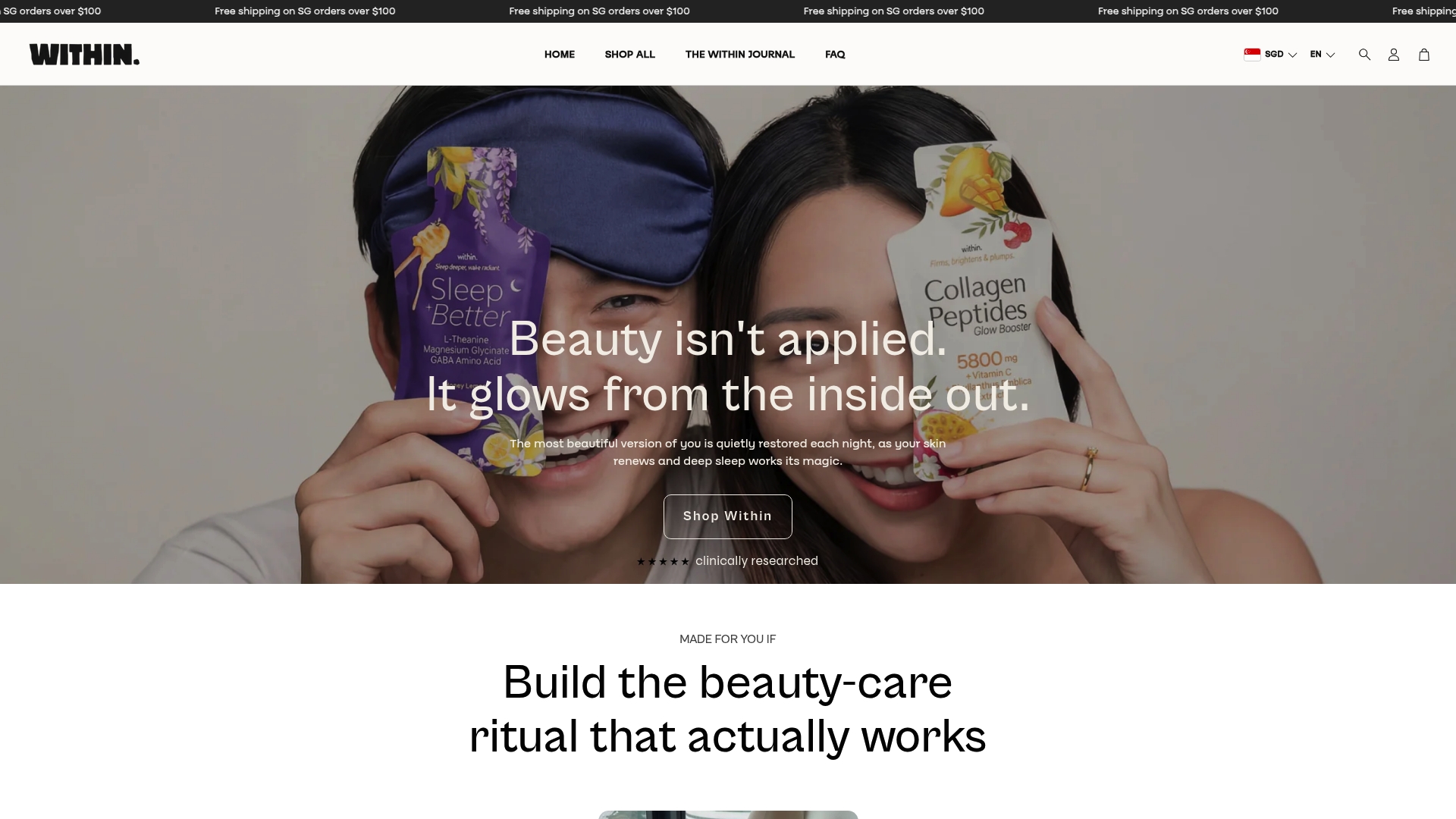
Quick morning recipe: Add one serving of Glow Booster to your mug, pour over freshly brewed coffee, add a splash of oat milk, and froth for 10 seconds. That’s your collagen coffee, done before your coffee cools. Consistent daily use over 12 weeks is where the skin and connective tissue benefits show up in the trial data.
Ready to make it part of your routine? View the Glow Booster and see the full ingredient breakdown, or browse the complete collagen supplement range to find the format that fits your lifestyle.
Sources
- Ncbi
- Pubmed
- Collagen for Coffee: Beneficial or Bogus?
- What Happens to Your Body When You Add Collagen to Your Coffee
- Medlineplus
