

on July 11, 2026

A targeted morning supplement routine for skin health is defined as a daily protocol of evidence-based nutrients taken at specific times to support collagen production, hydration, and cellular repair. The right supplements, taken in the right order, deliver results your topical skincare routine simply cannot reach on its own. Collagen peptides, vitamin C, and biotin form the core of what dermatologists and nutritionists call a “beauty stack,” and the science behind each ingredient is solid. If you’ve been wondering why your skin still looks tired despite a careful morning skincare routine, the answer is often what you’re putting inside your body, not just on it.
What are the essential supplements for a morning skin routine?

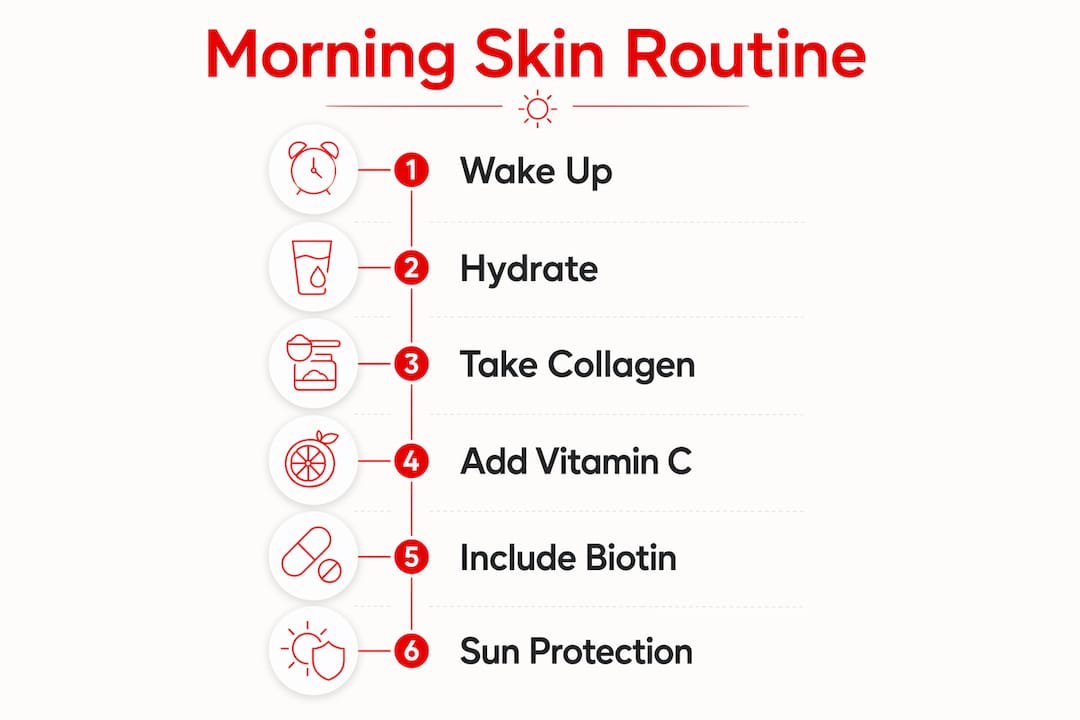
The foundation of any effective skin health supplement protocol starts with three core ingredients: collagen peptides, vitamin C, and biotin. Collagen peptides at 10–15g per day, combined with 500mg of vitamin C and 2,500–5,000mcg of biotin, produce visible skin firming within 8–12 weeks. That timeline matters because it sets realistic expectations. You won’t see results overnight, but you will see them.
Here’s what each ingredient actually does for your skin:
- Collagen peptides (10–15g/day): Bioactive collagen peptides act as biological signals, triggering fibroblast pathways that increase your skin’s own collagen and elastin production. This goes well beyond simply providing amino acids. Clinical trials with specific peptide formulations show measurable improvements in wrinkle volume and skin elasticity.
- Vitamin C (500mg/day): Vitamin C is a critical cofactor for collagen synthesis and antioxidant protection. Your body cannot store it, so daily replenishment is non-negotiable. Buffered forms like calcium ascorbate reduce stomach upset without reducing effectiveness.
- Biotin (2,500–5,000mcg/day): Biotin supports keratin infrastructure, which directly affects skin texture and resilience. Most people get some biotin from food, but therapeutic doses for skin benefits sit at the higher end of this range.
- Vitamin D3 + K2: Vitamin D3 and K2 regulate skin cell repair, and deficiency links directly to dull skin and conditions like eczema. These two work together, so taking them separately reduces their combined benefit.
- Omega-3 fatty acids (EPA + DHA): Omega-3s reduce skin inflammation and improve barrier hydration. Absorption triples when taken with dietary fats, so pairing them with breakfast is not optional.
- B-complex and CoQ10: B vitamins support cellular energy and skin renewal. CoQ10 provides antioxidant protection at the mitochondrial level, which becomes more relevant as skin ages.
Pro Tip: Phytoceramides at 30mg can reduce skin water loss within 15 days, making them a fast-acting addition to your stack while collagen builds over weeks.
How does nutrient timing maximize skin supplement absorption?
Timing your supplements correctly is just as important as choosing the right ones. Taking everything at once with a glass of water sounds convenient, but it actively reduces what your body absorbs. Here’s the sequence that works:
- First thing in the morning, before eating: Take vitamin C on an empty stomach. Vitamin C absorbs best before food slows gastric emptying. This is also when your morning cortisol peak supports systemic nutrient uptake.
- With your fat-containing breakfast: Take vitamin D3, K2, omega-3s, and CoQ10 with your meal. Fat-soluble vitamins require dietary fat to cross the intestinal wall. A breakfast with eggs, avocado, or nut butter works well.
- With or just after breakfast: Take collagen peptides and biotin. Collagen mixes easily into coffee or a smoothie with no chalky aftertaste, which makes this step genuinely easy to stick with.
- Avoid late-day dosing for D3 and B12: Taking invigorating supplements like B12 or D3 late in the day disrupts sleep, and poor sleep directly harms skin recovery. Morning dosing keeps your circadian rhythm intact.
- Space calcium and iron separately: If you take either of these, keep them at least two hours apart from each other and from zinc. These minerals compete for the same absorption pathways, and combining them means you absorb less of all three.
Pro Tip: Align your supplement routine with your morning cortisol peak, which typically occurs within 30–45 minutes of waking. This window supports absorption and sets a consistent biological signal your body learns to expect.
What common mistakes sabotage a morning skin supplement routine?
Even well-intentioned routines fail when a few key errors creep in. The most common ones are also the easiest to fix once you know what to look for.
- Skipping fat with fat-soluble vitamins: Taking D3, K2, or CoQ10 with just water means your body absorbs very little. Always pair these with a meal that contains real dietary fat.
- Combining interfering minerals: Zinc, calcium, and iron all compete for absorption. Taking them together reduces the benefit of each. Rotate them across different meals if you need all three.
- Megadosing without bloodwork: More is not better. Fat-soluble vitamins accumulate in tissue, and excess vitamin A or D causes toxicity over time. Blood work to confirm deficiencies before starting protects you from supplementing nutrients you already have in abundance.
- Expecting results in days: Skin changes require consistent daily intake for 8–12 weeks. Missing doses interrupt fibroblast signaling, which resets the biological process your supplements are trying to support.
- Ignoring individual health status: Pregnancy, kidney disease, liver conditions, and autoimmune diagnoses all change what supplements are safe and at what doses. Consulting a healthcare professional before starting is not a formality. It’s a real safety step.
Consistency beats complexity every time. Skipping doses, even occasionally, resets the cumulative biological signaling that collagen and hydration improvements depend on. Eight to twelve weeks of daily adherence is the clinical minimum for visible skin results. Treat your supplement routine like brushing your teeth: non-negotiable, not optional.
How to build and personalize your morning supplement stack for glowing skin
Building a stack that actually works for your skin starts with the basics and adds layers based on what your body needs. Here’s a practical approach:
- Start with the core three. Collagen peptides, vitamin C, and biotin cover the most ground for the widest range of skin concerns. These are your non-negotiables.
- Get bloodwork done. Check your vitamin D, iron, and B12 levels before adding those supplements. Supplementing nutrients you’re already sufficient in wastes money and can cause imbalance.
- Layer based on your skin concern. Dry or dehydrated skin benefits most from omega-3s and hyaluronic acid at 120mg. Dull or uneven skin responds well to vitamin C and CoQ10. Sensitive or inflamed skin improves with omega-3s and vitamin D3.
- Account for your diet. If you eat fatty fish three times a week, your omega-3 needs are partly covered. If you’re vegan, you’ll need algae-based DHA and a reliable B12 source.
- Track your progress. Take a photo in consistent lighting every two weeks. Skin changes are gradual, and photos reveal improvements your mirror misses.
| Supplement | Daily dose | Best taken with | Visible benefit timeline |
|---|---|---|---|
| Collagen peptides | 10–15g | Breakfast or coffee | 8–12 weeks |
| Vitamin C | 500mg | Empty stomach | 4–6 weeks |
| Biotin | 2,500–5,000mcg | Breakfast | 8–12 weeks |
| Vitamin D3 + K2 | Per bloodwork | Fat-containing meal | 8–12 weeks |
| Omega-3 (EPA+DHA) | Per label | Fat-containing meal | 6–8 weeks |
The cellular secret to radiant skin is not a single ingredient. It’s the consistent combination of the right nutrients, taken at the right time, every single day.
Key Takeaways
A morning supplement routine built on collagen peptides, vitamin C, and biotin, timed with meals and morning cortisol peaks, produces measurable skin improvements within 8–12 weeks of consistent daily use.
| Point | Details |
|---|---|
| Core stack matters most | Collagen peptides, vitamin C, and biotin form the evidence-based foundation for skin health. |
| Timing drives absorption | Fat-soluble vitamins require dietary fat; vitamin C absorbs best on an empty stomach. |
| Consistency is non-negotiable | Missing doses interrupts fibroblast signaling and delays visible skin results. |
| Bloodwork before stacking | Confirm deficiencies before adding vitamin D, iron, or B12 to avoid excess intake. |
| Results take 8–12 weeks | Realistic timelines prevent supplement anxiety and support long-term adherence. |
What I’ve learned from years of watching supplement routines succeed and fail
I’ve seen people spend a fortune on elaborate supplement stacks and get less from their skin than someone taking three simple things every morning without fail. That pattern taught me something important: simplicity and consistency outperform complexity almost every time.
The routines that actually work share one trait. They’re boring. Collagen in the coffee, vitamin C before breakfast, omega-3s with eggs. No drama, no rotating 14 different capsules. Just the same thing, every morning, for months.
The other thing I’d tell you is this: gut health is the silent variable most people ignore. Your gut absorbs everything you take. If your digestion is off, your expensive supplements pass through without doing much. Adding a simple probiotic to your morning routine often unlocks the skin benefits people expect from collagen alone.
Ritualizing the routine also matters more than people admit. Tying your supplements to something you already do, like making coffee or eating breakfast, removes the decision fatigue that causes skipped doses. Skipped doses are where results go to die.
Give your routine 12 weeks before you judge it. Take photos. Be patient. Your skin is rebuilding from the inside, and that process does not rush.
— From
Fromwithin’s approach to collagen-based skin support
If you’re ready to put this routine into practice, the quality of your collagen supplement matters as much as the dose.

Fromwithin’s collagen products are formulated with patented Wellnex® peptides that absorb directly into the bloodstream, bypassing the digestive breakdown that reduces the effectiveness of standard collagen powders. Each serving delivers bioactive peptides that signal fibroblasts to produce more of your skin’s own collagen and elastin. Vitamin C is included to support collagen synthesis from the first dose. If you want a stack built from the inside out, Fromwithin gives you a formulation you can trust, with ingredient transparency and clinical backing behind every product.
FAQ
What is the best time to take collagen for skin health?
Take collagen peptides with breakfast or mixed into your morning coffee. Pairing it with vitamin C at the same meal supports collagen synthesis at the cellular level.
How long before I see results from skin supplements?
Most people see hydration improvements within 4–6 weeks and visible firming or elasticity changes by 8–12 weeks of consistent daily use.
Can I take all my skin supplements at once?
Fat-soluble vitamins like D3, K2, and omega-3s require a fat-containing meal for absorption, while vitamin C absorbs best on an empty stomach. Spacing them by 20–30 minutes around breakfast gives each ingredient the best conditions.
Do I need bloodwork before starting a skin supplement routine?
Bloodwork is strongly recommended before adding vitamin D, iron, or B12. Supplementing nutrients you’re already sufficient in provides no benefit and can cause imbalance over time.
Are skin supplements safe during pregnancy?
Pregnant individuals must consult a healthcare professional before starting any supplement routine. Certain doses of fat-soluble vitamins and specific herbal ingredients carry risks during pregnancy that require medical guidance.
