

on July 04, 2026

Patented wellness ingredients are proprietary, clinically validated compounds that differ from generic supplement ingredients in one critical way: they carry documented proof of efficacy tied to a specific formulation and production method. 70% of supplement users trust products with branded, patented ingredients, and 63% are willing to pay a premium for them. That level of consumer confidence does not happen by accident. The Council for Responsible Nutrition and regulatory bodies like the FDA expect structure-function claims to be backed by real science. Patented ingredients deliver exactly that. If you want to understand patented wellness ingredients and make smarter supplement choices, this guide walks you through the most notable examples of patented wellness ingredients available today.
1. Top patented botanical extracts and their unique benefits
Patented botanical extracts represent some of the clearest examples of how intellectual property improves real-world health outcomes. The patent is not just a legal shield. It protects a specific extraction method, standardization process, or delivery technology that makes the ingredient work better than a raw plant powder ever could.
Two of the most studied patented ashwagandha forms are Sensoril® and KSM-66®. Sensoril® uses a water-based extraction process that concentrates both root and leaf, while KSM-66® focuses exclusively on the root using a milk-based extraction method. Both forms are backed by human clinical trials, which is something a generic ashwagandha powder cannot claim.
AprèsFlex® is a patented boswellia extract that delivers significantly higher levels of AKBA, the active compound responsible for its anti-inflammatory effects. Generic boswellia extracts deliver less than 10% AKBA. AprèsFlex® achieves far higher concentrations through its patented process. That gap in active content translates directly into a gap in clinical results.
Phytosome delivery systems, developed by Indena, represent another category of botanical patents. These systems bind plant compounds to phospholipids, which dramatically improves how much of the ingredient your body actually absorbs. Curcumin, for example, is notoriously hard to absorb in its standard form. Meriva® curcumin phytosome addresses that problem through a patented binding process.
Key patented botanicals worth knowing:
- Sensoril® ashwagandha: Stress and cortisol regulation, backed by multiple human trials
- KSM-66® ashwagandha: Endurance, testosterone support, and cognitive function
- AprèsFlex® boswellia: Joint comfort and inflammation management
- Meriva® curcumin: Absorption-enhanced anti-inflammatory and antioxidant support
- Pycnogenol® pine bark extract: Cardiovascular health and skin elasticity
Pro Tip: When you see a registered trademark symbol next to a botanical name on a supplement label, that is your signal to look up the clinical research linked to that specific form, not just the plant in general.
2. Patented collagen peptides and their specific health applications
Patented collagen peptides are not the same as the bulk collagen powder you find in a generic tub. The difference lies in how they are produced, what size the peptide fragments are, and whether human trials confirm the specific health outcome claimed on the label.
Nextida® GC is one of the most recent examples of targeted collagen innovation. Rousselot received U.S. patent US12636339 for this collagen peptide, which is specifically designed to support blood glucose regulation. That is a precise, metabolic application that goes far beyond the general “supports joints” language you see on most collagen products. Nextida® GC patents have also been granted in Australia, Europe, Japan, and China, reflecting a serious global intellectual property commitment.
Fromwithin’s approach centers on Wellnex® peptides, which are absorbed directly into the bloodstream rather than being broken down into amino acids first. That direct absorption pathway is what separates a clinically meaningful collagen supplement from one that simply adds protein to your diet.
Here is a quick look at how patented collagen forms compare by application:
| Patented collagen form | Primary application | Key differentiator |
|---|---|---|
| Wellnex® peptides | Skin elasticity and sleep support | Direct bloodstream absorption |
| Nextida® GC | Blood glucose regulation | Patented metabolic targeting |
| VERISOL® | Skin, hair, and nail health | Specific peptide size for dermal stimulation |
| UC-II® | Joint comfort | Undenatured type II collagen, low dose efficacy |
Patented production methods create stable, bioactive peptide fragments that survive digestion and reach target tissues. Generic collagen hydrolysate does not guarantee this. The clinical studies that show skin firmness improvements are tied to specific patented forms, not collagen as a general category.
- Wellnex® peptides: Skin bounce and sleep quality support
- Nextida® GC: Metabolic health and glucose management
- VERISOL®: Dermal collagen density and nail growth
- UC-II®: Cartilage and joint function with a low daily dose
3. Patented ingredient blends with synergistic effects
Single-compound patents are well understood, but some of the most interesting patented health ingredients cover combinations where the whole is genuinely greater than the sum of its parts. These combination patents protect the specific ratio, formulation, and the biological activity that emerges when two or more compounds work together.
TriNutra’s ThymoQuin is a clear example. This patented blend combines black seed oil and astaxanthin to produce synergistic anti-inflammatory and antioxidant effects. The patent covers the composition itself and the enhanced biological activity that results from combining these two compounds. Neither ingredient alone produces the same outcome at the same dose.
This kind of combination patent matters because it prevents a competitor from simply mixing the two ingredients and claiming the same results. The specific ratio, the processing method, and the measured biological outcome are all protected. That protection is what gives formulators and consumers confidence that the product on the shelf matches what was tested in the lab.
Other examples of patented blend categories include:
- Stabilized curcumin and piperine combinations: Piperine from black pepper increases curcumin absorption, and patented ratios protect the specific enhancement
- Magnesium glycinate with L-theanine blends: Patented for sleep and relaxation support with defined synergistic ratios
- Patented prebiotic and probiotic combinations: Where specific strain pairings and delivery systems are protected together
4. How patented manufacturing processes create superior ingredients
The molecule is only part of the story. A patent may cover the manufacturing process or delivery system rather than the molecule itself. That distinction matters enormously for purity, safety, and clinical performance.
OptiMSM® is the clearest example in the supplement market. MSM (methylsulfonylmethane) is a widely used joint and connective tissue ingredient. Generic MSM is produced through crystallization, which can leave behind contaminants. OptiMSM® uses a multi-stage distillation process that achieves over 99.9% purity. That level of purity is not achievable with standard production methods, and it is the manufacturing patent that makes it possible.
Clinical studies are designed around the exact patented form used in the trial. When a brand cites a study on OptiMSM® but uses generic MSM in its formula, the study results do not apply. This is one of the most common ways consumers get misled by supplement marketing.
| Feature | Patented manufacturing | Generic production |
|---|---|---|
| Purity level | Over 99.9% (OptiMSM®) | Variable, often lower |
| Contaminant removal | Multi-stage distillation | Single-step crystallization |
| Clinical study linkage | Tied to exact form | Not guaranteed |
| Delivery system protection | Covered by patent | No protection |
| Batch consistency | Standardized and verified | Varies by supplier |
Pro Tip: Ask your supplement brand for a Certificate of Analysis (CoA) that links the commercial batch to the specific patented ingredient used in clinical trials. If they cannot provide one, that is a red flag.
5. How to evaluate patented wellness ingredients before you buy
Knowing which ingredients are patented is only the first step. Verifying that a product actually contains the real patented form, at the dose used in clinical research, is where most wellness enthusiasts stop short.
Branded ingredients include trademarked names backed by clinical research, standardized potency, and safety data. A trademark symbol tells you the name is protected. A patent tells you the process or formulation is protected. Both matter, but they protect different things. A product can carry a trademarked name without holding a manufacturing patent, so reading the fine print is worth your time.
Here is what to check before purchasing a supplement with patented ingredients:
- Look for the registered trademark (®) or patent number on the label. Generic ingredient names with no trademark are a signal that the clinical research may not apply.
- Match the dose to the clinical trial. A study showing results at 500mg of KSM-66® does not validate a product using 150mg of the same ingredient.
- Request a Certificate of Analysis. A CoA links the commercial batch to the exact ingredient tested in trials.
- Check whether the study used the exact patented form. Generic ingredient results may not apply to patented variants, and brands sometimes misuse generic names when citing studies based on patented forms.
- Understand the premium pricing. Patents require significant R&D investment. A supplement priced significantly below market rate for a patented ingredient is likely using a generic substitute.
The right collagen supplement for your goals will always list the specific patented peptide form, not just “collagen” as a generic ingredient.
Key takeaways
Patented wellness ingredients deliver clinically validated, process-protected compounds that generic supplements cannot replicate, making ingredient verification a non-negotiable step for any informed wellness purchase.
| Point | Details |
|---|---|
| Patents protect more than molecules | Manufacturing processes, delivery systems, and formulations are all patentable and clinically significant. |
| Consumer trust is measurable | 70% of supplement users trust branded, patented ingredients over generic alternatives. |
| Dose must match the trial | A patented ingredient at the wrong dose does not deliver the results shown in clinical research. |
| Combination patents matter | Blends like ThymoQuin protect synergistic ratios that produce effects neither compound achieves alone. |
| Verification documents are available | A Certificate of Analysis links your supplement batch to the exact ingredient used in clinical trials. |
Why I think the wellness industry’s shift toward patents is the most important trend you are not tracking
The supplement market has spent decades selling hope in a bottle. What is changing now is that patents are forcing a different conversation. When a brand patents a manufacturing process or a specific peptide sequence, they are committing to reproducibility. That commitment is what makes clinical research meaningful.
I have watched the industry trend shift from generic commodities toward clinically validated ingredients, and the change is real. Brands that built their identity on price are losing ground to brands that can point to a patent number and a published human trial. That is not marketing. That is proof.
The uncomfortable truth is that most wellness consumers still do not ask for that proof. They read “collagen” on a label and assume all collagen is equal. It is not. The gap between a generic collagen powder and a patented peptide like Wellnex® is the difference between adding protein to your diet and actually supporting your skin’s elasticity at the cellular level.
My advice is simple. Demand ingredient traceability. Ask for the patent number. Ask for the clinical study. Ask whether the dose in the product matches the dose in the trial. These are not unreasonable questions. They are the minimum standard for any supplement worth your money.
— From
Fromwithin’s approach to patented ingredient transparency
Fromwithin builds its supplement line around patented, clinically researched ingredients because generic alternatives simply do not meet the same standard of proof. The Wellnex® peptides in Fromwithin’s collagen products are absorbed directly into the bloodstream, a process protected by patent and validated in human trials.
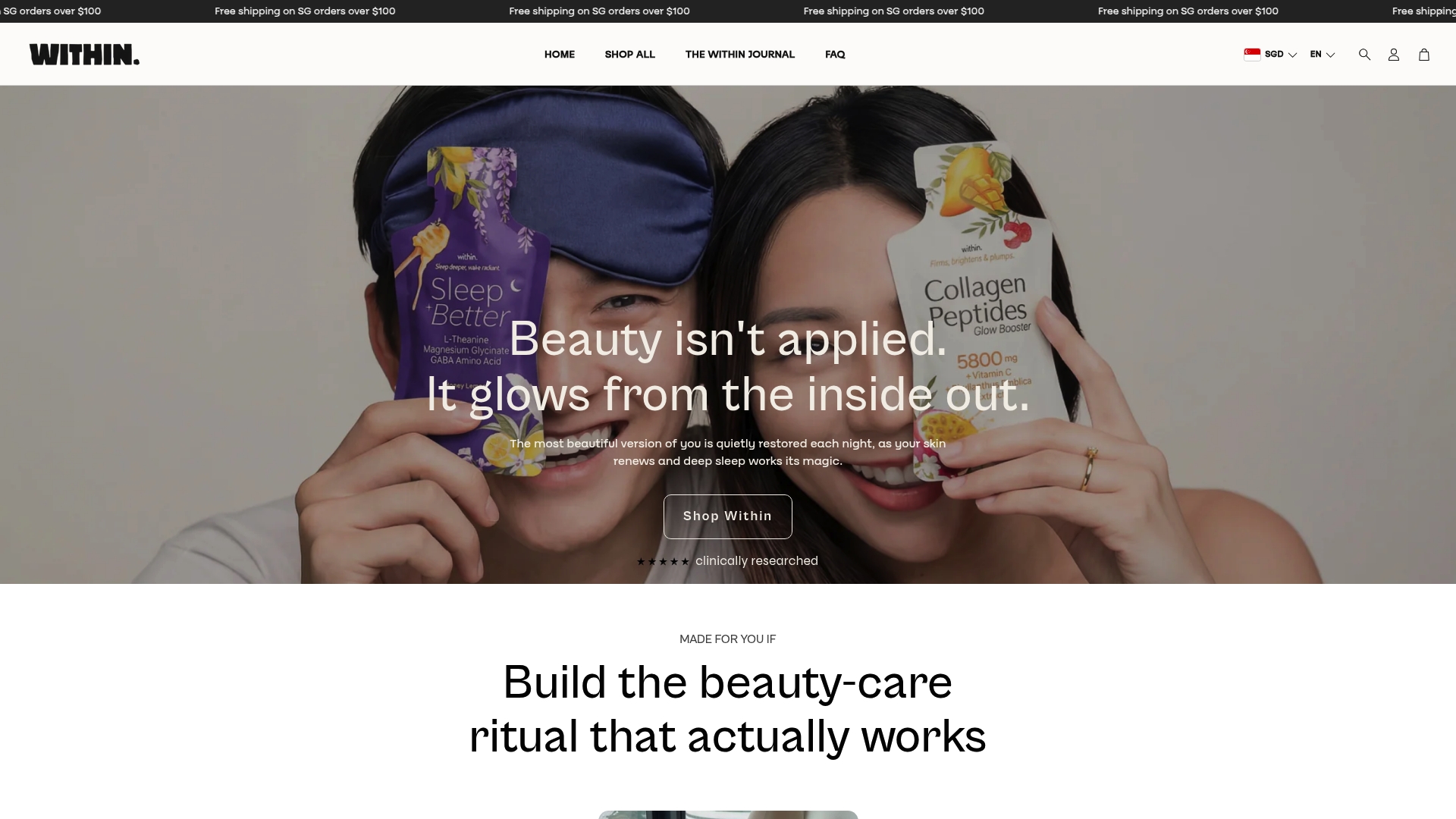
If you want to see what ingredient transparency looks like in practice, Fromwithin’s vitamins and supplements collection lists the specific patented forms used in each product, along with sourcing details and clinical backing. For skin-focused support, the collagen product page breaks down exactly how Wellnex® peptides work and what the research shows. No guesswork, no generic labels.
FAQ
What makes an ingredient “patented” in wellness supplements?
A patented wellness ingredient is protected by intellectual property law covering its manufacturing process, formulation, or delivery system. The patent guarantees that no other brand can replicate the exact method without a license.
Which ingredients are patented and most commonly found in supplements?
Sensoril®, KSM-66®, AprèsFlex®, OptiMSM®, VERISOL®, UC-II®, and Wellnex® are among the most widely used patented health ingredients in the supplement market today.
Do patented ingredients actually work better than generic ones?
Generic boswellia delivers less than 10% AKBA compared to patented AprèsFlex®, and generic MSM cannot match the 99.9% purity of OptiMSM®. The clinical evidence consistently favors the patented form.
How do I verify that a supplement contains the real patented ingredient?
Look for the registered trademark symbol on the label, confirm the dose matches the clinical trial dose, and request a Certificate of Analysis from the brand to link the batch to the specific patented compound.
Why do patented wellness ingredients cost more?
Patents require significant research and development investment, clinical trial funding, and ongoing quality control. That investment is reflected in the price, and it is also what separates a product with real proof from one with only marketing claims.
