

on July 08, 2026

Peptides are short chains of amino acids that act as messengers inside your skin, telling cells to produce more collagen, repair damage, and maintain a firm, even texture. The four main types of peptides for skin health are signal peptides, carrier peptides, neurotransmitter inhibitor peptides, and enzyme inhibitor peptides. Each one works through a different mechanism, and understanding them helps you choose products that actually do what they promise. A meta-analysis of 19 randomized controlled trials confirms that both oral and topical peptides significantly improve skin brightness and texture. That kind of evidence is worth paying attention to.
1. What are signal peptides and how do they benefit skin?
Signal peptides are the most well-studied category in skincare. They work by stimulating fibroblasts, the cells responsible for producing collagen, elastin, and the extracellular matrix that gives skin its bounce and firmness. When fibroblast activity slows with age, skin loses structure. Signal peptides send a message to restart that process.
The most recognized example is Matrixyl 3000, a blend of palmitoyl tetrapeptide-7 and palmitoyl oligopeptide. Clinical trials show Matrixyl 3000 reduces wrinkle depth by 15–35% over 8–12 weeks, with histological confirmation of increased collagen and fibrillin mRNA. That is a meaningful, measurable result from a topical ingredient.
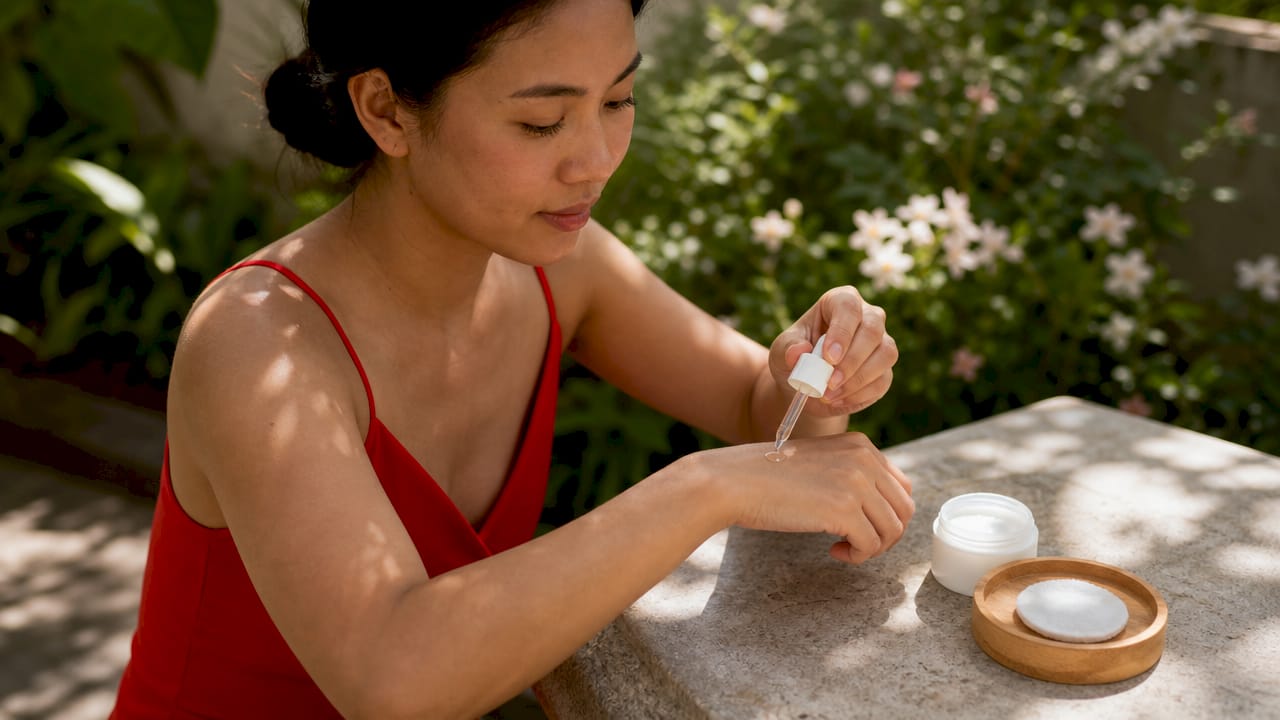
Palmitoyl pentapeptides work through the same fibroblast pathway. The palmitoyl group attached to the peptide chain is what makes skin absorption possible. Without it, the peptide sits on the surface and does very little.
How to use signal peptides:
- Apply in a serum after cleansing and toning, before heavier moisturizers.
- Use morning and evening for consistent fibroblast stimulation.
- Give the product at least 8 weeks before evaluating results.
- Pair with SPF in the morning to protect newly produced collagen from UV breakdown.
Pro Tip: Signal peptides work best in a slightly acidic formulation (pH 4–6). Check your serum’s pH or look for products that list pH on the label. A mismatch in pH can deactivate the peptide before it reaches your skin cells.
2. How do carrier peptides support skin repair and rejuvenation?
Carrier peptides do not stimulate production directly. Instead, they deliver trace elements, particularly copper, into skin cells where those elements support enzymatic repair processes. Think of them as the delivery system your skin depends on to keep its repair machinery running.
The most studied carrier peptide is GHK-Cu, a copper tripeptide complex. Research shows GHK-Cu modulates over 4,000 genes related to skin health, including those governing collagen cross-linking, antioxidant enzyme production, and wound healing. That level of genetic influence is unusual for a topical ingredient.
- GHK-Cu promotes collagen and glycosaminoglycan synthesis, improving skin firmness and hydration.
- AHK-Cu (alanine-histidine-lysine copper complex) supports similar pathways with a slightly different binding affinity.
- Copper activates lysyl oxidase, the enzyme responsible for cross-linking collagen fibers so they hold their structure under tension.
- Carrier peptides also support superoxide dismutase, an antioxidant enzyme that neutralizes free radicals from UV and pollution.
- Skin brightness improves as copper-dependent enzymes regulate melanin production more evenly.
The repair and glow benefits from carrier peptides are real, but they build gradually. You will not see a dramatic overnight change. What you will notice over 6–10 weeks is skin that looks more even, feels more resilient, and holds moisture better.
“Peptides act as essential messengers synthesized by skin cells, strengthening the epidermal barrier and supporting long-term skin health rather than serving as quick fixes.” Dr. Hadley King, dermatologist
3. What are neurotransmitter inhibitor peptides and how do they reduce expression wrinkles?
Neurotransmitter inhibitor peptides target a completely different problem: the repetitive muscle contractions that create expression lines around the eyes, forehead, and mouth. They work by reducing acetylcholine release at the neuromuscular junction, which softens the signal telling facial muscles to contract.
Argireline and SNAP-8 are the two most recognized peptides in this category. SYN-AKE mimics the effect of a peptide found in temple viper venom, blocking the sodium channel involved in muscle contraction. All three produce a topical relaxing effect on dynamic wrinkles.
Here is what you need to know before adding them to your routine:
- Effect size is modest. These peptides soften expression lines over time. They do not freeze muscles the way Botox does.
- Topical cosmetic peptides have decades of safe usage evidence, unlike injectable neurotoxins, making them suitable for long-term daily use.
- Concentration matters. Argireline is typically effective at 5–10% in a formulation. Below that, results are minimal.
- Best application zone: around the eyes and forehead, where dynamic wrinkles are most visible.
Pro Tip: Apply neurotransmitter inhibitor peptide serums before bed. Facial muscles are less active during sleep, which gives the peptide more time to work without competing with constant movement.
4. How do enzyme inhibitor peptides protect the skin’s structural integrity?
Enzyme inhibitor peptides are the most overlooked category in skincare conversations, but they may be the most important for long-term skin health. Their job is to block the enzymes that break down collagen and elastin, specifically matrix metalloproteinases (MMPs), collagenase, and elastase.
Blocking MMPs preserves the extracellular matrix against UV damage and the natural acceleration of enzyme activity that comes with age. UV exposure and intrinsic aging both increase MMP activity. Without inhibition, collagen breaks down faster than skin can replace it.
- Soy-derived peptides inhibit serine proteases that degrade the skin barrier, improving texture and reducing sensitivity.
- Rice peptides block elastase activity, helping skin maintain its snap and resilience.
- Silk fibroin peptides reduce MMP-1 expression, the primary collagenase responsible for UV-induced collagen loss.
The practical value here is preservation. Signal peptides build new collagen. Enzyme inhibitor peptides protect what already exists. Using both together creates a more complete approach to skin aging. Most people focus entirely on production and ignore the breakdown side of the equation. That is a gap worth closing.
5. How to choose and combine peptide types for optimal skin health
Choosing the right peptides starts with identifying your primary skin concern. Wrinkle depth and loss of firmness respond best to signal peptides like Matrixyl 3000. Dullness and uneven texture improve with carrier peptides like GHK-Cu. Expression lines around the eyes and forehead respond to neurotransmitter inhibitors. Preventing further collagen loss from sun exposure calls for enzyme inhibitors.
Peptides are compatible with retinol and vitamin C and are gentle enough for all skin types. This makes them one of the few active categories you can layer without significant irritation risk. The key is formulation order and pH awareness.
| Skin concern | Recommended peptide type | Pair with |
|---|---|---|
| Deep wrinkles and loss of firmness | Signal peptides (Matrixyl 3000) | Retinol, SPF |
| Dullness and uneven texture | Carrier peptides (GHK-Cu) | Vitamin C, niacinamide |
| Expression lines around eyes | Neurotransmitter inhibitors (Argireline) | Hyaluronic acid |
| Collagen breakdown from UV | Enzyme inhibitor peptides | Broad-spectrum SPF |
| Overall anti-aging maintenance | Combination of all four types | Consistent daily routine |
Palmitoylation is required for topical peptides to penetrate the stratum corneum effectively. When you read an ingredient label, look for “palmitoyl” before the peptide name. That prefix tells you the peptide has been modified for skin absorption. Without it, the molecule is too large and too water-soluble to reach the fibroblasts where it needs to work.
Pro Tip: Effective anti-aging skin care requires a balance of peptide types addressing multiple mechanisms at once. Rather than rotating products seasonally, build a routine that includes at least two peptide categories simultaneously for year-round support.
Key takeaways
The most effective approach to skin peptides combines all four functional types: signal, carrier, neurotransmitter inhibitor, and enzyme inhibitor, each targeting a distinct mechanism of skin aging.
| Point | Details |
|---|---|
| Four functional categories exist | Signal, carrier, neurotransmitter inhibitor, and enzyme inhibitor peptides each work differently. |
| Signal peptides build collagen | Matrixyl 3000 reduces wrinkle depth by 15–35% over 8–12 weeks in clinical trials. |
| Carrier peptides deliver copper | GHK-Cu modulates over 4,000 genes related to collagen repair and antioxidant defense. |
| Enzyme inhibitors prevent breakdown | Blocking MMPs preserves existing collagen against UV and age-related degradation. |
| Palmitoylation enables absorption | Look for “palmitoyl” on ingredient labels to confirm a peptide can penetrate the skin barrier. |
What I’ve learned from years of watching peptides work
I’ll be honest with you: peptides are not the most exciting ingredient to talk about at a dinner party. They do not produce the dramatic overnight results that make for a great before-and-after photo. What they do is something more valuable. They maintain the skin you have and slowly rebuild what time has taken.
The biggest mistake I see is people abandoning peptide products after two or three weeks because they do not feel an immediate difference. Peptides are preventive and restorative, not reactive. Your collagen and elastin network took years to weaken. Rebuilding it takes consistent, patient effort.
I also think the oral route deserves more attention than it gets. The meta-analysis showing oral polypeptides produce a mean difference of -43.60 in skin roughness is a striking result. Topical peptides are limited by skin barrier penetration. Oral peptides, particularly those with high bioavailability like Wellnex® peptides, reach the dermis through the bloodstream. That is a fundamentally different delivery mechanism, and the results reflect it.
My honest recommendation: use topical peptides for targeted surface work and support them with an oral collagen peptide supplement for deeper structural benefit. The two approaches are not competing. They are complementary.
— From
Peptide-based support for your skin, from the inside out
Your skin responds to what you give it consistently, and peptides are one of the most well-researched tools available for long-term skin health.
Fromwithin’s collagen peptide supplements use patented Wellnex® peptides that absorb directly into the bloodstream, bypassing the absorption limitations of topical-only routines. The formulas are designed for people who want real results without a complicated, time-consuming regimen. If you are ready to support your skin from the inside, the full supplement collection is a practical place to start. Clear ingredients, clinically researched peptides, and no chalky aftertaste. Your skin will thank you for the consistency.
FAQ
What are the four types of peptides used in skincare?
The four main types are signal peptides, carrier peptides, neurotransmitter inhibitor peptides, and enzyme inhibitor peptides. Each targets a different mechanism of skin aging, from collagen production to enzyme-driven breakdown.
How do collagen peptides improve skin health?
Collagen peptides, whether applied topically or taken orally, stimulate fibroblast activity and support the extracellular matrix that gives skin its firmness and elasticity. Oral collagen peptides show particularly strong results for skin roughness and texture in clinical research.
Are peptides safe for daily use?
Topical cosmetic peptides have decades of safe usage evidence and are gentle enough for all skin types, including sensitive skin. They are compatible with retinol, vitamin C, and most other actives in a skincare routine.
How long do peptides take to show results?
Signal peptides like Matrixyl 3000 show measurable wrinkle reduction over 8–12 weeks of consistent use. Carrier and enzyme inhibitor peptides also require at least 6–8 weeks before visible improvements in texture and firmness appear.
What does “palmitoyl” mean on a skincare label?
Palmitoyl refers to a fatty acid chain attached to a peptide to increase its ability to penetrate the skin barrier. Without palmitoylation, most peptides cannot pass through the stratum corneum to reach the fibroblasts where they do their work.
