

on July 10, 2026

Clinically tested beauty supplements are oral products with peer-reviewed scientific evidence proving measurable improvements in skin, hair, or nails. Unlike generic powders sold on vague “beauty blend” claims, these are the products where researchers ran controlled trials, measured wrinkle depth with imaging tools, and published results. The examples of clinically tested beauty supplements covered here include hydrolyzed collagen peptides, postbiotic VMK223, Purebkale™ extract, and Piceatannol. Each has published trial data behind it. If you’ve ever bought a supplement that did nothing, the missing piece was almost certainly clinical evidence.
1. Examples of clinically tested beauty supplements with real skin data
The strongest science-backed beauty supplements share one thing: published, peer-reviewed trials with measurable outcomes. Here are the top examples worth knowing.
Hydrolyzed collagen peptides
Hydrolyzed collagen peptides are the most studied oral beauty ingredient available. A meta-analysis of 11 randomized trials covering 805 participants found that daily doses between 2.5 and 10 grams improve skin elasticity by approximately 8%, increase visible hydration by week 4, and reduce wrinkle depth by up to 20% over 8–12 weeks. That is a meaningful, measurable result. The key is the dose: products with less than 2.5 grams per serving are unlikely to replicate trial outcomes.
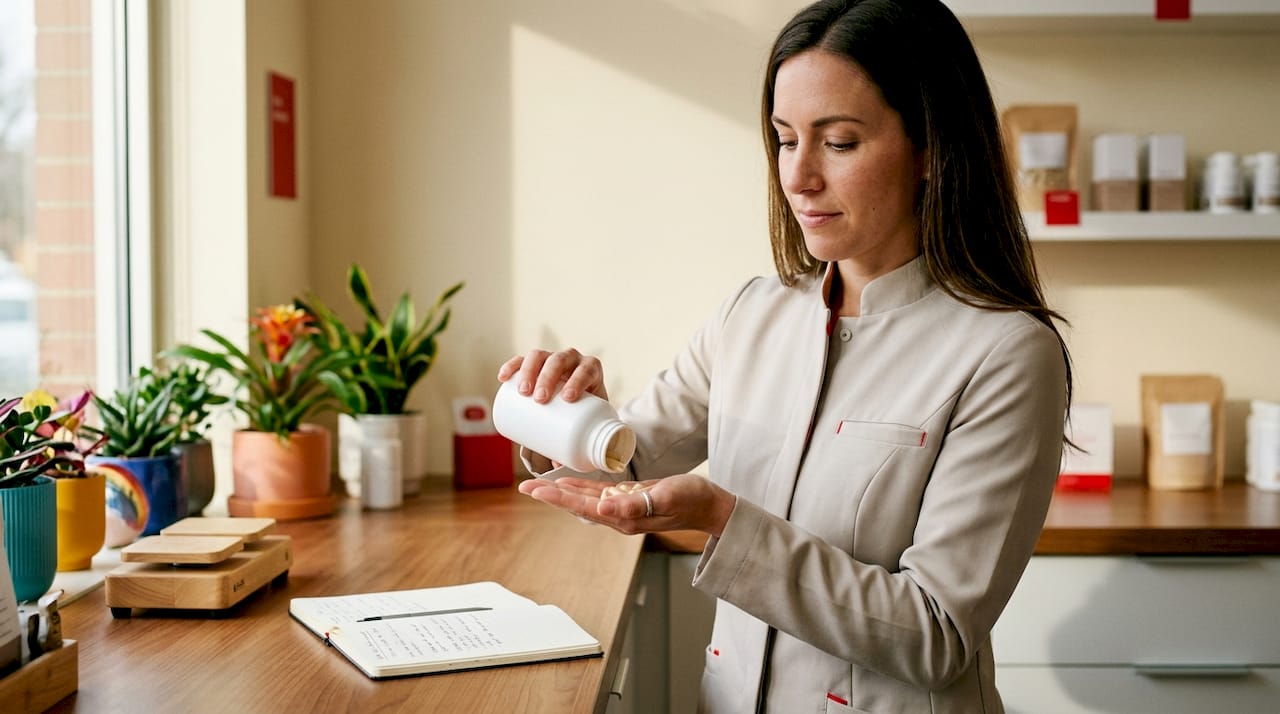
Fromwithin uses patented Wellnex® peptides, which are absorbed directly into the bloodstream rather than broken down in the gut. That absorption difference matters for efficacy. You can read more about how collagen and elastin work together to support skin structure from the inside out.
Pro Tip: Look for “hydrolyzed” on the label. Non-hydrolyzed collagen molecules are too large to absorb efficiently, so the clinical results from peptide trials do not apply to them.
Postbiotic VMK223 (Bifidobacterium breve)
This is one of the more surprising entries on any beauty supplement ingredients checklist. A 12-week clinical study of 50 women aged 40–55 found that 500 mg of postbiotic VMK223 reduced wrinkle depth by 28.0% and increased skin elasticity by 26.8% compared to placebo. Those numbers outperform many topical retinoids in head-to-head comparisons. The mechanism works through the gut-skin axis: improving microbial balance reduces systemic inflammation, which directly affects skin aging.
Purebkale™ (Brassica oleracea extract)
Purebkale™ is a dry aqueous extract of kale, and it has a clean clinical record. An open-label study of 50 women taking the extract daily for 56 days showed a 15.1% reduction in wrinkle depth and a 12.8% increase in dermal density. Dermal density is a structural measure of skin thickness and firmness. Improving it means your skin physically holds its shape better.
Piceatannol
Piceatannol is a polyphenol found in passion fruit seeds, and it has strong hydration data. A randomized, double-blind, placebo-controlled trial confirmed that 8 weeks of daily Piceatannol intake significantly improved stratum corneum hydration and reduced crow’s feet wrinkle severity in adult women. The stratum corneum is the outermost skin layer. Keeping it hydrated is the single most effective way to reduce the appearance of fine lines without needles.
2. How to evaluate the science behind beauty supplements
Not every product with “clinically tested” on the label deserves that claim. Here is how to check whether a supplement’s science actually holds up.
- Match the ingredient to the trial. Branded extracts like Wellnex® or Purebkale™ have specific strain identities, extraction processes, and dosages tied to their clinical results. A generic “kale extract” or “collagen powder” is not the same thing.
- Check the study design. Randomized, double-blind, placebo-controlled trials carry the most weight. Open-label studies are useful but less definitive. Testimonials are not evidence.
- Verify the dose. If a trial used 500 mg and your product contains 100 mg, the clinical result does not transfer. Dose matters more than most people realize.
- Look for third-party testing. Supplement regulation is minimal compared to pharmaceuticals. Third-party certification from organizations like NSF International or USP confirms that what is on the label is actually in the capsule.
- Avoid proprietary blends with hidden doses. When a label lists a “beauty blend” without individual ingredient amounts, you cannot verify whether any ingredient reaches a clinically effective dose.
Pro Tip: Search the ingredient name plus “clinical trial” in PubMed. If no peer-reviewed results appear, the clinical claim is likely marketing language, not science.
Branded extracts with clinical replication consistently outperform generic powders because the trial conditions are reproducible. That reproducibility is what makes a supplement genuinely trustworthy.
3. Common beauty supplement ingredients with limited or mixed evidence
Some popular ingredients have weaker or more inconsistent clinical support than their marketing suggests. Knowing the difference protects your money and your health.
- Biotin. Biotin deficiency does cause hair loss and brittle nails. Correcting a deficiency works. Taking high-dose biotin when you are not deficient produces no measurable cosmetic benefit, and high doses interfere with thyroid and cardiac lab tests, leading to false results.
- Vitamin D. Vitamin D supports skin barrier function, but only in people who are deficient. Supplementing when your levels are already normal does not improve skin appearance.
- Zinc. Zinc reduces acne-related inflammation in people with low zinc status. The evidence for zinc as a universal skin supplement in people with normal levels is thin.
- Keratin supplements. Keratin is a structural protein in hair and nails. Oral keratin supplements show some early-stage data for hair strength, but the research base is not yet large enough to draw firm conclusions.
- Choline-stabilized orthosilicic acid (ch-OSA). Ch-OSA has promising early data for nail and hair strength, but the trials are small and need replication before it earns a place on a reliable beauty supplement ingredients checklist.
- Oral hyaluronic acid. Hyaluronic acid supplements show some hydration benefits in small trials, but results are variable. The evidence is not as consistent as the evidence for hydrolyzed collagen peptides.
4. Safety, usage timelines, and realistic expectations
The most common reason people decide beauty supplements “don’t work” is quitting too soon. Skin cells turn over on a biological schedule, and no supplement overrides that timeline.
Expect 8–12 weeks of consistent daily use before you see measurable changes in skin elasticity or hydration. That is not a marketing caveat. It reflects how long it takes for new collagen to form and for skin structure to visibly shift. People who stop at week 3 and say it did nothing are making a fair observation about week 3, not about the supplement.
Safety is a real concern with high-dose supplementation. Poly-supplementation is the practice of taking multiple supplements simultaneously, often without realizing that ingredients overlap. The Royal College of GPs warns that this risks exceeding safe intake limits and can strain the liver and kidneys. More is not always better, and stacking five “beauty” products at once is a common mistake.
A few specific safety notes worth keeping in mind:
- High-dose fat-soluble vitamins (A, D, E, K) accumulate in the body and can reach toxic levels.
- Some herbal extracts carry liver toxicity risk at high doses, including green tea extract in concentrated supplement form.
- Marine-sourced collagen carries a potential contamination risk with methylmercury. Always verify that marine collagen products carry third-party testing certification.
- Consult a healthcare provider before starting any supplement if you take prescription medications, since interactions are possible.
The clinically proven beauty products with the strongest safety records are those tested in trials that also tracked adverse events, not just outcomes. That data transparency is a sign of a trustworthy product.
Key takeaways
The most effective clinically tested beauty supplements are those with peer-reviewed trial data, dose-matched ingredients, and transparent third-party testing behind every claim.
| Point | Details |
|---|---|
| Match dose to trial data | Products must match the exact dose used in clinical studies to replicate results. |
| Allow 8–12 weeks | Skin biology requires consistent use over weeks before visible improvements appear. |
| Branded extracts outperform generics | Named ingredients like Wellnex® or Purebkale™ have reproducible clinical evidence; generic powders do not. |
| Poly-supplementation carries risk | Stacking multiple supplements can exceed safe intake limits and strain organs. |
| Third-party testing is non-negotiable | Minimal industry regulation means independent certification is the only reliable quality check. |
What I’ve learned from years of watching the beauty supplement market
Here is the uncomfortable truth about this category: most products are sold on hope, not evidence. I’ve watched the beauty supplement space grow from a niche wellness corner into a crowded market where “clinically inspired” and “clinically tested” sit side by side on the same shelf, looking almost identical. They are not the same thing.
The products that actually deliver results share a pattern. They use named, patented ingredients. They publish their trial data. They tell you exactly how much of each ingredient is in each serving. That transparency is not a coincidence. It is what happens when a brand is confident its product works.
I’d also push back on the idea that supplements alone are a complete beauty strategy. Your skin reflects your sleep, your stress, your diet, and your hydration. A well-chosen supplement supports those foundations. It does not replace them. The people I’ve seen get the best results from science-backed beauty supplements are the ones who treat them as one part of a consistent routine, not a shortcut.
My honest recommendation: pick one or two supplements with strong clinical backing, use them consistently for at least 12 weeks, and evaluate the results honestly. If you see improvement, continue. If you don’t, reassess the dose and formulation before assuming the category doesn’t work. Patience and specificity beat variety every time.
— From
Fromwithin’s clinically backed beauty collection
If you’ve made it this far, you already know what separates a real supplement from a pretty label. Fromwithin was built around that exact standard: every product in the range uses authenticated, research-backed ingredients at doses that match published trial data.
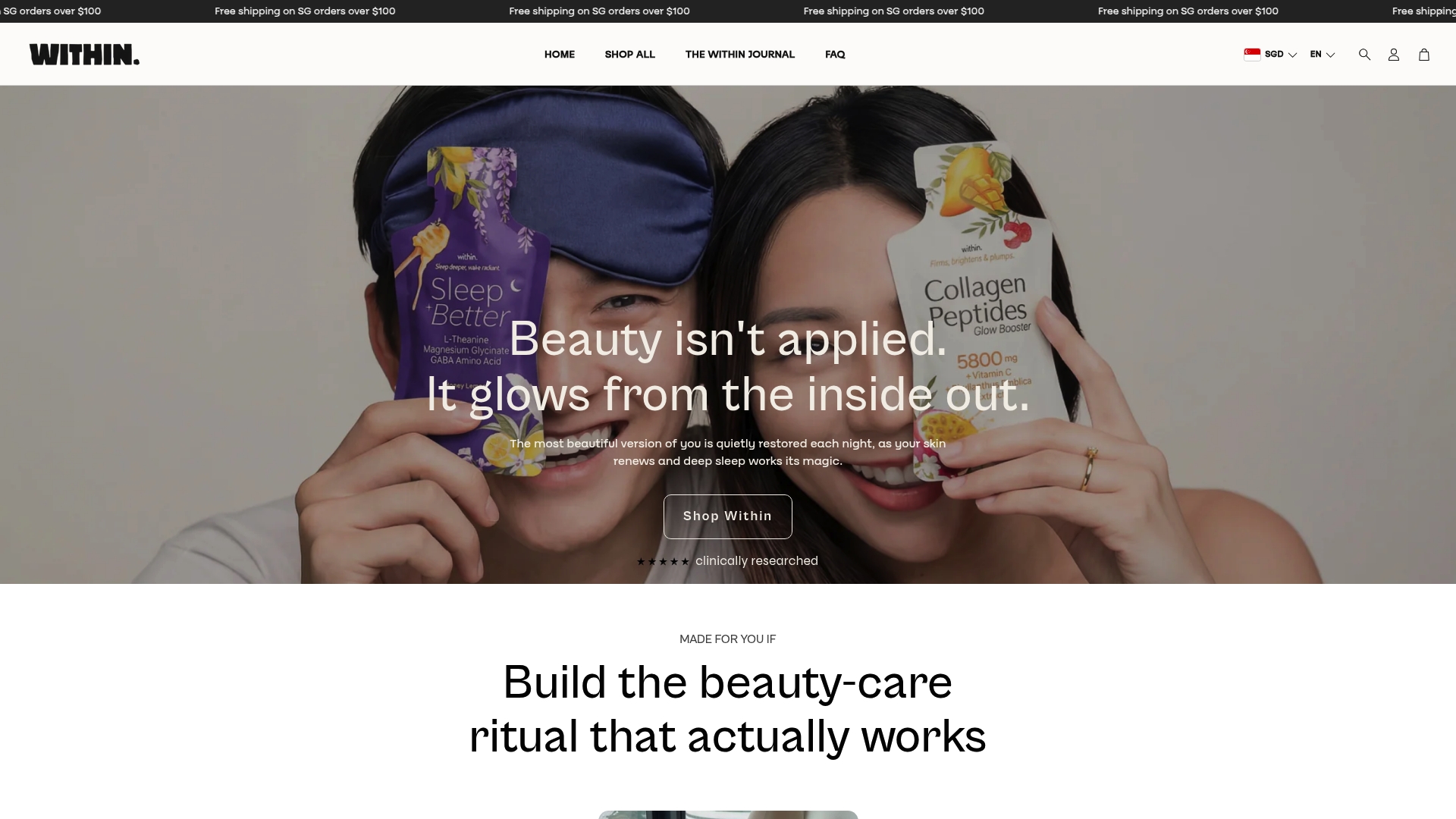
The vitamins and supplements collection brings together products formulated with patented Wellnex® peptides and other clinically validated ingredients. Sourcing and manufacturing transparency are not optional extras at Fromwithin. They are the baseline. If you want skin support that is grounded in real science, the skin health collection is a good place to start your search.
FAQ
What are clinically tested beauty supplements?
Clinically tested beauty supplements are oral products evaluated in peer-reviewed human trials that measure specific outcomes like wrinkle depth, skin elasticity, or hydration. They differ from generic supplements by having published, reproducible evidence behind their claims.
How long do beauty supplements take to work?
Most clinically tested supplements require 8–12 weeks of consistent daily use before measurable skin improvements appear. Stopping earlier does not mean the product failed; it means the biological timeline was not completed.
What is the difference between science-backed and generic beauty supplements?
Science-backed beauty supplements use named, standardized ingredients at doses proven effective in clinical trials. Generic versions often use the same ingredient category but lack the specific strain, extraction method, or dose that produced the trial results.
Is biotin effective for hair and nail growth?
Biotin corrects deficiency-related hair loss and brittle nails effectively. Taking high-dose biotin without a confirmed deficiency produces no measurable cosmetic benefit and can interfere with thyroid and cardiac lab tests.
Are collagen supplements safe?
Hydrolyzed collagen peptides are generally well-tolerated at doses of 2.5–10 grams daily based on trial data. Marine-sourced collagen carries a methylmercury contamination risk, so third-party testing certification is required before use.
