

on September 23, 2026

The evidence points to a clear range: 2.5 to 10 grams of hydrolyzed collagen per day, taken consistently for at least 8 to 12 weeks. Higher doses closer to 10 grams tend to show bigger improvements in wrinkles, while even 2.5 grams can boost hydration and elasticity. Trials studying doses up to 15 grams a day found no major safety concerns, but formulation quality (not just the number on the label) determines whether your skin actually notices a difference.
TL;DR:
- Consistent daily intake of 2.5 to 10 grams of hydrolyzed collagen over 8 to 12 weeks yields noticeable improvements in skin hydration, elasticity, and wrinkle reduction.
- Doses around 5 grams per day are well-studied and reliable, while 10 grams show the strongest evidence for reducing wrinkle size and number.
- Higher doses close to 15 grams mainly target joint and muscle health and do not necessarily provide additional skin benefits beyond 10 grams.
- The effectiveness of collagen depends more on product quality, proper dosing, and consistent use rather than higher intake alone.
- Always verify collagen product details, including peptide molecular weight and third-party testing, to ensure the supplement matches evidence-based dosing for optimal results.
Table of Contents
- Collagen Dosage for Skin: Breaking Down What Each Amount Does
- What the Clinical Trials Actually Show
- Not All Collagen Is Dosed the Same Way
- Is Collagen Safe at These Doses, and Who Should Be Careful?
- How to Actually Choose and Dose a Collagen Supplement
- Where Fromwithin Fits Into This Evidence
- What I’d Actually Expect From Taking Collagen
- Ready to Match Your Dose to a Product That Backs It Up?
- Sources
- FAQ
Collagen Dosage for Skin: Breaking Down What Each Amount Does
Not every gram of collagen works the same way, and the dose you choose should match the outcome you actually care about. Here’s how the research shakes out by amount.
2.5 grams per day is the entry point where things start happening. Multiple randomized controlled trials have shown measurable improvements in skin elasticity and hydration at this dose, and it’s a reasonable starting point if you’re new to collagen or want something easy to fit into a daily routine. One trial specifically comparing 2.5 g and 10 g/day found that even the lower dose increased hydration and elasticity compared to placebo, alongside rises in plasma TGF-β and Klotho, markers linked to skin health.
5 grams per day sits in the middle and shows up constantly in the literature as a dependable, well-tolerated dose. It’s the amount you’ll see in a lot of commercial products, largely because it delivers consistent benefits without pushing into “why do I need this much” territory.
10 grams per day is where the wrinkle data gets more convincing. In that same bioactive collagen peptide trial, the 10 g group saw a significant reduction in wrinkle number and length, something the 2.5 g group didn’t fully match. If visible wrinkle reduction is your main goal, this is the dose the evidence leans toward.
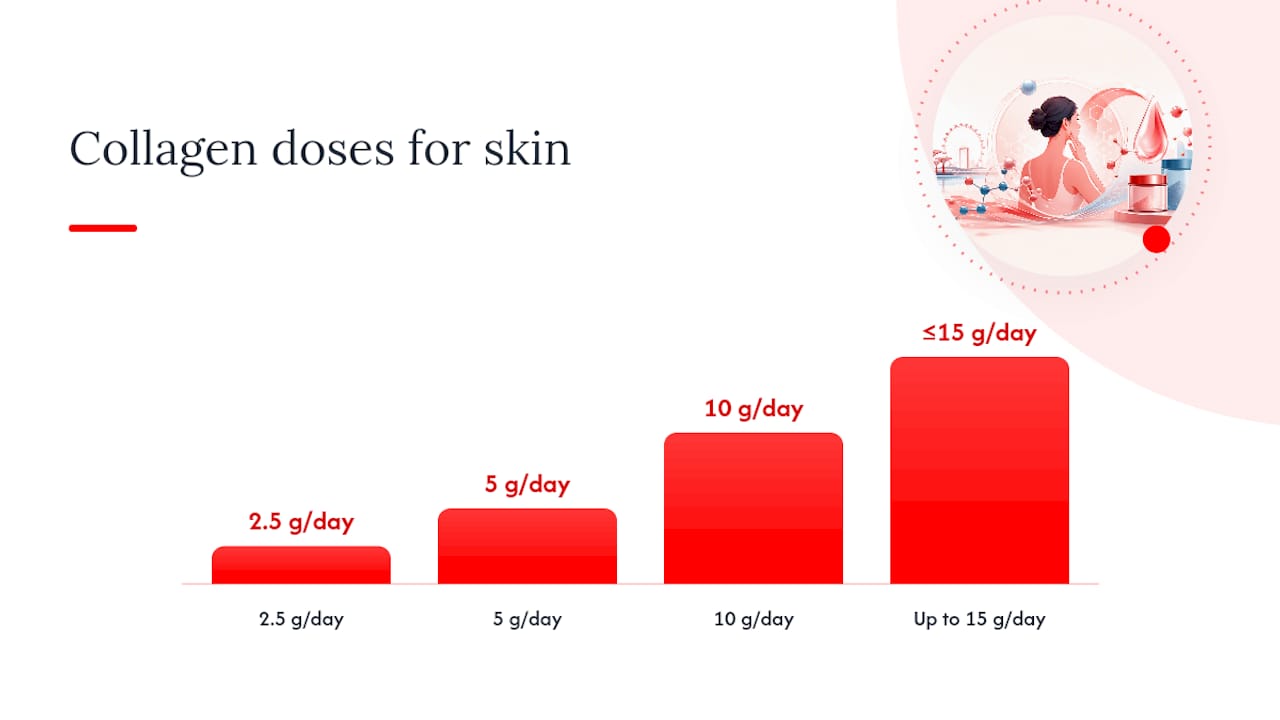
Above 10 grams, up to 15 grams a day, trials exist, but most of that research targets joint and muscle outcomes rather than skin. For skin specifically, benefits appear to plateau somewhere in the 10 gram range, so going higher isn’t guaranteed to buy you more glow.
A quick summary:
- 2.5 g/day: hydration and elasticity gains, good starting dose
- 5 g/day: the reliable, well-studied middle ground
- 10 g/day: strongest evidence for wrinkle reduction
- Up to 15 g/day: studied mostly for joints and muscle, not additional skin benefit
What the Clinical Trials Actually Show
Here’s the thing about collagen research that most product pages gloss over: the trials themselves are pretty specific about what they measure and for how long, and that detail matters more than the marketing copy suggests.
Most randomized controlled trials run 8 to 12 weeks, tracking outcomes like skin hydration, transepidermal water loss (TEWL), elasticity, and wrinkle counts. A systematic review and updated meta-analysis pooling these trials found consistent evidence that hydrolyzed collagen improves both hydration and elasticity versus placebo, though the review also flagged real heterogeneity: studies differ in collagen source, peptide profile, dose, and duration, which is part of why results aren’t perfectly uniform across products.
A separate review in the Journal of Drugs in Dermatology looked at 11 randomized controlled trials covering 805 patients, using doses of 2.5 to 10 grams per day over periods ranging from 8 to 24 weeks. It reported improvements in elasticity, hydration, and dermal density, with no safety concerns flagged.
What predicts whether someone actually sees results? According to the meta-analysis, it’s less about which exact dose you pick within the effective range and more about how consistently you take it. Skipping days or stopping after two weeks undercuts the whole premise, since hydration tends to shift earlier while elasticity and wrinkle measures take the full 12 weeks to show up clearly.
Newer research into bioactive collagen peptides adds another layer: benefits may not come purely from supplying raw amino acids for collagen rebuilding. There’s evidence these peptides also influence immune-regulatory pathways, meaning the “why it works” story is more complex than just “protein in, collagen out.”
Not All Collagen Is Dosed the Same Way
Here’s where things get interesting, and where a lot of the confusion around collagen supplements actually comes from. Two products can list “5 grams of collagen” and behave completely differently in your body.
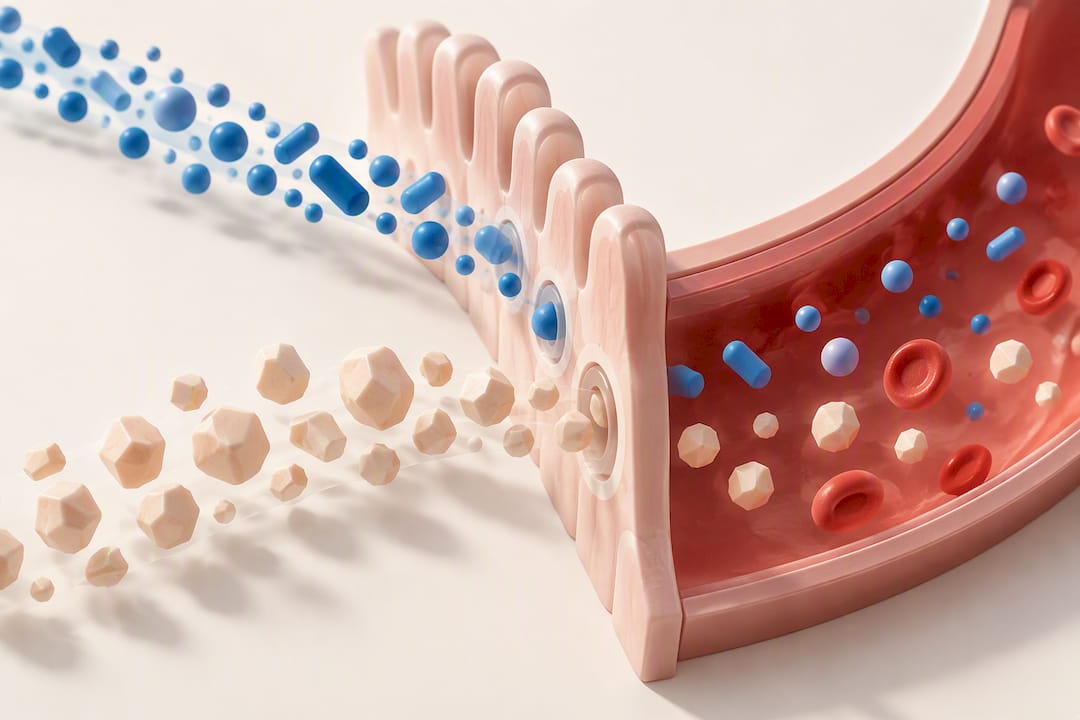
Hydrolyzed collagen peptides are broken down into smaller chains for easier absorption. Bioactive collagen peptides (BCP) go a step further, often using proprietary processing to target specific molecular weight ranges, generally under 3,000 daltons, which trial data links to better bioavailability than larger, unprocessed peptides.
The source matters too. Marine and bovine collagen contain different amino acid ratios, and the proportion of hydroxyproline and proline (the building blocks tied to fibroblast activation) can vary by brand and batch, not just by species.
- Match your daily total serving to an evidence-backed range, not just to “a scoop”
- Check whether the product discloses peptide molecular weight or clinical testing
- Look for Vitamin C or hyaluronic acid listed alongside collagen, since they support how your body uses it
Pro Tip: Two 5-gram scoops from different brands are not interchangeable. If a product won’t tell you its peptide source or molecular weight, you’re guessing at the dose, not measuring it.
Is Collagen Safe at These Doses, and Who Should Be Careful?
Across the dose range studied (2.5 grams up to 15 grams per day), trials report no major adverse events. When side effects appear, they’re typically mild, things like bloating or an upset stomach, not anything that required stopping the study.
A few groups should still pay attention before starting:
- People with fish or shellfish allergies should avoid marine-sourced collagen and check labels carefully
- Pregnant or breastfeeding individuals should talk to a doctor before adding any new supplement
- Anyone managing kidney disease should get clinical guidance first, since protein intake needs individual assessment
- Choose products with third-party testing and clear sourcing information, since regulatory oversight of supplements varies
If you’re on medication or managing a chronic condition, a quick conversation with your doctor costs you nothing and removes the guesswork.
How to Actually Choose and Dose a Collagen Supplement
Skip the marketing claims and check these five things before you buy:
- Grams per serving. Confirm the label states an exact number, not a vague “collagen blend” amount.
- Servings needed to hit your target dose. If one serving gives you 2.5 g, you may need two to reach the 5 g range trials favor.
- Peptide disclosure. Look for named clinical research behind the specific peptide, not just “collagen” as a category.
- Vitamin C content. Your body needs it as a cofactor for collagen synthesis, so pairing helps your intake do more work.
- Third-party testing. Independent verification is the closest thing to a quality guarantee in an unregulated supplement category.
For timing, a single daily dose works fine for most people. Taking it with a meal containing Vitamin C, think citrus, berries, or a supplement, may support your body’s own collagen production alongside what you’re ingesting.
Pro Tip: Compare price per effective daily gram, not price per container. A cheaper product that requires three scoops to hit 5 g might cost more per gram than a pricier one that delivers it in a single serving.
Where Fromwithin Fits Into This Evidence
Fromwithin’s Collagen Peptides Glow Booster is built around patented Wellnex® peptides, which the brand states are absorbed directly into the bloodstream for stronger uptake, a formulation claim worth knowing as you compare it against the trial doses covered above. Serving size and full ingredient details are listed on the product page, so you can check exactly how it maps to the 2.5 to 10 gram range the research supports before committing to a routine.
Fromwithin’s broader collagen approach centers on ingredient transparency and clinically researched formulation rather than vague “beauty blend” language, which is precisely the kind of disclosure this guide recommends you look for in any product you consider.
What I’d Actually Expect From Taking Collagen
Set your expectations at “modest but real,” not “overnight transformation.” Most people see genuine change over 8 to 12 weeks, and it helps to pair intake with a Vitamin C-rich diet and daily sun protection. If you’re dealing with deep wrinkles or a specific skin condition, a dermatologist should be your first call, not your last resort.
— From
Ready to Match Your Dose to a Product That Backs It Up?
Most collagen shopping comes down to guessing whether a tub of powder or a drink shot actually delivers what the label promises. One option removes guesswork by disclosing peptide formulation and serving details up front, so you can line up what you’re drinking against the 2.5 to 10 gram range covered in this guide instead of hoping for the best.

If hydration and elasticity are your priority, start with the dose range that matches the evidence and stick with it daily for a full 8 to 12 weeks before judging results. Pairing your morning routine with a topical hydrator, like a hyaluronic acid serum, can support the same hydration goals from the outside while your collagen intake works from within. Browse the full product lineup to find the serving size that fits your target dose, or check the Glow Booster page directly for ingredient specifics before you order.
This article is general information, not a substitute for advice from a qualified doctor. Consult a qualified healthcare professional about your own circumstances before acting on anything here.
Sources
- Immune-Modulatory Effects of Bioactive Collagen Peptides Improve Skin Health in Middle-Aged Women | Dermatology and Therapy
- PubMed entry on 2026 research into bioactive collagen peptides
- Oral Collagen Peptides and Skin Rejuvenation: A Systematic Review and an Updated Meta‐Analysis of Randomized Controlled Trials
- Oral Collagen Supplementation: A Systematic Review of Dermatological Applications | J Drugs Dermatol
FAQ
How much collagen per day is best for skin?
Most research points to a range between 2.5 and 10 grams of hydrolyzed collagen daily, with higher amounts near 10 grams showing the strongest wrinkle reduction in trial data. The right amount depends on whether hydration, elasticity, or wrinkles is your main goal.
How long before I see results from collagen supplements?
Hydration improvements can appear within a few weeks, but elasticity and wrinkle changes typically take the full 8 to 12 weeks most clinical trials use as their study window. Consistency matters more than the exact dose within the effective range, according to pooled trial analysis.
Is a higher collagen dose always better for wrinkles?
Not necessarily. A randomized controlled trial found 10 g/day reduced wrinkle number and length more than 2.5 g/day, but benefits appear to plateau beyond that range for skin outcomes specifically.
Are collagen supplements safe to take daily?
Yes, for most healthy adults. Studies covering doses from 2.5 to 15 grams per day report no major adverse events, with mild digestive upset being the most common complaint noted across dermatological trial reviews.
Does Fromwithin’s collagen product match the recommended dose?
Fromwithin’s Glow Booster is formulated with its patented Wellnex® peptides, and exact serving details are listed on the product page so you can compare it directly against the 2.5 to 10 gram range this guide covers. Current pricing is available on the site.
