

on August 06, 2026

Collagen supplements can meaningfully reduce the visible appearance of cellulite, and the clinical evidence is more solid than most people realize. A 2015 randomized, double-blind, placebo-controlled trial found that 2.5 g/day of specific bioactive collagen peptides (BCP) over six months produced a statistically significant decrease in cellulite degree and an 8% reduction in skin waviness compared to placebo. A more recent 2026 randomized clinical study on low-molecular-weight collagen peptides (LMWCP) in 114 women confirmed improvements in cellulite severity, skin elasticity, and the dermal–subcutaneous border at a dose of 1,000 mg/day over 24 weeks.
That said, collagen is not a cure. Here is what the research actually tells you to expect:
- Dose and duration matter. Trials used 1,000 mg to 2.5 g daily for 24 weeks minimum. Noticeable changes in skin structure tend to appear around the 24-week mark, with some procollagen markers rising within 8 weeks.
- Your BMI influences results. The 2015 BCP trial found stronger improvements in normal-weight women than in overweight participants. If you carry more body fat, you may still benefit, but the magnitude of visible change is likely smaller.
Table of Contents
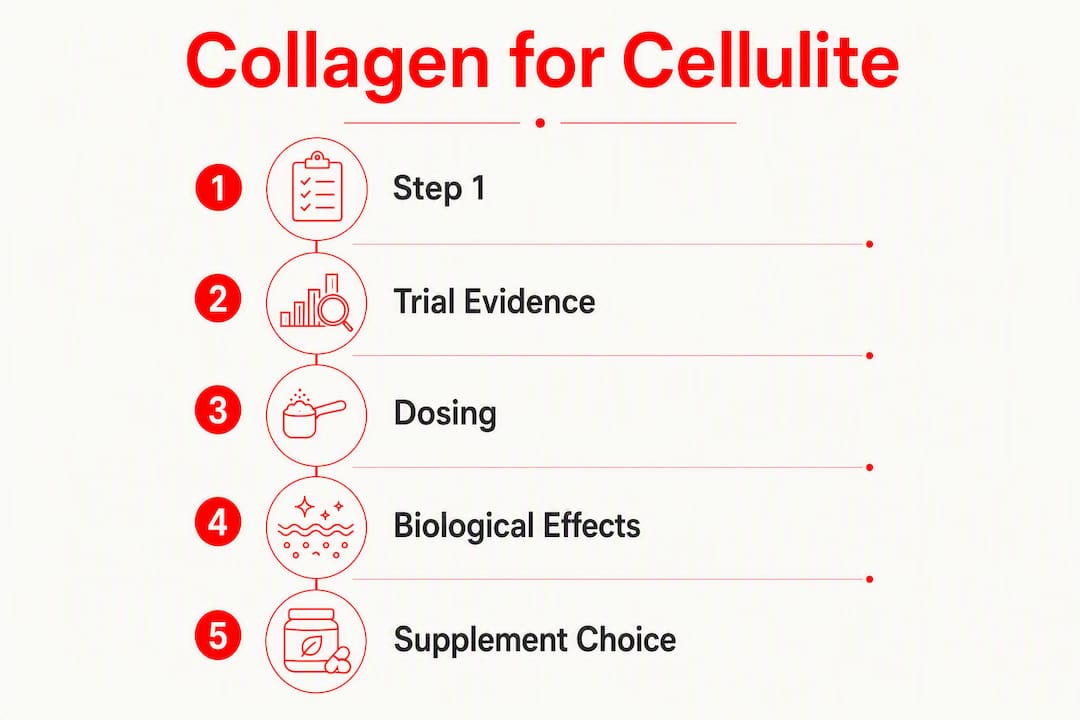
- What the science says about collagen for cellulite
- How collagen peptides could actually change your skin’s structure
- Which collagen types actually matter for cellulite?
- How to use collagen supplements for cellulite: dose, timing, and safety
- How oral collagen fits with professional cellulite treatments
- How to choose a collagen supplement that is worth your money
- Why only some collagen products are actually study-worthy
- Key Takeaways
- What I actually think about collagen and cellulite
- Fromwithin’s collagen is built around the same evidence
- Primary sources and further reading
What the science says about collagen for cellulite
Two randomized controlled trials form the backbone of the evidence here. They differ in peptide type, dose, and year, but both point in the same direction.
The 2015 BCP trial enrolled 105 women aged 24–50 with moderate cellulite. Participants received either 2.5 g/day of specific bioactive collagen peptides or a placebo for six months. Researchers measured cellulite degree, skin waviness using 3D imaging, and dermal density via ultrasound. At six months, the BCP group showed a statistically significant reduction in cellulite score and an 8% reduction in skin waviness versus placebo. Dermal density also improved. Normal-weight women responded more strongly than overweight participants, which the authors attributed to the greater structural challenge posed by higher subcutaneous fat.
The 2026 LMWCP trial tested a lower dose of 1,000 mg/day for 24 weeks in 114 women. This study added pharmacokinetic data, showing that the targeted enzymatic hydrolysis used to produce LMWCPs resulted in approximately 54-fold higher systemic exposure to the Gly-Pro-Hyp (GPH) tripeptide compared to general collagen. Clinically, participants saw significant improvements in cellulite severity, dermal–subcutaneous border length, skin roughness, and elasticity.
| Feature | 2015 BCP Trial | 2026 LMWCP Trial |
|---|---|---|
| Sample size | 105 women | 114 women |
| Peptide type | Bioactive collagen peptides (BCP) | Low-molecular-weight collagen peptides (LMWCP) |
| Daily dose | 2.5 g | 1,000 mg |
| Duration | 24 weeks | 24 weeks |
| Key outcomes | Cellulite score, skin waviness (8% reduction), dermal density | Cellulite severity, dermal–subcutaneous border, elasticity, roughness |
| Notable limitation | Single branded peptide; stronger results in normal-weight women | Single branded peptide; predominantly female cohort |
Both trials used objective skin imaging rather than self-reported satisfaction, which strengthens their credibility. The limitations are real, though. Sample sizes are modest, both studies used specific branded peptides, and neither has been independently replicated at scale. A 2023 clinical review noted that many collagen studies fail to standardize peptide type or preparation method, making cross-trial comparisons tricky. The evidence is promising, not conclusive.
Statistic to keep in mind: The 2015 BCP trial reported an 8% reduction in skin waviness at six months versus placebo. That is a measurable structural change captured by 3D imaging, not just a cosmetic smoothing effect.
How collagen peptides could actually change your skin’s structure
The biological pathway from a daily supplement to smoother-looking skin is more direct than you might expect. When you take hydrolyzed collagen peptides orally, small peptides including the GPH tripeptide are absorbed through the gut and reach the skin’s dermis via the bloodstream. Once there, they stimulate fibroblasts, the cells responsible for producing the structural proteins that give skin its firmness and bounce.

Mechanistic data from BCP research shows that interstitial skin fluid contained higher levels of new procollagen type I and tropoelastin within 8 weeks of daily peptide intake. Procollagen is the precursor to mature collagen fibers; tropoelastin is the building block of elastin. Both contribute to a denser, more resilient dermal layer.
Why does that matter for cellulite specifically? Cellulite forms partly because the dermis above the subcutaneous fat layer becomes thinner and less structured over time, allowing the fat lobules below to push upward and create the characteristic dimpling. A thicker, denser dermis acts like a firmer mattress, making those underlying fat lobules less visible at the surface.
Here is the simplified mechanistic chain:
- Oral peptide intake → GPH tripeptides absorbed into the bloodstream
- Systemic GPH reaches dermal fibroblasts → stimulates procollagen type I and tropoelastin production
- Increased dermal matrix density and elasticity → thicker, firmer dermis
- Firmer dermis → reduced visibility of subcutaneous fat lobules → smoother skin surface
One important note: collagen supplements do not sever the fibrous septae that physically tether skin to deeper tissue and create the deepest dimples. They improve skin quality from the inside, which is genuinely useful, but it is a different mechanism than what surgical or laser procedures achieve.
Which collagen types actually matter for cellulite?
Not all collagen supplements are created equal, and the label details matter more than most people realize. The trials that produced positive results used specific, characterized peptide formats, not generic collagen powder.

Bioactive collagen peptides (BCP) are hydrolyzed collagen fragments with a defined peptide composition, typically enriched in GPH sequences. The 2015 trial used a specific BCP formulation. Hydrolysis breaks collagen into smaller peptides that are more readily absorbed than intact collagen protein.
Low-molecular-weight collagen peptides (LMWCP) take hydrolysis further, using targeted enzymatic processing to produce even smaller peptides with higher GPH content. The 2026 trial’s pharmacokinetic data showed approximately 54-fold higher systemic GPH exposure with LMWCPs compared to general collagen, which helps explain why a lower dose (1,000 mg vs. 2.5 g) still produced significant clinical results.
Here is a quick glossary of terms you will see on labels:
- Collagen peptides: — Often used interchangeably with hydrolyzed collagen; look for dose per serving and peptide characterization data.
Pro Tip: When reading a supplement label, look for the specific peptide name or molecular weight range, the exact dose per serving in milligrams or grams, and the source species. A product that lists only “hydrolyzed collagen” with no dose or peptide characterization gives you no way to know whether it matches what was tested in trials.
How to use collagen supplements for cellulite: dose, timing, and safety
The clinical trials give us a clear dosing framework. Both studied doses fall within a practical daily range, and the duration required is longer than most supplement marketing suggests.
Trial-informed dosing:
| Dose | Duration | Measured outcomes |
|---|---|---|
| 2.5 g/day (BCP) | 24 weeks | Cellulite score, skin waviness (8% reduction), dermal density |
| 1,000 mg/day (LMWCP) | 24 weeks | Cellulite severity, dermal–subcutaneous border, elasticity, roughness |
Timeline: what to expect and when
- Weeks 1–8: Procollagen type I and tropoelastin levels begin rising in dermal tissue. No visible changes yet for most people.
- Weeks 8–12: Some early improvement in skin texture and elasticity may be noticeable, particularly in normal-weight individuals.
- Weeks 12–24: More consistent tissue remodeling. Modest improvements in cellulite appearance become measurable. Consistent daily intake for 24 weeks is needed to detect meaningful changes.
- 24 weeks and beyond: Clearer structural improvements in dermal density and skin smoothness. This is the timeframe where both trials recorded their strongest results.
Safety checklist:
- Hydrolyzed collagen peptides are generally well tolerated, with low rates of adverse events in clinical trials.
- Check the source species on the label if you have a fish, shellfish, or bovine allergy. Marine collagen is fish-derived; bovine collagen comes from cattle.
- Vitamin C supports collagen synthesis. Taking your supplement alongside a vitamin C-rich food or a separate vitamin C supplement can help your body use the peptides more effectively. Read more about vitamin C and collagen synthesis for the full picture.
- If you are pregnant, breastfeeding, or managing a chronic condition, check with your healthcare provider before starting any new supplement.
Set realistic expectations going in. The 8% reduction in skin waviness from the 2015 trial is a real, measurable change, but it is not a dramatic transformation. Normal-weight individuals tend to see more visible improvement than those with higher BMI.
How oral collagen fits with professional cellulite treatments
Supplements improve skin quality from the inside. They do not physically alter the fibrous septae, the connective tissue bands that tether skin to deeper layers and create the deepest, most stubborn dimples. That distinction shapes how you should think about combining supplements with professional options.
The American Academy of Dermatology is clear that oral supplements alone have not been proven to fully eliminate cellulite and should be considered adjuncts to skin health, not standalone treatments. Procedures that physically address the fibrous septae, such as subcision (mechanical cutting of the bands), laser-assisted treatments like Cellulaze, or acoustic wave therapy, can produce structural changes that no supplement can replicate.
From the American Academy of Dermatology: While some in-office procedures can reduce cellulite, oral supplements have not been proven to fully eliminate it. Supplements are best understood as adjuncts that support skin quality rather than replacements for procedural care when deep structural dimpling is the concern.
That said, supplements and procedures are not mutually exclusive. A denser, more elastic dermis going into a procedure may support better outcomes and recovery. After a procedure, continued collagen supplementation can help maintain skin quality over time.
When to see a dermatologist: If you have persistent deep dimpling that bothers you significantly, lumps that change rapidly, or any skin integrity concerns, a board-certified dermatologist is the right first call. Supplements are a sensible starting point for mild to moderate cellulite, but they are one tool among several.
How to choose a collagen supplement that is worth your money
The supplement aisle is full of products making big promises. Here is a practical checklist to cut through the noise.
Look for:
- The specific peptide type named on the label (BCP, LMWCP, or a patented format with clinical data)
- A clear dose per serving in milligrams or grams that matches trial-used amounts
- Third-party testing certification (NSF, USP, or Informed Sport) for purity and label accuracy
- Source species and allergen declaration (fish, bovine, porcine)
- Manufacturing transparency: country of origin, GMP-certified facility
Red flags to avoid:
- “Hydrolyzed collagen” listed with no dose or peptide characterization
- Proprietary blends that hide individual ingredient weights
- “28-day cure” or “visible results in two weeks” claims with no study citations
- Dramatic before-and-after photos not tied to a published clinical trial
- Multi-ingredient “cellulite formulas” where collagen is one of ten ingredients with no dose breakdown
Budget priority is straightforward: spend on clinical evidence and transparent dosing, not on packaging. A clinically tested supplement with a named peptide and a clear dose per serving will always be a better investment than a beautifully branded product with vague ingredient claims.
Why only some collagen products are actually study-worthy
Here is something the supplement industry does not advertise loudly: the positive trial results for collagen and cellulite are tied to specific, characterized peptide preparations, not to collagen as a category. A generic collagen powder and a GPH-enriched LMWCP are not interchangeable, even if both say “hydrolyzed collagen” on the front of the package.
What makes a peptide trial-worthy? Clinicians and researchers look for several things:
- Randomized, double-blind, placebo-controlled design with objective endpoints (3D skin imaging, ultrasound-measured dermal density) rather than self-reported satisfaction scores.
- Peptide fingerprinting: the specific peptide sequences present in the product are characterized and documented, so the trial is reproducible.
- Pharmacokinetic data: evidence that the peptides actually reach systemic circulation and elevate GPH levels in the bloodstream. The 2026 LMWCP trial’s finding of approximately 54-fold higher GPH exposure is an example of this kind of mechanistic validation.
- Adequate duration and sample size: both key trials ran for at least 24 weeks with 100+ participants, which is the minimum needed to detect meaningful dermal remodeling.
A note on reproducibility: Most published collagen trials use a single branded peptide, which means the results are specific to that preparation. Independent replication with larger, more diverse cohorts would significantly strengthen confidence in the findings. The 2023 NMJ clinical review flagged this as a key gap in the current literature.
When you see a collagen product citing “clinical studies,” ask which study, which peptide, and what dose. If the answer is a vague reference to “collagen research” rather than a specific RCT with a matching peptide format, that is a gap worth noting.
Key Takeaways
Specific, characterized collagen peptides taken daily for at least 24 weeks can produce measurable reductions in cellulite appearance, with stronger results in normal-weight adults and best outcomes when combined with professional care for deep structural dimpling.
| Point | Details |
|---|---|
| Clinical evidence is real but specific | Positive trials used BCP at 2.5 g/day or LMWCP at 1,000 mg/day for 24 weeks minimum, not generic collagen. |
| Timeline requires patience | Meaningful structural changes appear at 12–24 weeks; the clearest improvements in both trials came at 24 weeks and six months. |
| BMI affects your results | Normal-weight women in the 2015 BCP trial responded more strongly; higher BMI reduces but does not eliminate the benefit. |
| Supplements are adjuncts, not cures | The AAD notes supplements support skin quality but do not physically alter the fibrous septae causing deep dimpling. |
| Fromwithin’s Wellnex® peptides align with trial criteria | Fromwithin uses patented Wellnex® peptides with transparent dosing and direct bloodstream absorption, matching the characterized peptide formats used in positive clinical trials. |
What I actually think about collagen and cellulite
The evidence here is genuinely encouraging, and I say that as someone who reads a lot of supplement research where the results are far murkier. Two independent randomized controlled trials, using different peptide formats and doses, both found measurable improvements in cellulite-related skin endpoints. That is not nothing. But the nuance matters: the improvements are modest, they take months, and they are most pronounced in people who are already at a healthy weight.
What I find most useful about this research is the mechanistic clarity. We are not talking about a vague “supports skin health” claim. We are talking about GPH tripeptides reaching dermal fibroblasts, stimulating procollagen and tropoelastin production, and producing a measurably denser dermis on ultrasound. That is a plausible, documented pathway. Combine that with collagen and elastin support strategies, adequate vitamin C, good hydration, and professional guidance for anything structural, and you have a sensible, evidence-grounded skin health plan. Collagen is one pillar of that plan, not the whole building.
Fromwithin’s collagen is built around the same evidence
If you have read this far and you are ready to try a collagen supplement that actually aligns with what the trials tested, Fromwithin is worth a close look. Their formulations feature patented Wellnex® peptides, which are absorbed directly into the bloodstream for maximum bioavailability, matching the characterized, GPH-enriched peptide format that produced positive results in clinical research. Dosing is transparent, the ingredient list is clear, and there are no proprietary blends hiding what you are actually taking.

What you get with Fromwithin’s collagen is straightforward: a peptide form that mirrors trial-backed formats, a clear dose per serving, and full allergen and source transparency. No chalky aftertaste, no guesswork on the label. Browse the Fromwithin collagen range to see the full product lineup and find the format that fits your daily routine.
This article is for general informational purposes only and is not a substitute for professional medical advice. Confirm any supplement decisions with a qualified healthcare provider.
Primary sources and further reading
The claims in this article draw from peer-reviewed trials and authoritative clinical guidance. These are the primary sources worth reading if you want to go deeper:
- Dietary Supplementation with Specific Collagen Peptides Has a Body Mass Index-Dependent Beneficial Effect on Cellulite Morphology (PMC) — The 2015 double-blind RCT; the foundational human trial for BCP and cellulite, with objective 3D imaging endpoints.
- Low-Molecular-Weight Collagen Peptide Supplementation Improves Cellulite Severity, Skin Elasticity, and Hair Shaft Diameter (2026) — The 2026 LMWCP randomized clinical study with pharmacokinetic data; provides the strongest mechanistic evidence to date for GPH-enriched peptides.
- Cellulite Treatments: What Really Works? (American Academy of Dermatology) — AAD clinical guidance on the adjunctive role of supplements and when procedural options are appropriate.
- Collagen: A Review of Clinical Use and Efficacy (NMJ) — A 2023 synthesis of collagen trial evidence; useful for understanding reproducibility limits and the importance of peptide standardization.
