

on August 22, 2026

Yes, but the results depend entirely on which route you pick. Topical retinoids rebuild collagen gradually, over 12 weeks or more. Injectable fillers correct volume loss immediately, often within one visit. Oral collagen peptides work as a slower, supportive adjunct, with most trial-backed benefits showing up around 8 to 12 weeks. None of these acts alone as a magic eraser, and none works overnight except the needle.
Here’s how I’d think about your first move:
- If you’re prevention-minded, start with sunscreen every morning and a nightly retinoid.
- If you want structural correction now, book a consult with a board-certified dermatologist or plastic surgeon before choosing a filler.
- If you’re adding an oral collagen supplement, give it a full 12-week trial before judging results.
Key Takeaways
Collagen supports smile-line improvement through three distinct paths, topical retinoids, oral peptides, and injectable procedures, each with its own evidence base and timeline.
| Point | Details |
|---|---|
| Topicals need 12 weeks | Retinoids increase collagen I formation, but visible smoothing takes at least 12 weeks of consistent use. |
| Oral peptides work by 12 weeks | Trials using 10 g daily bioactive collagen peptides showed reduced wrinkle count and length at 12 weeks. |
| Fillers act fast, fade faster | Collagen fillers correct volume immediately but generally last less than HA or CaHA fillers. |
| Prevention still wins long term | Daily sunscreen and quitting smoking slow collagen breakdown more reliably than any single treatment. |
| Fromwithin supports the oral route | Fromwithin’s collagen peptides use the clinically studied 10 g dose with Wellnex® peptides for direct absorption. |
Table of Contents
- What Are Your Options for Collagen and Smile Lines?
- Does the Clinical Evidence Actually Support Oral Collagen?
- How Do Topical Retinoids and Peptides Support Collagen?
- Should You Consider Fillers, Microneedling, or Lasers?
- How Do You Choose the Right Approach for You?
- What Actually Causes Smile Lines in the First Place?
- Bovine, Porcine, or Synthetic: Do Filler Types Matter?
- What Are the Risks Worth Knowing About?
- Why Does Collagen Loss Show Up First Around Your Mouth?
- Where a Daily Collagen Peptide Fits Into Your Routine
- Frequently Asked Questions
- Sources
What Are Your Options for Collagen and Smile Lines?
Nasolabial folds respond to three very different categories of intervention, and it helps to know which lane you’re actually standing in before you spend money.
Topical products rarely contain collagen you can absorb. The molecule is too large to cross the skin barrier, so effective creams instead rely on signal peptides that prompt fibroblasts to make more collagen or on retinoids that directly ramp up collagen I synthesis. These are prevention and mild-smoothing tools, not fold-erasers.
Oral hydrolyzed collagen peptides are ingested, broken down, and reassembled by the body as building blocks for skin structure. Clinical guidance from Cleveland Clinic points to this as a supportive, not primary, correction.
Injectable and energy-based procedures either add volume directly (fillers) or stimulate your own collagen production through controlled injury (microneedling, radiofrequency, certain lasers). These are the tools for visible, structural change.
A quick map of what to expect:
- Prevention: sunscreen, retinoids, oral peptides
- Mild smoothing: peptide serums, longer-term retinoid use, collagen supplements
- Volume replacement: dermal fillers, collagen-stimulating procedures
Recovery varies wildly, from zero downtime with a serum to a few days of swelling after filler injections. Safety profiles differ too, which we’ll unpack section by section.
Does the Clinical Evidence Actually Support Oral Collagen?
Here’s the honest answer: yes, moderately, and the timeline matters more than the marketing.
A meta-analysis of multiple studies involving over a thousand participants found that roughly 90 days of hydrolyzed collagen ingestion improved skin hydration, elasticity, and wrinkle appearance compared to placebo. That’s not a single flashy study. That’s a pooled result across nearly two decades of separate trials.
Pro Tip: Give any oral collagen product a full 90-day trial before deciding if it’s working. Judging results at week three is like judging a garden a week after planting seeds.
A more recent randomized controlled trial testing 10 grams of bioactive collagen peptides daily reported measurable reductions in wrinkle count and length by 12 weeks, alongside increases in biomarkers tied to tissue remodeling, including TGF-β and Klotho. That dose and that timeline, 10 grams daily, 12 weeks, show up consistently enough across trials that they’ve become the working standard for anyone shopping for a supplement.
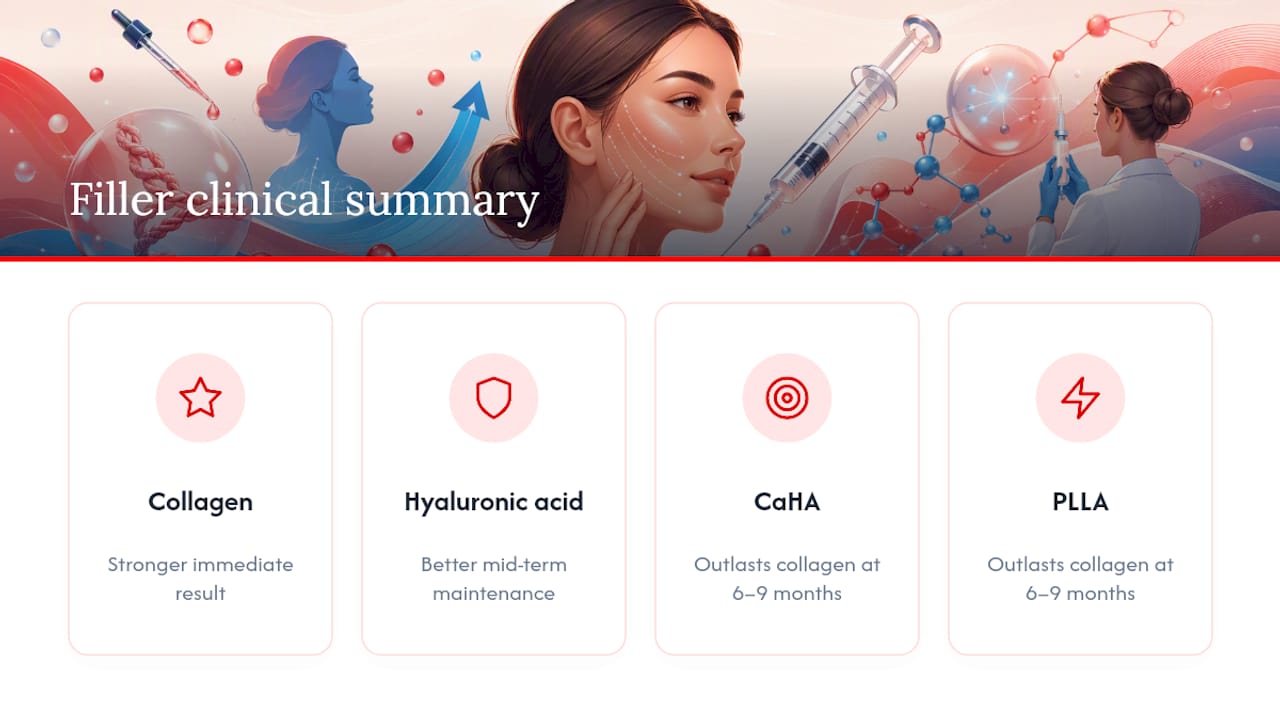
Where the evidence gets more nuanced is on the injectable side. A network meta-analysis comparing tissue fillers found that calcium hydroxylapatite, poly-L-lactic acid, and several hyaluronic acid fillers tend to outlast collagen fillers at the 6 to 9 month mark. Collagen fillers still earn their place, though. A prospective study comparing hyaluronic acid and collagen found collagen delivered stronger immediate results in the short term, while HA pulled ahead on maintenance by mid-term.
Worth flagging: Harvard Health has cautioned that many commercial collagen supplements blend in hyaluronic acid, vitamins, and other actives, which muddies exactly what’s driving the benefit. Read your ingredient label before assuming “collagen” is doing all the work.
How Do Topical Retinoids and Peptides Support Collagen?
Let’s clear up a common mix-up first: rubbing collagen onto your face doesn’t add collagen to your dermis. The molecule is far too large to penetrate skin’s outer layer, so any topical labeled “collagen cream” is mostly working on the surface, if it’s working at all.
What actually moves the needle are retinoids. A classic study on tretinoin and photodamaged skin showed substantial increases in collagen I formation, the exact protein that gives skin its bounce and structure. The catch is patience. Visible changes typically require at least 12 weeks of consistent use, sometimes longer for smile lines specifically since that skin sees constant movement.
A simple routine that respects both your skin and your patience:
- Morning: Vitamin C serum (optional), then broad-spectrum sunscreen, no exceptions.
- Evening: Cleanse, apply a pea-sized amount of retinoid, then a peptide-infused moisturizer to buffer irritation.
- Weekly: Watch for redness or flaking. If it’s intense, cut back to every other night for two weeks before resuming nightly use.
Pro Tip: Start retinoids two to three nights a week for the first month. Your skin needs time to build tolerance, and going full-strength too fast just leads to quitting out of frustration.
Should You Consider Fillers, Microneedling, or Lasers?
This is where results get faster and the stakes get a little higher.
Collagen fillers smooth nasolabial folds almost instantly. A randomized multicenter trial testing a cross-linked porcine dermal collagen injectable found meaningful correction with only transient, tolerable side effects. The trade-off: collagen fillers typically have a shorter duration of effect compared to HA or CaHA, often requiring maintenance treatments every few months. Anyone with a history of allergic reactions to animal-derived products should flag this during consultation, since older collagen fillers were bovine-sourced and required allergy testing beforehand.
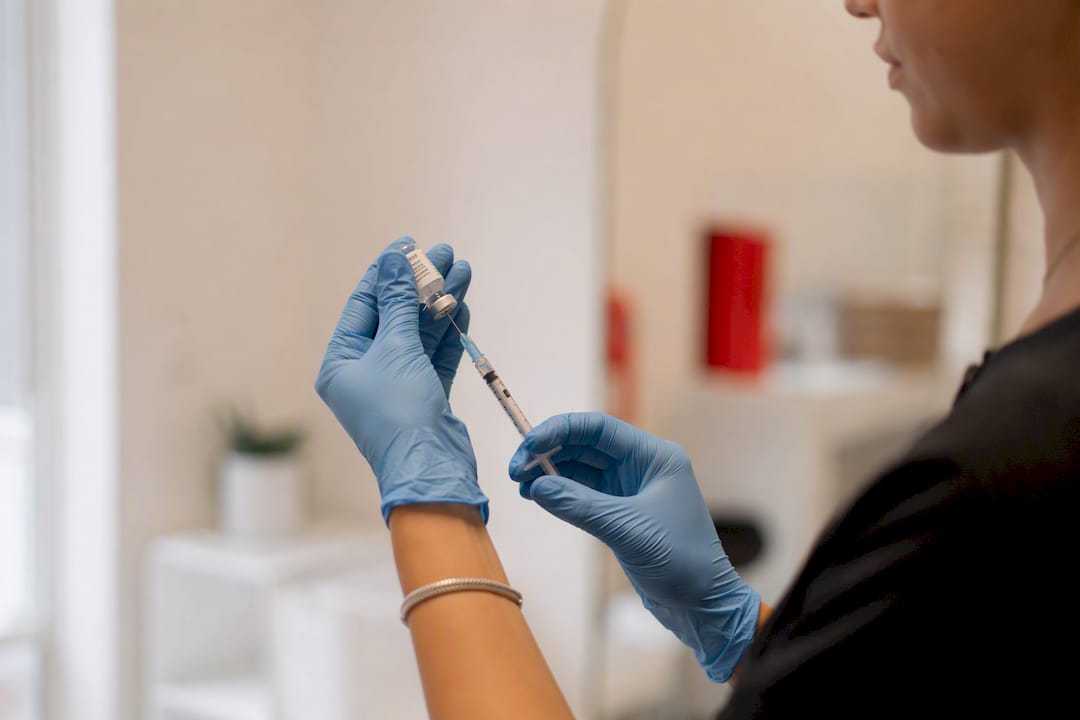
HA, CaHA, and PLLA fillers trade a bit of that immediate “wow” for staying power. HA fillers are the most common middle ground, typically lasting 6 to 12 months. CaHA (calcium hydroxylapatite) often extends further, and PLLA (poly-L-lactic acid) works differently entirely, stimulating your own collagen production gradually over months rather than filling space directly.
Collagen induction procedures, microneedling, radiofrequency, and certain laser treatments, create controlled micro-injuries that trigger your skin’s own repair response, prompting fibroblasts to lay down new collagen. Here’s the catch that surprises most people: results aren’t immediate. Expect visible improvement over 2 to 3 months as collagen remodels, with three or more sessions often needed for smile lines specifically. Recovery is typically mild, redness for a day or two with microneedling, slightly longer with more aggressive laser settings.
How Do You Choose the Right Approach for You?
Match your goal to the tool, not the other way around.
- Want to soften surface texture and prevent progression? Start with sunscreen, a retinoid, and possibly an oral collagen supplement.
- Want to restore lost volume you can see in the mirror right now? You’re likely looking at fillers.
- Want a middle path with gradual, natural-looking improvement? Collagen induction therapy (microneedling, RF, laser) fits that gap.
Before booking any procedure, ask your injector or dermatologist these questions:
- What are your credentials, and how many nasolabial fold procedures have you performed?
- Which specific product are you using, and how does it compare to alternatives?
- What’s the realistic timeline for results, and when should I expect to return for maintenance?
- What does aftercare look like, and what symptoms should prompt me to call you?
Watch for these red flags, too:
- A clinic pressuring you to decide same-day, especially for anything injectable.
- Before-and-after photos with no documented technique or product used.
- Vague answers about how they’d handle an adverse reaction.
What Actually Causes Smile Lines in the First Place?
Nasolabial folds aren’t a flaw. They’re a mechanical fact of aging skin meeting decades of facial movement.
Collagen production slows measurably starting in your mid-20s, and that decline accelerates after menopause for women. Less collagen means less structural support under the skin, so the tissue around your nose and mouth starts to fold rather than sit smooth.
Sun exposure speeds this up dramatically. UV rays break down existing collagen and interfere with new collagen synthesis, which is why people with heavy sun exposure often show deeper folds a decade earlier than their sun-cautious peers. Smoking compounds the damage by restricting blood flow to skin tissue and introducing chemicals that directly degrade collagen and elastin fibers.
Then there’s volume loss, a separate but related issue. Your face isn’t just skin over bone. It’s fat pads, cheek volume, and structural support that shift and shrink with age. As that padding drops, the skin above it has less to rest on, and nasolabial folds deepen simply from gravity doing its work on a less supported structure.
Genetics play a role too. Some people show deep smile lines in their 30s while others reach their 50s with minimal folding, largely tied to skin thickness, bone structure, and how much subcutaneous fat they carry to begin with.
Bovine, Porcine, or Synthetic: Do Filler Types Matter?
They matter more than most people realize before their first consultation.
Bovine-derived collagen was the original injectable filler type, and it required a mandatory skin test weeks before treatment because a small percentage of people react to animal-derived proteins. This type has largely fallen out of favor as newer options emerged, though it’s worth asking directly if a clinic still offers it.
Porcine-derived collagen is one step removed and generally triggers fewer allergic reactions than bovine sources, though it isn’t risk-free. The randomized multicenter trial on cross-linked porcine dermal collagen found it effective for nasolabial fold correction, with side effects that were transient rather than serious, things like temporary swelling or redness at the injection site.
Synthetic and bioengineered collagen options skip the animal-sourcing question entirely, which appeals to people with allergy concerns or dietary restrictions. These tend to be manufactured for more consistent cross-linking, which can affect how long the filler holds its shape under the skin.
The practical takeaway: always ask your injector the source material before treatment, not after. If you have any history of allergic reactions, animal product sensitivities, or autoimmune conditions, disclose this upfront so your provider can recommend an appropriate product or a patch test. This single conversation prevents the overwhelming majority of adverse reactions tied to filler source material.
What Are the Risks Worth Knowing About?
Every collagen-based approach carries some risk, and the level scales with how invasive the method is.
Oral collagen supplements carry the lowest risk profile for most healthy adults. Mild digestive upset is the most commonly reported issue, and people with fish, shellfish, or bovine allergies should check the collagen source carefully since reactions, while uncommon, do happen.
Topical retinoids come with a predictable, manageable set of side effects: redness, peeling, dryness, and increased sun sensitivity during the adjustment period. This is exactly why pairing a retinoid routine with daily sunscreen isn’t optional, it’s the difference between building collagen and accelerating the same UV damage you’re trying to reverse.
Injectable collagen fillers carry more serious, though still uncommon, risks. Beyond allergic reactions specific to animal-sourced products, patients should watch for bruising, asymmetry, lumping under the skin, and in rare cases, vascular occlusion, where filler accidentally compresses a blood vessel. This last complication is rare but requires immediate medical attention, which is exactly why credentials and injector experience matter as much as the product itself.
Collagen induction procedures like microneedling and laser treatments carry risks tied to skin type and technique, including hyperpigmentation in darker skin tones if settings aren’t properly calibrated, and infection risk if aftercare instructions aren’t followed closely.
Why Does Collagen Loss Show Up First Around Your Mouth?
Collagen makes up roughly 75 to 80% of your skin’s dry weight, forming the structural scaffolding that keeps skin firm, elastic, and resistant to folding. Think of it as the rebar in a concrete structure. Remove enough of it, and the whole structure starts to sag under its own weight.
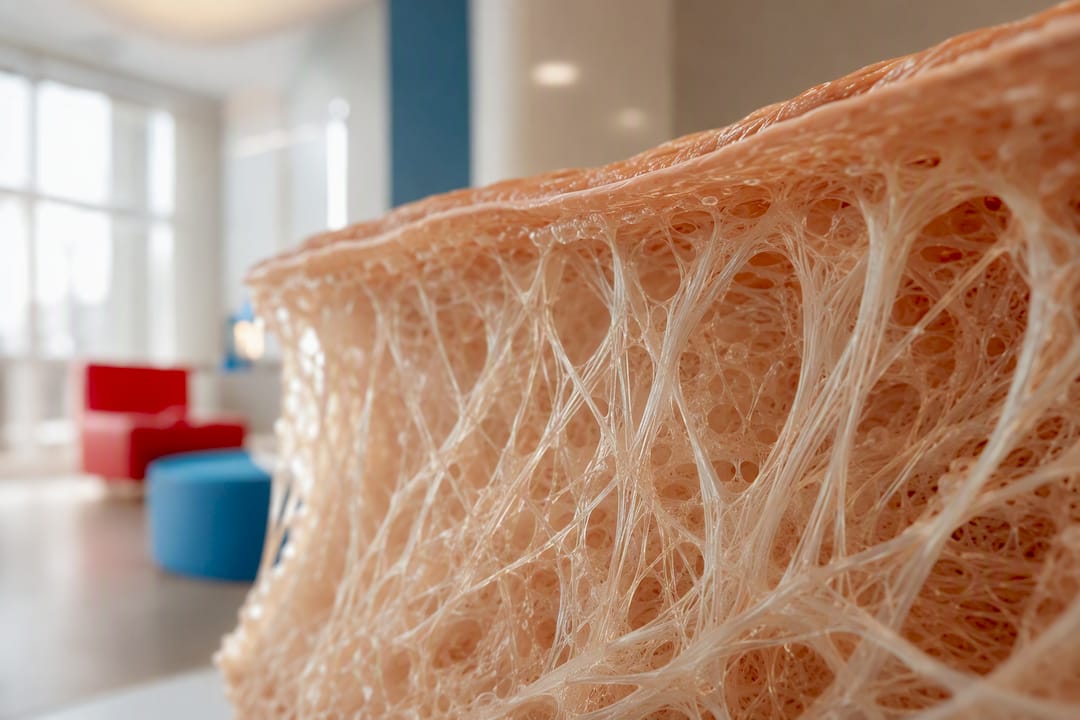
Your dermis contains a dense network of collagen fibers produced by cells called fibroblasts. In your 20s, this production runs at full capacity, constantly replacing old collagen with new. Past age 25, that replacement rate starts declining by roughly 1% per year, and the decline steepens further after menopause due to estrogen’s role in supporting fibroblast activity.
The nasolabial area is particularly vulnerable because it sits at the intersection of near-constant muscle movement (talking, smiling, chewing) and comparatively thin skin with less underlying fat than the cheeks. Every repetition of that movement, multiplied across decades, creates a permanent crease once collagen support beneath it thins out. This is also why smile lines appear years before forehead lines flatten out or crow’s feet fully set in for some people. It’s a matter of which skin structure loses support first.
What I’d Actually Do About My Own Smile Lines
Honestly? I’d start with sunscreen and a retinoid, since that combination has the deepest evidence behind it. I’d add an oral collagen supplement as a supportive layer, not a replacement, and give it the full 12 weeks before judging results. If volume loss is the real issue, a consult with a credentialed injector beats guessing every time.
Where a Daily Collagen Peptide Fits Into Your Routine
If you’re building a smile-line strategy from the inside out, an oral peptide supplement is the piece most people skip, and it’s the one with a genuine 12-week evidence trail behind it.

Fromwithin’s collagen peptides are formulated around the same 10-gram daily benchmark seen in recent trials tied to visible improvements in wrinkle count and skin elasticity. The patented Wellnex® peptides are designed for direct bloodstream absorption, which matters given how much of the collagen supplement market gets diluted with filler ingredients that confound results. Use it consistently for at least 8 to 12 weeks alongside your morning sunscreen and nightly retinoid, and if you’re already planning an injectable procedure, mention your supplement routine to your clinician beforehand just so everyone’s on the same page. For a closer look at how peptide profiles differ across products, our guide to choosing the right collagen supplement breaks down what to check on a label. Ready to start? Browse the collagen collection and pick the option that matches your routine.
Frequently Asked Questions
Does collagen for smile lines actually work, or is it mostly marketing? It works, but expectations need calibrating by method. Topical retinoids and oral peptides show measurable improvement in clinical trials, typically over 8 to 12 weeks, while injectables deliver faster, more dramatic correction. None reverses folds permanently on their own.
How long before I see results from oral collagen supplements? Most trial evidence points to meaningful change around 12 weeks, with a foundational meta-analysis showing benefits at roughly 90 days of consistent use. Give any supplement a full quarter before deciding if it’s working for you.
Are collagen fillers better than hyaluronic acid for nasolabial folds? It depends on your priority. Collagen fillers tend to deliver stronger immediate results, while HA fillers generally hold up longer past the 6-month mark. Your injector can help match the choice to your goals and budget.
Can I combine oral collagen supplements with filler injections? Generally yes, but mention your supplement routine to your injector during consultation. There’s no known conflict, but your clinician should have the full picture of what you’re taking.
What’s the fastest natural way to reduce smile lines without injections? Daily broad-spectrum sunscreen paired with a consistent retinoid routine is the best-supported non-invasive combination. Add an oral collagen peptide supplement for additional support over a 12-week trial period.
Sources
- Meta-analysis on hydrolyzed collagen and skin outcomes
- Immune-modulatory effects of bioactive collagen peptides improve skin health in middle-aged women (2026)
- Tretinoin increases collagen production in photodamaged skin (classic study)
