

on August 28, 2026

Collagen peptide drinks reliably improve one thing best: skin hydration and elasticity, with modest wrinkle reduction showing up in clinical trials after roughly two to three months of daily use. Joint comfort improves in some people, bone density gains appear in specific populations over a year of use, and muscle support only shows up when paired with resistance training. The effects are real but gentle, evidence quality varies by outcome, and many products blend in other actives that muddy the picture.
TL;DR:
- Collagen drinks show the most consistent skin benefits after about three months of daily use, especially when combined with vitamin C or hyaluronic acid.
- Benefits for joints and bones are less certain, with improved outcomes mainly seen in active or postmenopausal adults taking around 5 to 10 grams daily over several months.
- Absorption relies on hydrolyzed collagen peptides, with most research suggesting 2.5 to 10 grams daily for skin and around 10 grams for joint support, requiring 8 to 12 weeks to see significant results.
- Treatment effectiveness is enhanced when combined with resistance exercise, and personal tracking of hydration, texture, and symptoms over months offers clearer insight than day-to-day changes.
- Choosing a high-quality product involves verifying the peptide dose per serving, source, label transparency, and avoiding excess sugar or fillers for optimal results.
Table of Contents
- Collagen Peptide Drink Benefits for Skin: What the Studies Show
- What Research Shows About Joints, Bones, and Muscle
- How Collagen Peptides Work and How Much You Actually Need
- Who Benefits Most, and When to Talk to a Doctor First
- How to Choose a Quality Collagen Peptide Drink
- How Fromwithin’s Formulation Reflects the Research
- Why I’d Temper the Hype Without Dismissing the Science
- Try a Collagen Drink Built Around the Research, Not Around Hype
- Sources
Collagen Peptide Drink Benefits for Skin: What the Studies Show
Here’s the part that actually holds up under scrutiny: a systematic review and meta-analysis pooling multiple randomized trials found that oral collagen supplementation improves skin elasticity and hydration while reducing wrinkle depth. That’s not one small study with a hopeful conclusion. It’s a pattern across trials, which is about as close to a settled answer as supplement science gets.
The doses that showed results in these trials typically ranged from low to moderate daily amounts, and duration mattered more than most people expect.
- Most trials ran 8 to 12 weeks as a minimum window before measuring changes
- Clearer, more consistent results tended to show up closer to the 3-month mark
- Skin hydration often improved before visible elasticity changes appeared
Here’s a number worth sitting with: trials generally needed at least 8 weeks of daily use before differences became measurable, and Harvard Health notes that visible improvements typically take 3 to 6 months, not days.
There’s a catch, though, and it’s one the marketing rarely mentions. Many of the trials showing skin benefits used products that also contained vitamin C or hyaluronic acid alongside the collagen peptides, which makes it genuinely hard to isolate collagen’s individual contribution. If you’re trying to figure out whether a collagen drink actually helped your skin, track hydration and texture with photos every two weeks rather than relying on memory. Skin changes gradually enough that day-to-day comparisons rarely register.

What Research Shows About Joints, Bones, and Muscle
Joint and bone outcomes tell a more mixed story than skin does, mostly because the populations studied and the doses used vary so widely.
- Active adults using around 10 grams per day for six to nine months reported improvements in joint pain and stiffness, particularly during or after physical activity
- Postmenopausal women taking 5 grams daily for a full year showed increased bone mineral density in randomized trials, a meaningful finding given how hard bone loss is to reverse with lifestyle changes alone
- Pooled data on body composition found modest gains in lean mass and reductions in body fat, but almost always in studies where participants combined collagen with resistance training
That last point matters. Collagen peptides alone don’t build muscle. They appear to support the structural tissue, tendons and cartilage, that muscle relies on, so the strength gains show up when you’re already lifting or training consistently. The bone and joint studies also tend to run smaller sample sizes than we’d like, and some carry funding ties to supplement manufacturers, so treat the findings as promising rather than definitive.
How Collagen Peptides Work and How Much You Actually Need
Whole collagen molecules are too large for your gut to absorb efficiently. That’s why virtually every collagen drink on the market uses hydrolyzed collagen, meaning the protein has been broken down into smaller peptides and free amino acids that your digestive system can actually take up. Once absorbed, these peptides circulate and appear to signal your body to ramp up its own collagen production, rather than being deposited directly into your skin or joints like a patch.
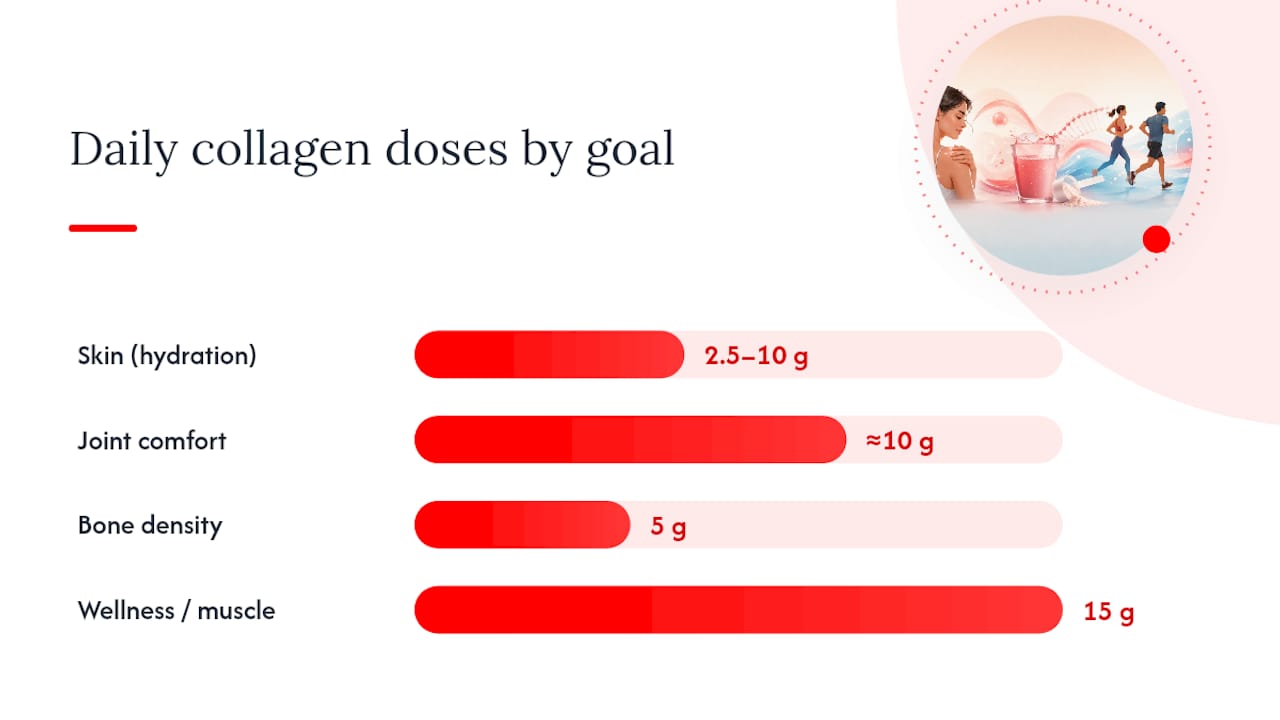
Doses in research vary by what you’re targeting:
- Skin outcomes: 2.5 to 10 grams daily, tested across most of the trials showing hydration and elasticity gains
- Joint comfort: around 10 grams daily in active adults, or much smaller doses (milligram-range) for undenatured type II collagen specifically
- Bone density: 5 grams daily, but only tested over a full 12-month period
- General wellness or muscle support: often 15 grams daily, paired with resistance training
Give it at least 8 to 12 weeks before judging results, and don’t be surprised if the clearest changes show up closer to month three or four.
Pro Tip: Take your collagen drink at the same time every day, whether that’s in your morning coffee or a smoothie, so it becomes a habit you don’t have to think about. Consistency matters more than timing.
Who Benefits Most, and When to Talk to a Doctor First
Collagen peptide drinks tend to help specific people more than others. Adults noticing skin dryness or loss of bounce, people managing mild joint wear from age or activity, and active adults already doing resistance training are the groups where the evidence is strongest.
Safety-wise, the profile is generally favorable, but a few things deserve attention:
- Mild digestive side effects like bloating or a feeling of fullness show up occasionally, especially at higher doses
- If you have a shellfish or fish allergy, check whether your product uses marine-sourced collagen rather than bovine or chicken
- People with kidney disease should talk to a doctor before adding extra protein load from any supplement, collagen included
- Supplements aren’t medical treatments. If joint pain, skin changes, or fatigue persist or worsen, that’s a conversation for a clinician, not a bigger dose
Track how you feel over the first month. If you notice no change by month three and no digestive issues, it’s reasonable to stop and reassess rather than continuing indefinitely.
How to Choose a Quality Collagen Peptide Drink
Not all collagen drinks are built the same, and the label tells you most of what you need to know before you buy.
- Check the peptide dose per serving. It should land somewhere in the 2.5 to 15 gram range depending on your goal, and it should be listed clearly, not buried in a proprietary blend.
- Look for “hydrolyzed collagen” or “collagen peptides” on the label. This confirms it’s in the absorbable form research actually tested.
- Note the source. Marine, bovine, and chicken collagen all show benefits in trials, but source matters for allergies and dietary preferences.
- Scan for excess sugar or filler ingredients. A quality drink shouldn’t need a sugar rush to be palatable.
- Consider added actives like vitamin C, which supports your body’s own collagen synthesis, or hyaluronic acid, which may contribute to hydration, though it complicates knowing exactly what’s driving results.
Pro Tip: Mix your collagen drink into something you already drink daily, like your morning coffee or an afternoon smoothie, and store it somewhere visible. The best collagen drink is the one you’ll actually finish the bottle of.
Give any product a full 3-month trial before deciding it isn’t working. That’s the window where the research consistently shows the clearest results.
How Fromwithin’s Formulation Reflects the Research
Fromwithin builds its collagen drinks around the same principles the research points to: hydrolyzed peptides for absorption, transparent per-serving dosing, and formulations designed with skin elasticity outcomes in mind.
- Wellnex® peptides are patented and designed for direct bloodstream absorption, aligning with why hydrolyzed forms outperform whole collagen in trials
- Per-serving doses are stated plainly on the label, not hidden in a proprietary blend
Why I’d Temper the Hype Without Dismissing the Science
People want collagen to be a shortcut, and I understand the appeal of a drink that promises tighter skin and quieter joints. The honest read is that benefits are real but gradual, and they work best as one piece of a broader routine. Sunscreen and topical retinoids still do more for visible skin aging than any oral supplement, and resistance training remains the strongest lever for joint and muscle health. Track your own results over months, not days, and loop in a doctor if something persistent doesn’t budge.
— From
Try a Collagen Drink Built Around the Research, Not Around Hype
Fromwithin’s approach skips the proprietary-blend guessing game that makes so many collagen drinks hard to evaluate against the research you just read. The Collagen Peptides Glow Booster states its per-serving peptide dose plainly and uses Wellnex® peptides formulated for bloodstream absorption, the same absorption principle that makes hydrolyzed collagen the standard in clinical trials.

If you’re ready to give collagen an honest 3-month trial, start by checking Fromwithin’s collagen collection for serving sizes and subscription options, or read more about the formulation on the collagen product page before you commit to a bottle.
Sources
- Effects of Oral Collagen for Skin Anti-Aging
- Considering collagen drinks and supplements? (Harvard Health)
This article is general information, not a substitute for advice from a qualified doctor. Consult a qualified healthcare professional about your own circumstances before acting on anything here.
