

on July 13, 2026

Sleep directly improves skin appearance by activating collagen synthesis, cellular repair, and barrier restoration during the night. These are not passive processes. Your skin runs on a biological clock, and the hours you spend asleep are when that clock does its most important work. Understanding why sleep improves skin appearance goes beyond the idea of “beauty sleep” as a cliché. It is a measurable, hormonal, and cellular reality. This article breaks down the science in plain terms, so you can make smarter choices for your complexion starting tonight.
What biological processes happen in the skin during sleep?
Beauty sleep is scientifically valid because skin repair is synchronized with sleep-driven hormonal cycles. Your skin has its own peripheral molecular clock, a biological timer that controls cell division, collagen production, and barrier function. This clock runs independently but stays synchronized with your brain’s circadian rhythm.
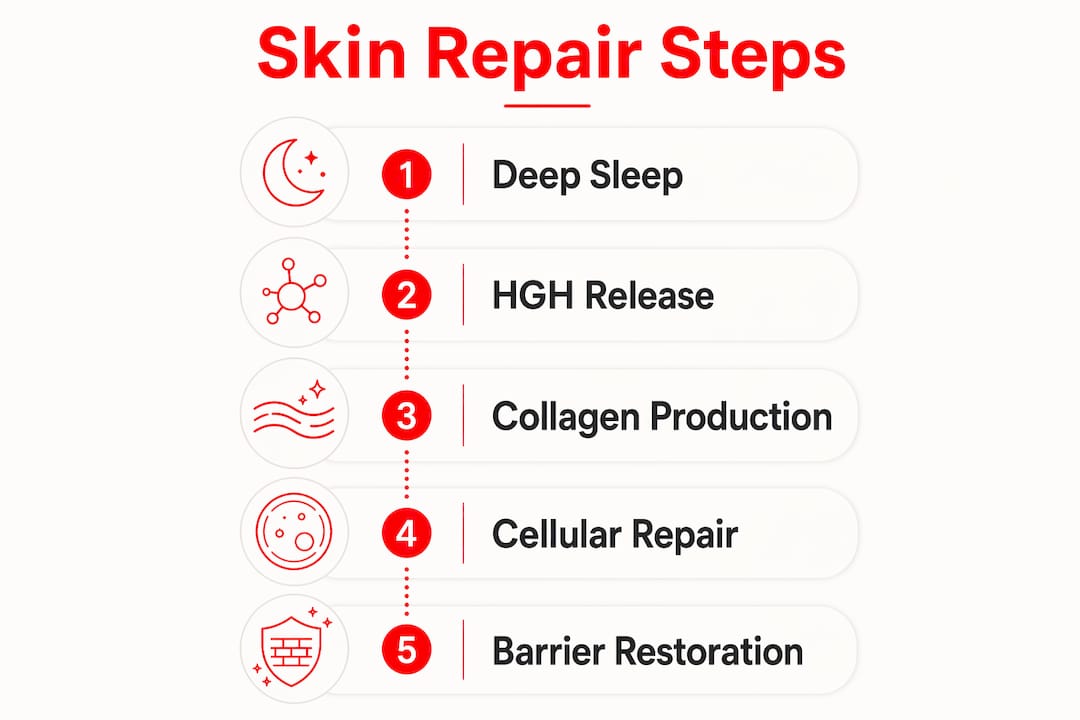
During deep, slow-wave sleep, the pituitary gland releases human growth hormone (HGH). HGH stimulates fibroblasts, the cells responsible for producing collagen and elastin. Peak collagen synthesis and DNA repair occur specifically during these deep sleep stages. That timing is not a coincidence. It is your body’s most efficient repair window.
Several key processes run simultaneously during this window:
- Collagen synthesis: Fibroblasts produce new collagen fibers, maintaining skin firmness and reducing fine lines.
- DNA repair: Enzymes peak overnight to fix UV-induced DNA damage accumulated during the day.
- Antioxidant defense: Skin cell melatonin neutralizes free radicals, reducing oxidative stress that accelerates aging.
- Barrier restoration: The skin’s outer layer rebuilds its lipid structure, reducing water loss and improving hydration.
- Reduced inflammation: Cortisol drops during healthy sleep, allowing anti-inflammatory repair to proceed without interference.
Pro Tip: Apply your most active nighttime skincare products right before bed, not hours earlier. Your skin’s repair processes ramp up as you fall into deeper sleep stages, so timing matters.
Each of these processes depends on uninterrupted, quality sleep. Skipping even one or two nights disrupts the hormonal signals that trigger them.
How does poor sleep accelerate skin aging?
Poor sleep does not just make you look tired in the morning. It actively degrades your skin’s structure over time. Elevated cortisol from poor sleep degrades collagen and promotes excess sebum production, accelerating visible skin aging. Cortisol also suppresses fibroblast activity, meaning your skin produces less collagen precisely when it needs more.
Sleeping less than 6 hours correlates with lower ceramide production and higher levels of inflammatory cytokines IL-6 and TNF-α. Ceramides are the lipids that hold your skin barrier together. Without them, moisture escapes, and irritants enter more easily. The result is drier, more reactive skin that looks dull and feels rough.
The visible signs of sleep-deprived skin are well documented:
- Dark circles and puffiness: Poor circulation and fluid retention concentrate around the eyes.
- Dull complexion: Reduced cell turnover leaves dead skin cells on the surface longer.
- Fine lines: Dehydration and collagen loss make existing lines more visible.
- Uneven skin tone: Impaired repair leaves pigmentation inconsistencies unaddressed.
- Increased breakouts: Excess sebum and inflammation create conditions where acne thrives.
Chronic poor sleep elevates cortisol persistently, driving ongoing skin inflammation and collagen loss. This is not a short-term problem. Cumulative sleep debt causes irreversible structural collagen damage that topical skincare alone cannot fix. That is a sobering fact worth sitting with.
What practical steps align sleep habits with skin repair?
The good news is that your skin responds quickly to improved sleep. Consistency is the key variable. Here is how to build habits that support your skin’s natural repair cycle:
-
Keep a fixed sleep schedule. Irregular sleep timing causes “epidermal jet lag,” disrupting collagen production and DNA repair cycles even when total sleep hours are adequate. Go to bed and wake up at the same time every day, including weekends.
-
Cut blue light exposure 60–90 minutes before bed. Blue light from screens suppresses melatonin production. Less melatonin means lighter, more fragmented sleep and less antioxidant protection for your skin overnight.
-
Cool your bedroom to 65–68°F. Core body temperature drops during deep sleep. A cooler room supports that drop, helping you reach the slow-wave sleep stages where HGH and collagen synthesis peak.
-
Cleanse gently before bed. Removing sunscreen, makeup, and pollutants lets your skin barrier focus on repair rather than fighting surface debris. Follow with a hydrating moisturizer to reduce overnight water loss.
-
Add a relaxation practice to your evening. Stress raises cortisol. A 10-minute wind-down routine, whether that is light stretching, breathing exercises, or reading, lowers cortisol before sleep and protects your skin’s repair environment. Fromwithin’s guide to simple bedtime relaxation steps is a practical starting point.
Pro Tip: Silk or satin pillowcases reduce friction on your skin and absorb less moisture than cotton. It is a small change that genuinely supports overnight hydration.
How does your nighttime skincare routine work with sleep?
Your skincare products work harder when your skin is asleep. Skin permeability peaks between midnight and 4 AM, meaning active ingredients absorb more effectively during this nocturnal window. That is why nighttime formulas often contain higher concentrations of actives than daytime products.
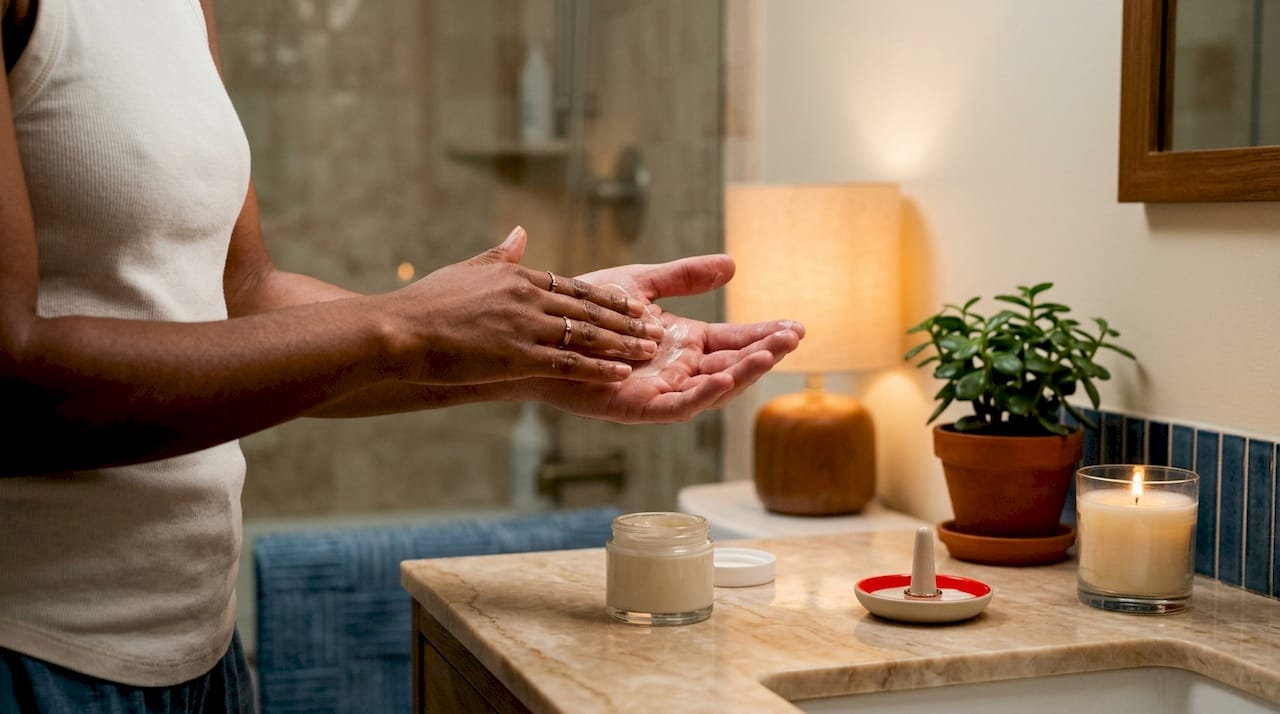
Retinoids, peptides, and AHAs all align well with the skin’s overnight repair cycle. Retinoids accelerate cell turnover, which peaks at night. Peptides signal fibroblasts to produce more collagen and elastin, complementing the HGH-driven synthesis already underway. Hydrating ingredients like hyaluronic acid and ceramides combat the water loss that naturally increases while you sleep.
Here is how product timing and sleep quality interact:
| Skincare factor | With quality sleep | With poor sleep |
|---|---|---|
| Active ingredient absorption | High, barrier permeability peaks overnight | Reduced, barrier function impaired |
| Collagen support from peptides | Amplified by HGH-driven fibroblast activity | Blunted by elevated cortisol |
| Hydration retention | Supported by restored ceramide production | Compromised by lower ceramide levels |
| Cell turnover from retinoids | Synchronized with natural overnight renewal | Disrupted by irregular circadian signaling |
The takeaway is clear. Even the best nighttime serum delivers less when your sleep is poor. Holistic skincare requires prioritizing regular sleep to harness these natural repair windows. Topical care and sleep are partners, not substitutes for each other.
What visible signs tell you sleep is helping or hurting your skin?
Your skin gives you honest feedback about your sleep quality. Blinded studies show sleep-deprived individuals are consistently rated as less healthy and less attractive by outside observers. That is not subjective. It is a measurable, reproducible finding.
The signs of sleep-deprived skin are visible and specific:
- Grayish or sallow complexion from reduced circulation and slower cell turnover
- Swollen under-eye area from fluid that pools when lymphatic drainage slows overnight
- Deeper-looking fine lines caused by dehydration and reduced collagen density
- Blotchy or uneven skin tone from unresolved pigmentation and inflammation
Recovery from a single bad night takes more than one good night. Skin lightness, pigmentation, and transparency changes can persist beyond 14 days after acute sleep deprivation. That means the effects accumulate faster than they resolve.
Good sleep, maintained consistently over weeks, produces the opposite: a brighter, more even complexion, firmer texture, and skin that holds its moisture through the day. These are not cosmetic illusions. They reflect genuine structural improvements in collagen density and barrier integrity.
Knowing what to look for helps you connect your habits to your results. If your skin looks dull on Monday morning, your weekend sleep pattern is worth examining.
Key Takeaways
Sleep is the single most underused skin repair tool available, and no topical product fully compensates for its absence.
| Point | Details |
|---|---|
| Sleep triggers collagen production | HGH released during deep sleep activates fibroblasts to synthesize collagen and repair skin structure. |
| Poor sleep degrades skin fast | Under 6 hours of sleep lowers ceramide production and raises inflammatory cytokines, impairing the skin barrier. |
| Timing consistency matters | Irregular sleep schedules cause “epidermal jet lag,” disrupting repair cycles even when total hours are sufficient. |
| Nighttime absorption peaks | Skin permeability is highest between midnight and 4 AM, making nighttime skincare significantly more effective. |
| Sleep debt has lasting effects | Skin changes from sleep deprivation can persist beyond 14 days, and cumulative collagen damage may be irreversible. |
Why I think sleep is the most underrated skincare step
I’ve spent years paying close attention to what actually moves the needle for skin health, and the honest answer keeps coming back to sleep. Not the latest serum. Not a new ingredient. Sleep.
What surprises most people is that duration alone is not the full story. You can sleep 8 hours on an irregular schedule and still show signs of “epidermal jet lag.” The timing and consistency of sleep matter as much as the total hours. That insight changed how I think about skin routines entirely.
The other thing I’ve noticed is how quickly people give up on sleep as a strategy because the results feel invisible at first. Collagen rebuilds slowly. Barrier function improves gradually. But after three to four weeks of consistent, quality sleep, the difference in skin texture and tone becomes undeniable. Patience is the skill most skincare routines are missing.
I also think the stress piece is wildly underappreciated. Cortisol is the enemy of good skin, and most people manage it with topical products rather than addressing the root cause. A calmer evening routine, less screen time, and a consistent bedtime do more for collagen preservation than most creams on the market. That is not an opinion. It is what the biology shows.
If you are serious about your skin, treat sleep like the non-negotiable it is. Everything else builds on top of it.
— From
Supporting your skin from the inside out with Fromwithin
Good sleep and good skincare work best when your body has the raw materials it needs to repair overnight.

Fromwithin’s collagen supplements are built around patented Wellnex® peptides that absorb directly into the bloodstream, giving your fibroblasts the building blocks they need during those peak overnight repair hours. Pair that with Fromwithin’s sleep aid, designed to support natural relaxation and deeper sleep stages without dependence on prescription medications. Together, they address both sides of the equation: the quality of your sleep and the quality of your skin’s repair. If you want skin that genuinely reflects how well you care for yourself, starting from within is the approach that makes sense.
FAQ
Why does sleep improve skin appearance?
Sleep triggers the release of human growth hormone, which stimulates collagen production and cellular repair. These processes restore skin firmness, hydration, and tone overnight.
How many hours of sleep does skin need to repair?
Sleeping less than 6 hours impairs ceramide production and raises inflammatory markers that damage the skin barrier. Most adults need 7–9 hours for full skin repair cycles to complete.
Can poor sleep permanently damage skin?
Cumulative sleep debt can cause irreversible structural collagen damage that topical skincare cannot reverse. Skin changes from acute sleep deprivation can also persist for more than 14 days.
Does sleep timing matter as much as sleep duration?
Yes. Irregular sleep schedules cause “epidermal jet lag,” disrupting collagen synthesis and DNA repair even when total sleep hours are adequate. Consistent timing is as important as total duration.
What skincare products work best during sleep?
Retinoids, peptides, and ceramide-rich moisturizers align best with overnight repair cycles. Skin permeability peaks between midnight and 4 AM, so these actives absorb more effectively during that window.
