

on September 09, 2026

Yes, you can add hydrolyzed collagen peptides to hot or cold tea. The peptides are heat-stable, so typical brewing temperatures won’t break them down or block absorption. The real questions worth your attention are dose and label transparency: look for a product like From Within’s Collagen Peptides Glow Booster that lists actual grams of hydrolyzed collagen per serving, not a sprinkle for show.
TL;DR:
- Effective collagen absorption requires at least 2.5 to 5 grams per serving, with 10 to 20 grams daily being optimal for skin benefits.
- Normal tea brewing temperatures do not damage hydrolyzed collagen peptides, making it safe to add powder to hot or cold tea.
- Many commercial collagen teas contain little or no actual collagen, so label transparency on dose and source is essential for efficacy.
- Combining collagen with polyphenol-rich teas like green or matcha may enhance skin protection without interfering with peptide absorption.
- Consistent daily intake over two to three months, paired with vitamin C, is key to seeing noticeable improvements in skin elasticity and hydration.
Table of Contents
- What Is Collagen Tea, and Does Heat Ruin the Peptides?
- What Does the Research Actually Show About Collagen and Skin?
- Which Teas Pair Best With Collagen?
- How Do You Mix Collagen Into Tea Without Clumps?
- How Much Collagen Should You Take, and When?
- What Should You Know Before Mixing Collagen With Tea?
- How Does From Within’s Collagen Fit This Ritual?
- Building a Realistic Collagen Tea Habit
- Add Collagen Peptides Glow Booster to Your Daily Tea Ritual
- Sources
What Is Collagen Tea, and Does Heat Ruin the Peptides?
Collagen tea means two very different things depending on who’s selling it. One version is real: you stir hydrolyzed collagen peptides, an unflavored or lightly flavored powder, into a cup of tea you already brew. The other version is a marketing label slapped on a tea blend that contains a token amount of collagen, or none at all, riding on the ingredient’s popularity without delivering a functional dose.
The peptides themselves handle heat well. Hydrolyzed collagen has already been broken down into shorter amino acid chains through a process that makes it dissolve easily in liquid, and that same structure means normal tea and coffee brewing temperatures do not destroy the peptides or reduce their absorbability. You’re not cooking a raw protein that denatures into uselessness. You’re dissolving something that was engineered to dissolve.
So how do you tell a real collagen tea from a symbolic one? Read the nutrition label, not the front of the box. Here’s what to check:
- Grams of protein per serving. Anything under 2.5 to 5 grams is closer to a garnish than a dose.
- The word “hydrolyzed.” Collagen peptides, gelatin, and unhydrolyzed collagen behave differently in liquid; hydrolyzed is what dissolves cleanly and absorbs well.
- Type I or Type III listed explicitly. These are the collagen types most studied for skin and joint support.
- Source disclosure. Bovine, marine, or porcine should be stated, not implied.
Category scans of commercial “collagen teas” have found that many contain little or no actual collagen peptides, leaning on the word “collagen” in the name while the nutrition facts panel shows zero grams of protein. That’s the gap between a wellness trend and a wellness ingredient. If you want the benefit, you need the dose, and the dose is only visible on the label.
What Does the Research Actually Show About Collagen and Skin?
The most consistent finding across human trials is straightforward: daily oral collagen peptide doses in a moderate range commonly used in research, taken regularly over multiple weeks, correlate with measurable improvements in skin elasticity and hydration. A systematic review of dermatological outcomes found this pattern repeated across multiple controlled trials, not as a one-off result from a single study.
That timeline matters more than most people expect. Collagen doesn’t work like a moisturizer, where you can see a difference in an hour. Your body needs weeks to build new collagen fibers using the amino acids you’ve supplied, and the visible payoff (plumper, more elastic skin) shows up gradually as old collagen gets replaced.
The numbers that matter: trials showing skin benefit generally use 10 to 20 grams of hydrolyzed collagen daily, sustained for at least two to three months, which is longer than most people give a new supplement before deciding whether it “works.”
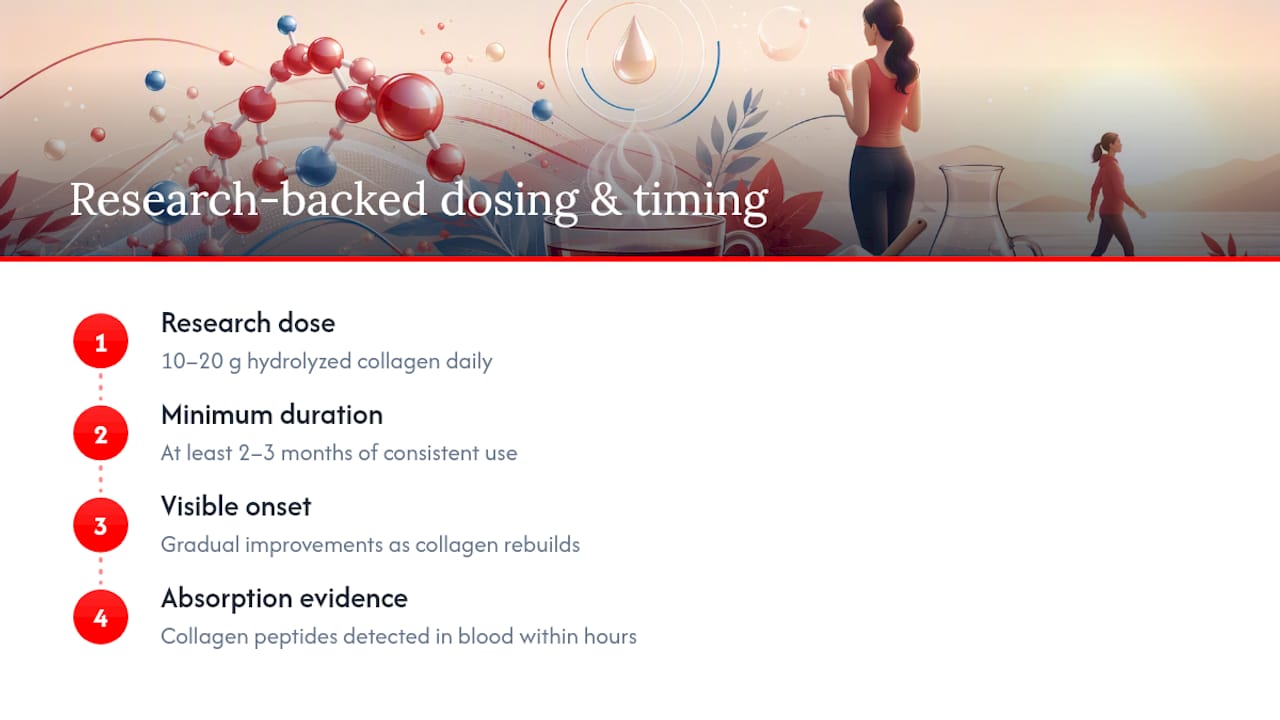
There’s also a bioavailability question worth settling directly, because skeptics raise it often: does the collagen you drink actually get absorbed, or does your gut just break it down into generic amino acids like any other protein? Labeled-peptide studies have traced collagen-derived peptides showing up in human blood within a couple of hours after oral ingestion, which tells us these specific peptide fragments survive digestion intact enough to circulate, not just get reduced to a generic amino acid pool.
None of this changes based on whether you take your collagen in tea, water, or a smoothie. What changes outcomes is dose consistency over time, not the vehicle you dissolve it in. If you skip days or you’re using a product with 2 grams per scoop, tea won’t compensate for either problem.
Which Teas Pair Best With Collagen?
Almost any tea works chemically. The differences between green, black, white, matcha, and herbal are about taste, caffeine, and what each one brings to your skin routine beyond the collagen itself, not about whether they interfere with peptide absorption.
Tea options and how they stack up:
- Green tea brings EGCG, a polyphenol studied for its role in protecting existing collagen from breakdown, plus a mild grassy flavor that blends cleanly with unflavored collagen powder.
- Matcha delivers a concentrated dose of the same catechins in a thicker, creamier base, which also happens to mask the slight chalkiness some collagen powders have.
- Black tea has a bolder, more tannic profile, good for readers who want something that tastes like a “real” cup rather than a wellness drink.
- White tea is the mildest of the true teas, minimally processed, and a good pick if you want the polyphenol benefits without a strong flavor fighting your collagen.
- Herbal blends (rooibos, chamomile, hibiscus) contain no caffeine, which makes them the natural choice for an evening collagen ritual.
A myth worth killing outright: tannins and caffeine do not cancel out collagen peptides. There’s no published clinical evidence that normal tea caffeine levels block peptide absorption. The idea that your afternoon oolong is sabotaging your supplement doesn’t hold up against the research. Tannins can modestly reduce iron absorption from food, which matters if you’re anemic, but that’s a separate issue from collagen peptide uptake entirely.
Think of it as a two-part strategy: tea polyphenols help protect the collagen you already have, while the peptides you’re drinking supply raw material for new collagen. One plays defense, the other plays offense, and both work better together than either does alone.
Pro Tip: If you’re taste-sensitive to collagen powder, matcha and chai are your best cover. The bold, slightly bitter flavor profile hides any aftertaste far better than a delicate white tea does.
How Do You Mix Collagen Into Tea Without Clumps?
Getting a smooth cup comes down to technique, not luck. Collagen powder clumps when it hits hot liquid all at once and the outer layer gelatinizes before the rest can dissolve. Fix the sequence, and you fix the texture.
For hot tea:
- Brew your tea first and let it sit for a minute so it’s hot, not boiling.
- Make a small slurry: mix your collagen scoop with a splash of cool water or milk in your mug until it’s a smooth paste.
- Pour the hot tea over the slurry slowly, stirring as you pour rather than dumping it in and stirring after.
- If clumps persist, a small milk frother (the handheld kind) breaks them up in seconds.
For iced tea: the slurry method matters even more, since cold liquid dissolves powder more reluctantly than hot. Mix your collagen with a small amount of warm water first, then pour that mixture into your iced tea and stir well before adding ice.
For matcha: whisk your matcha powder with hot water first using a bamboo whisk or frother until it’s frothy, then whisk in the collagen slurry afterward. Adding collagen before whisking the matcha tends to leave gritty patches.
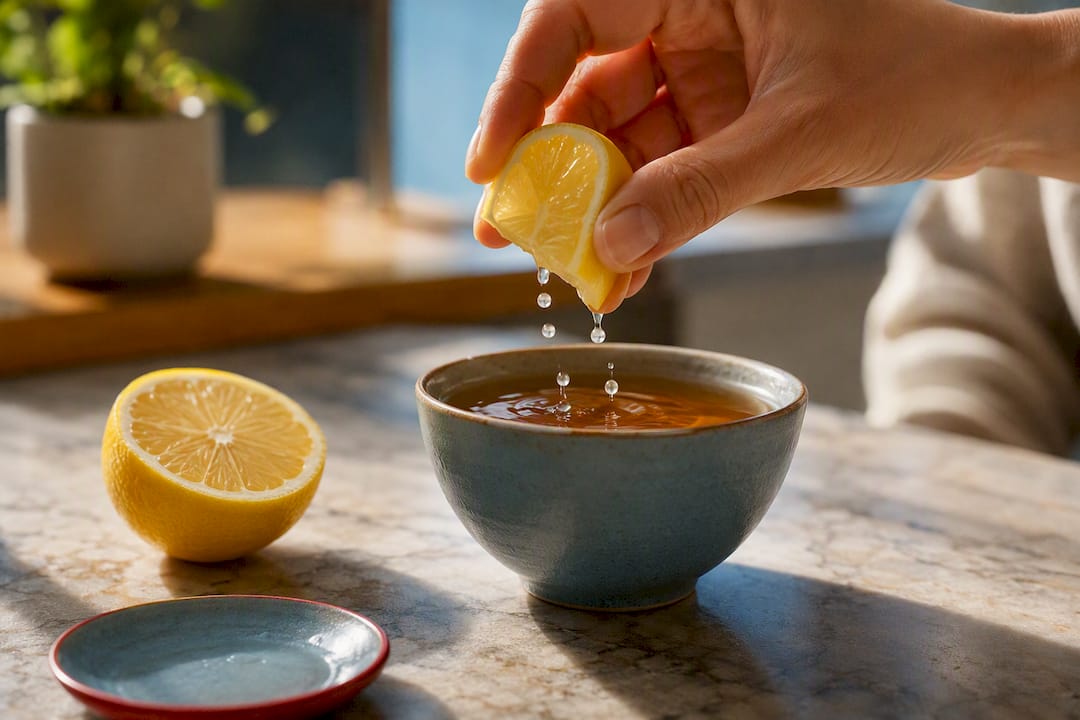
If you like to add lemon for a vitamin C boost, which supports your body’s own collagen production, wait until your tea has cooled for a minute or two before squeezing it in. Vitamin C is heat-sensitive, and adding it straight into a boiling cup degrades more of it than adding it once the temperature drops slightly.
Milk and creamer change the mouthfeel more than they change the chemistry. Full-fat milk masks collagen’s texture better than oat or almond milk, which can occasionally separate slightly when combined with both hot liquid and protein powder.
Four recipes to try:
- Morning matcha glow latte: matcha, hot water, unflavored collagen slurry, splash of oat milk.
- Iced green tea refresher: brewed and cooled green tea, collagen slurry, a squeeze of lemon added after cooling, ice.
- Evening chamomile wind-down: chamomile tea, collagen slurry, optional honey.
- Chai collagen latte: brewed chai, collagen slurry, milk of choice, cinnamon on top.
How Much Collagen Should You Take, and When?
Most of the clinical benefit tracks back to a 10 to 20 gram daily dose, and in practice that usually means one full scoop of a quality powder stirred into your mug, or a split dose (half in morning tea, half in an evening cup) if you prefer smaller amounts throughout the day.
Timing depends on your goal more than any biological rule about tea specifically:
- Pre-workout or midday, if your priority is tendon and ligament support alongside movement or training.
- Evening, if you’re drawn to collagen partly for its association with glycine, an amino acid present in collagen that’s linked to relaxation and sleep support, which pairs naturally with an evening tea ritual anyway.
- Whenever you’ll actually remember, honestly, since consistency over 8 to 12 weeks matters more than optimizing the exact hour.
One thing that does not change your results either way: tea itself does not reduce how much collagen your body absorbs. The caffeine-blocks-collagen theory doesn’t hold up under scrutiny, as covered above. What does help is pairing your collagen with vitamin C, since it’s a required cofactor for your body’s own collagen synthesis pathway, whether that vitamin C comes from a lemon wedge added to your cooled tea or from your regular diet.
What Should You Know Before Mixing Collagen With Tea?
Collagen is a protein, and proteins come with allergy considerations that are easy to overlook when a powder looks like nothing more than beauty dust. Hydrolyzed collagen is sourced from bovine (cattle), marine (fish skin and scales), or porcine (pork) origins, and source selection matters for allergy and dietary preferences.
Check for these before you buy:
- Marine collagen should be avoided if you have a fish or shellfish allergy, even though it’s a popular choice for its smaller peptide size.
- Bovine collagen isn’t appropriate for anyone following a strict vegetarian, vegan, or certain religious dietary practice.
- Porcine-sourced collagen carries the same religious and dietary exclusions worth checking on the label.
- Cross-contamination risk is worth a quick check if you have severe food allergies, since manufacturing facilities vary in how strictly they separate sources.
On the interaction side, the evidence is reassuring rather than alarming. There’s minimal clinical evidence that tannins in tea meaningfully interfere with collagen peptide absorption. The one interaction worth remembering involves iron, not collagen: tannins can reduce iron absorption from food, so if you’re managing anemia or take an iron supplement, separate that dose from your tea by an hour or two as a general precaution.
If you’re pregnant, nursing, managing an autoimmune condition, or taking prescription medication, run any new daily supplement by your doctor or pharmacist before adding it to your routine. That’s not a formality. It’s the same advice you’d get for any protein supplement, and collagen is no exception just because it comes with a beauty halo attached.
How Does From Within’s Collagen Fit This Ritual?
Some collagen formulas are built around a straightforward premise: transparency should be the default, not a selling point. Some focus on specific peptides engineered to absorb directly into your bloodstream for what is described as maximum efficacy, alongside clear labeling of collagen type, source, and dose per serving so you’re never guessing what you’re actually drinking.
For a tea ritual specifically, formulation is what determines whether your afternoon cup turns into a happy habit or a chalky chore. A well-designed collagen peptide should dissolve into tea the same way it dissolves into water: smoothly, without a gritty residue clinging to the bottom of your mug or floating in an oily film on top.
What to look for on any collagen label:
- Grams per serving stated plainly, not buried in a proprietary blend.
- A named peptide technology or ingredient, rather than a generic “collagen blend” with no specifics.
- Type I/III collagen called out directly.
- A serving suggestion for liquids, confirming the product is intended to be mixed into a drink like tea rather than eaten dry.
The Collagen Peptides Glow Booster fits into a tea ritual the same way it fits into water or a smoothie: one scoop, stirred well, ideally using the slurry method covered earlier for the smoothest result. The brand’s broader collagen positioning leans on visible skin improvement over time rather than overnight claims, which lines up with what the clinical timelines above actually show.
Building a Realistic Collagen Tea Habit
Here’s my honest read after going through the research: people overthink the temperature question and underthink the consistency question. You’ll find endless debate online about whether your tea is “too hot” for collagen, and almost none of it matters once you know hydrolyzed peptides are heat-stable. What actually determines whether you see results is whether you’re still doing this in week nine, not whether your tea was 175°F or 195°F when you added the scoop.
The trade-off worth thinking about honestly is tea versus a straight powder-in-water approach. Tea gives you a ritual, a lower-caffeine or caffeine-free option depending on what you choose, and polyphenols that support the collagen you already have. A plain powder mix might get you to a slightly higher dose with less flavor to manage. Neither is wrong. Pick the one you’ll actually stick with for three months, because that’s the real threshold.
Pair it with a squeeze of lemon added after your tea cools, and don’t treat collagen as a replacement for a reasonably balanced diet. It’s a supplement, not a substitute.
— From
Add Collagen Peptides Glow Booster to Your Daily Tea Ritual
If you already have a tea habit, you’ve got the easiest possible starting point for adding collagen consistently, and that’s the real advantage over trying to remember a separate supplement at a separate time of day. From Within’s Collagen Peptides Glow Booster is built around patented Wellnex® peptides designed for direct bloodstream absorption, with a clear dose and source listed on the label so you’re not left guessing what’s actually in your cup.

One scoop stirred into your morning green tea or evening chamomile is the simplest version of the routine covered throughout this piece: brew your tea, make a quick slurry, pour and stir. Whatever product you land on, check that the label states real grams of hydrolyzed collagen per serving rather than a token amount riding on the word “collagen” for marketing appeal. If you’re ready to build the habit, browse the full collagen lineup and pick the format that fits the way you already drink your tea.
Sources
- Oral collagen supplementation: a systematic review of dermatological outcomes
- Collagen hydrolysate: production, biological activities and uses
- Absorption of collagen hydrolysate in humans
- Vitamin C — Health Professional Fact Sheet (NIH ODS)
