

on August 11, 2026

Waking at 3am usually means your brain has moved into a lighter sleep window, right around the end of a 90-minute sleep cycle, when early-morning cortisol starts to rise and the smallest disruption can pull you fully awake. The good news? Most cases respond well to a few targeted changes. Here’s what to do the next time it happens:
- Avoid bright light and screens. Even a quick phone check signals “daytime” to your brain and delays falling back asleep.
- Try slow breathing. Inhale for 4 counts, hold for 4, exhale for 8. This activates your parasympathetic nervous system and lowers arousal quickly.
- Don’t look at the clock. Clock-watching spikes anxiety and makes the wake-up feel more significant than it often is.
If you’re waking up at night regularly and want longer-term relief, keep reading. We’ll walk through exactly why this happens, what might be driving it for you specifically, and when it’s worth talking to a doctor.
Key Takeaways
Waking at 3am is usually the result of normal sleep architecture, an early cortisol rise, and one or two modifiable triggers, most of which respond to consistent behavioral changes within 2–3 weeks.
| Point | Details |
|---|---|
| Sleep cycles make 3am fragile | Later cycles are REM-heavy and light, making awakenings more likely around 3am for typical bedtimes. |
| Top 3 immediate actions | Avoid light and screens, use 4-4-8 breathing, and don’t check the clock when you wake. |
| Top 3 prevention strategies | Set a consistent wake time, keep the bedroom at 60–67°F, and cut alcohol at least 3 hours before bed. |
| Clinical threshold for evaluation | Seek care if awakenings occur 3+ nights per week for 3+ months with daytime impairment. |
| Fromwithin sleep aid | A non-habit-forming, non-melatonin option designed to complement behavioral strategies for busy adults. |
Table of Contents
- Why does waking at 3am happen so often?
- What common causes are worth checking tonight?
- What sleep disorders can cause repeated early awakenings?
- What should you do right now if you wake up at 3am?
- How can you prevent early awakenings over the long term?
- When should you see a doctor about waking up at night?
- A quick evidence snapshot: what the research says
- Nightly support that works alongside your routine
- Sources
Why does waking at 3am happen so often?
Your sleep isn’t a single long stretch of unconsciousness. It’s a series of 90–100 minute cycles, each moving through lighter non-REM stages, deeper slow-wave sleep, and then REM. Early in the night, those cycles are heavy on deep sleep. By the third or fourth cycle, which lands somewhere around 3am for most people who go to bed between 10pm and midnight, the balance shifts. You’re spending more time in REM and light sleep, and less in the deep, restorative stages that buffer you against waking.
Layered on top of that is your body’s cortisol rhythm. Cortisol, the hormone that primes you for alertness, begins rising around 2–3am as part of your circadian clock preparing you to wake up. Under normal conditions, that rise is gradual and you sleep through it. But when baseline stress is elevated, the cortisol surge can tip you into full wakefulness instead of a quiet transition between cycles.
One U.S. study referenced by the Sleep Foundation found that about 35.5% of people wake three or more nights per week. Middle-of-the-night awakenings are genuinely common, not a sign something is seriously wrong with you.
What makes the 3am window especially fragile is the combination of lighter sleep stages and a rising cortisol baseline. Add any of the following triggers and waking becomes almost inevitable:
- Internal triggers: a full bladder, blood sugar dip, hot flash, or pain flare
- External triggers: a noise, a light source, a partner moving, or a room that’s too warm
- Psychological triggers: an anxious thought that catches hold the moment you surface from REM
Understanding this interaction is genuinely reassuring. It means the problem usually isn’t one big thing. It’s several small, modifiable things stacking on each other.
What common causes are worth checking tonight?
Before you schedule a sleep study, run through this checklist. Many people find one or two items here explain most of their early awakenings, and fixing them takes a few days, not months.
Physiologic causes
- Nocturia (nighttime bathroom trips): Drinking fluids close to bedtime, certain medications, or an overactive bladder can pull you awake. If you’re over 60, this is one of the most common culprits.
- Blood sugar dips: Eating a large, high-carb meal late at night can cause a reactive blood sugar drop in the early hours. The body responds by releasing adrenaline, which wakes you up.
- Chronic pain: Back pain, arthritis, or acid reflux (GERD) that’s manageable during the day often becomes harder to ignore when you’re lying still.
- Hot flashes and night sweats: Menopausal hormonal changes, specifically falling estrogen and progesterone, are a leading cause of early-morning awakenings in women over 55. Treating vasomotor symptoms or adjusting medications can meaningfully improve sleep continuity.
Behavioral and substance-related causes
- Alcohol: It feels like it helps you fall asleep, but alcohol fragments sleep architecture and increases early-morning awakenings as it metabolizes. More on this in the evidence section below.
- Late heavy meals: A full stomach raises core body temperature and keeps digestion active, both of which interfere with the lighter sleep stages you’re already vulnerable in.
- Caffeine: Caffeine’s half-life is roughly 5–6 hours. A 3pm coffee can still be active in your system at 9pm.
- Late naps or irregular sleep timing: Napping after 3pm or going to bed at wildly different times each night disrupts your circadian anchor and makes early awakenings more likely.
Environmental causes
- Bedroom temperature: The Sleep Foundation recommends 60–67°F as the optimal range. A room that’s even a few degrees too warm noticeably increases awakenings in the second half of the night.
- Light and noise: Even modest light or intermittent noise matters more after midnight because sleep is lighter then. A streetlight through thin curtains or a partner’s snoring can be enough.
Medications
Some medications fragment sleep as a side effect, including stimulants, certain antidepressants (especially SSRIs taken at night), beta-blockers, and diuretics. If you started waking at 3am around the same time you started a new medication, mention it to your prescribing clinician.
Pro Tip: Pick one variable and run a two-week experiment. Cut alcohol and heavy late meals completely for 14 nights and track your wake-ups. This single behavioral test often reveals more than a week of journaling, and it’s exactly what many clinicians suggest before ordering any tests.
What sleep disorders can cause repeated early awakenings?
Sometimes the cause isn’t a habit or a hormone. It’s a diagnosable condition. Here’s what to watch for.
Signs that point to specific disorders
- Obstructive sleep apnea (OSA): If your partner reports gasping, choking, or loud snoring, or if you feel exhausted despite spending enough time in bed, OSA may be causing your awakenings. The brain wakes you briefly to restore breathing, often dozens of times a night.
- Restless legs syndrome (RLS): An uncomfortable urge to move your legs, especially in the evening or when lying still, that’s temporarily relieved by movement. RLS can prevent sleep onset and cause early awakenings.
- Chronic insomnia: Awakenings lasting longer than 20–30 minutes, difficulty returning to sleep, and daytime fatigue that persists for weeks point to insomnia as a condition rather than a bad night.
- Circadian rhythm disorders: Shift workers, frequent travelers, and people whose natural sleep timing is significantly misaligned with their schedule often experience early awakenings as their body clock tries to assert itself.
- GERD and asthma: Acid reflux and nighttime asthma symptoms can both trigger awakenings without the person immediately recognizing the physical cause.
When to see primary care vs. a sleep specialist
Start with your primary care provider if you have no obvious red-flag symptoms. They can rule out thyroid dysfunction, blood sugar issues, and medication effects, and they can refer you onward if needed. Go directly to a sleep clinic if you have symptoms of OSA (gasping, snoring, severe daytime sleepiness) or if your awakenings have persisted for months without a clear cause.
Diagnostic tools clinicians use
- Sleep diary: A two-week log of bedtime, wake time, awakenings, and daytime energy. Cheap, useful, and often the first thing a clinician asks for.
- Actigraphy: A wrist-worn device that tracks movement and light exposure over days or weeks to map your actual sleep-wake pattern.
- Overnight oximetry or polysomnography: Measures oxygen levels and full sleep-stage data. The standard test for OSA.
- Lab work: Thyroid function, fasting glucose, and iron levels are commonly checked when a medical cause is suspected.
What to mention to your clinician
- How many nights per week you wake, and roughly what time
- How long you stay awake before returning to sleep
- Any symptoms during the day (fatigue, concentration problems, mood changes)
- Current medications, including supplements and alcohol use
- Whether a bed partner has noticed snoring or gasping
Pro Tip: Keep a simple sleep diary for two weeks before your appointment. Even a basic notes-app log of “woke at 3:10am, awake for 40 minutes” gives your clinician far more to work with than a general complaint of “bad sleep.”
What should you do right now if you wake up at 3am?
The first few minutes after waking matter a lot. How you respond either calms your nervous system back toward sleep or locks in a pattern of conditioned wakefulness. Here’s a practical sequence.
In the first minute
- Stay in the dark. No phone, no lamp, no TV. Light suppresses melatonin and signals morning to your brain.
- Try 4-4-8 breathing. Inhale for 4 counts, hold for 4, exhale for 8. Repeat 4–5 times. This is one of the simplest, fastest ways to lower heart rate and reduce the alertness spike that comes with waking.
- Don’t check the clock. Knowing it’s 3:17am doesn’t help you sleep. It gives your brain a number to fixate on.
- Try a body scan. Mentally move your attention from your feet upward, noticing sensation without judgment. This grounds you in the body rather than in anxious thought.
If you’re still awake after 15–20 minutes
Get out of bed. This is the core of stimulus control for insomnia: your bed should be associated with sleep, not with lying awake and worrying. Go to a dim room, do something calm and unstimulating (reading a physical book, gentle stretching, or quiet breathing), and return to bed only when you feel genuinely sleepy. Resist the urge to scroll your phone or watch something engaging.
What not to do
- Don’t try to force sleep. Effort is the enemy of sleep onset.
- Don’t problem-solve or plan. Your brain at 3am is not equipped for good decisions, and rehearsing tomorrow’s to-do list keeps the stress response active.
- Don’t eat a large snack. A small, low-sugar option is fine if hunger is genuinely waking you, but eating signals daytime to your metabolism.
Pro Tip: Keep a notepad on your nightstand. If anxious thoughts are keeping you awake, write them down with a single word or phrase. The act of externalizing the thought often reduces its grip enough to let you drift back off. This is a technique used in relaxation-focused sleep approaches and it works better than most people expect.
How can you prevent early awakenings over the long term?
One good night doesn’t fix a pattern. These strategies build the conditions for consistent sleep over weeks.
Behavioral therapies worth knowing about
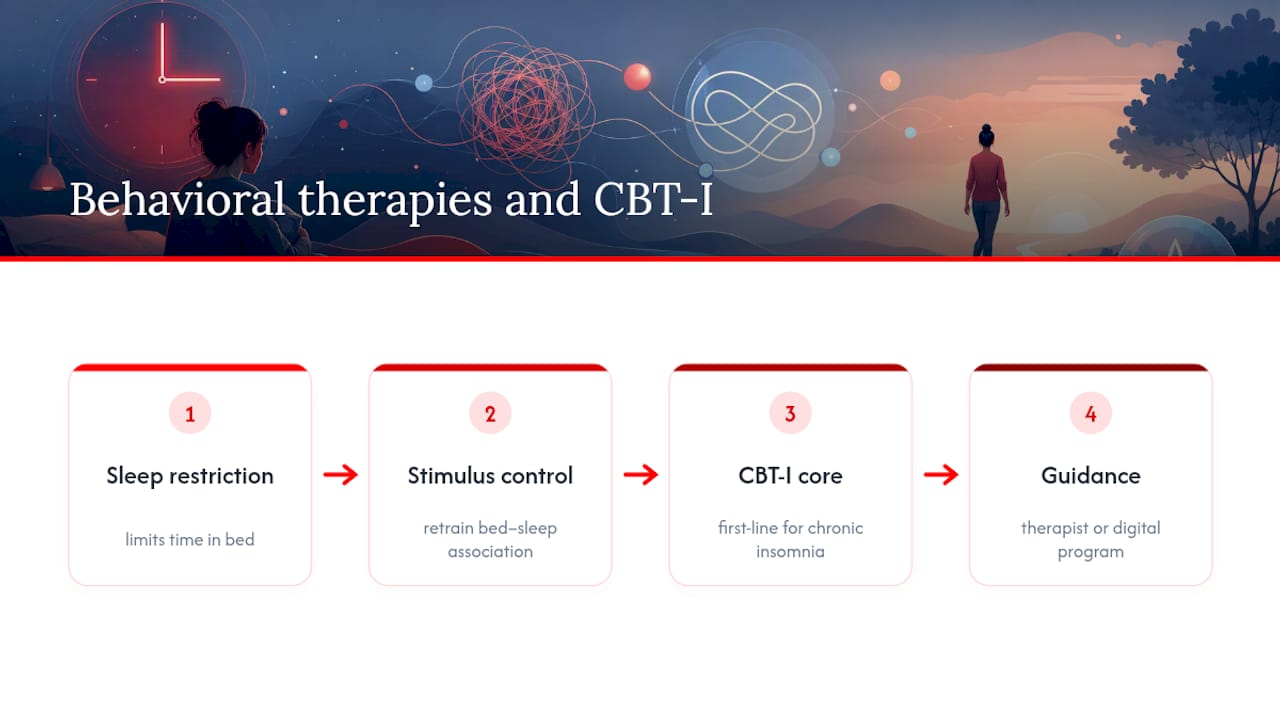
Sleep restriction therapy and stimulus control are the two most evidence-backed behavioral interventions for middle-of-the-night awakenings. Sleep restriction temporarily limits time in bed to match actual sleep time, which builds sleep pressure and consolidates fragmented sleep. Stimulus control (the “get out of bed” rule above) retrains the brain’s association between bed and sleep. Together, these form the core of CBT-I (Cognitive Behavioral Therapy for Insomnia), which sleep medicine specialists consistently rank as the first-line treatment for chronic insomnia. A therapist trained in CBT-I or a digital CBT-I program can guide you through both.
Building an evening routine that actually helps
A consistent evening wind-down routine is one of the most underrated tools for reducing early awakenings. Here’s what the evidence supports:
- Last caffeine by 2pm for most adults, earlier if you’re sensitive.
- Last alcohol at least 3 hours before bed, ideally none on nights when sleep quality matters most.
- Finish large meals 2–3 hours before bedtime to allow digestion and core temperature to settle.
- Dim lights in the hour before bed. Bright overhead lighting delays melatonin release.
- Set a consistent wake time, even on weekends. This is the single most powerful circadian anchor you have.
Environmental checklist
- Keep your bedroom between 60–67°F.
- Use blackout curtains or a sleep mask if any light enters the room.
- Try white noise or a fan to mask intermittent sounds.
- Reserve the bedroom for sleep and intimacy only. No work, no TV in bed.
You can find a full evening wind-down checklist that walks through each of these steps in practical detail.
Most people see meaningful improvement in sleep continuity within 2–3 weeks of consistent behavioral changes, according to behavioral sleep medicine guidance. CBT-I and clinical treatments typically take longer, often 4–8 weeks for full effect, but the trajectory is usually clear within the first month.
Supplements and non-habit-forming sleep aids can play a supporting role alongside these behavioral strategies. They work best when the behavioral foundation is already in place, not as a substitute for it.
When should you see a doctor about waking up at night?
There’s a clear clinical threshold here, and it’s worth knowing. Chronic insomnia is defined as sleep difficulty occurring 3 or more nights per week for 3 or more months, with daytime consequences such as fatigue, concentration problems, or mood disruption. If that describes you, a medical evaluation is appropriate.
Red-flag symptoms that warrant prompt attention
- Gasping, choking, or being told you stop breathing during sleep (possible OSA)
- Severe daytime sleepiness that affects driving or work safety
- Chest pain or palpitations at night
- Significant cognitive decline or memory problems alongside poor sleep
- Symptoms of depression or anxiety that feel tied to the sleep disruption
What clinicians typically recommend
- CBT-I as first-line treatment for chronic insomnia, often before any medication
- CPAP therapy for confirmed obstructive sleep apnea
- Iron supplementation or dopaminergic medications for restless legs syndrome, depending on severity
- Medication timing adjustments when a prescribed drug is identified as the cause
- Hormone therapy or symptom management for menopausal sleep disruption, discussed with a gynecologist or internist
Pro Tip: If your primary care provider isn’t familiar with CBT-I, ask specifically for a referral to a behavioral sleep medicine specialist or look for a digital CBT-I program. These are evidence-based, widely available, and often more effective than sleep medication for long-term relief.
A quick evidence snapshot: what the research says
Here’s a concise summary of the three most clinically relevant mechanisms behind 3am wake-ups.
Cortisol and the circadian clock
Cortisol follows a predictable daily curve. It starts rising in the early morning hours, typically around 2–3am, as part of the body’s preparation for waking. Under normal conditions, this rise is gradual and doesn’t disturb sleep. When chronic stress keeps baseline cortisol elevated, the early-morning surge can tip the brain into full alertness rather than a quiet cycle transition. Daytime stress management, including exercise, mindfulness, and social connection, directly affects how disruptive this early rise becomes.
Alcohol and sleep architecture
Alcohol is one of the most reliably documented causes of early-morning awakenings. It disrupts sleep architecture by suppressing REM sleep in the first half of the night and then fragmenting sleep in the second half as it metabolizes. The result is more awakenings precisely in the 3–5am window, when sleep is already lightest.
Blood sugar dips and nocturnal hypoglycemia
A large or high-glycemic meal close to bedtime can trigger a reactive blood sugar drop in the early hours. The body responds by releasing adrenaline and cortisol to raise glucose levels, which can pull you out of sleep. This is especially relevant for people with prediabetes, insulin resistance, or those who skip dinner and then eat heavily late at night.
| Mechanism | Effect on sleep | Key modifiable factor |
|---|---|---|
| Early-morning cortisol rise | Triggers full wakefulness instead of quiet cycle transition | Daytime stress management |
| Alcohol metabolism | Fragments REM and increases second-half awakenings | Eliminate or limit alcohol, especially close to bedtime |
| Blood sugar dip | Adrenaline release pulls you awake | Avoid large, high-carb late meals |
A note on perspective
Most 3am wake-ups are not a sign of a serious condition. They’re the result of normal sleep architecture colliding with one or two modifiable triggers. That’s genuinely good news, because it means most people can make real progress without a prescription or a sleep lab.
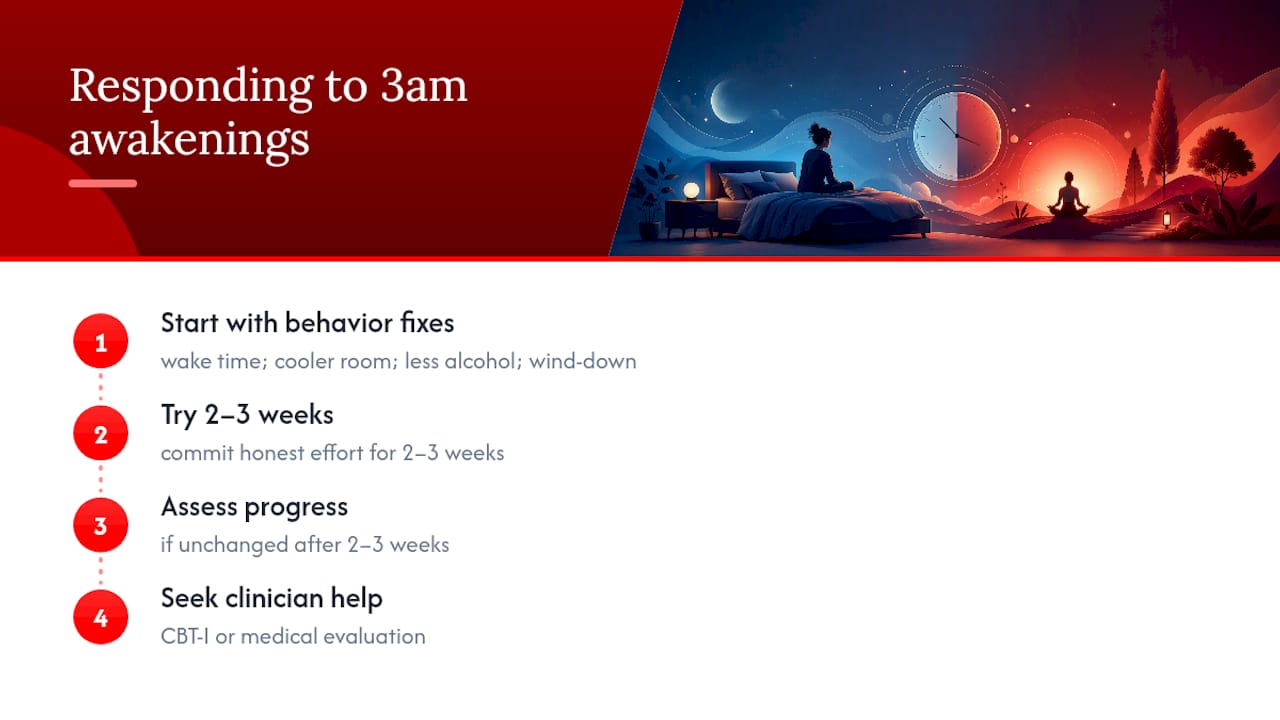
That said, I’d encourage you not to dismiss persistent awakenings as “just stress.” When waking at 3am becomes a nightly pattern and daytime functioning suffers, that’s your body asking for a closer look. Behavior changes and environment fixes are the right first step. If they don’t move the needle after 2–3 weeks of honest effort, a clinician conversation is the logical next move, not a sign of failure.
Combining approaches tends to work better than chasing a single fix. A consistent wake time, a cooler bedroom, less alcohol, and a structured wind-down routine together create conditions where sleep can consolidate. Add CBT-I or a medical evaluation if needed. Progress is usually gradual, but it’s real.
Nightly support that works alongside your routine
If you’re doing the behavioral work and still struggling to wind down, Fromwithin’s non-habit-forming sleep aid was designed for exactly this situation. It’s non-melatonin and non-hormonal, formulated with transparent, clinically researched ingredients to support natural relaxation without dependence.

It fits naturally into a consistent evening routine for busy adults who want extra support on harder nights, without replacing the behavioral strategies that create lasting change. For best results, pair it with a fixed wake time and a dimmed-light wind-down. If you’re on other medications, check with your clinician before adding any supplement. You can also read Fromwithin’s guidance on responsible supplement use at bedtime to get the most from it. Ready to give your nights some real support? Visit the sleep aid page to learn more.
Sources
These are the sources and resources worth bookmarking if you want to go deeper.
- Why Do I Wake Up at 3 am? (Sleep Foundation FAQ)
- The 3 a.m. wake-up: Why it happens to women more often after 55 (Harvard Health)
- Review: Alcohol and sleep architecture (PMC review)
- Keep Waking Up at 3 A.M.? Here’s What Your Body Might Be Telling You
- Diagnostic criteria reference table (insomnia)
This article is for general informational purposes only and is not a substitute for professional medical advice. If you have persistent sleep difficulties or any of the red-flag symptoms described above, please consult a qualified healthcare provider.
