

on July 12, 2026

Sleep hygiene is defined as the set of daily habits and bedroom conditions that promote consistent, high-quality sleep. You probably hear a lot about diet and exercise, but sleep hygiene rarely gets the same attention. That gap is costly. More than 1 in 3 adults in the US do not regularly get quality sleep, and over 14% struggle to fall asleep most nights. Those numbers reflect a real, widespread problem. The good news is that most sleep quality issues respond well to simple, consistent behavioral changes. Understanding what sleep hygiene means is the first step toward making those changes work for you.
What is sleep hygiene, and what are its core principles?
Sleep hygiene is not about being perfectly clean or following a rigid checklist. It is about creating the right conditions for sleep to happen naturally. Think of it as setting the stage. Your body and brain need reliable cues to shift from alert to restful, and good sleep practices build those cues over time.
The most widely recommended sleep hygiene practices include:
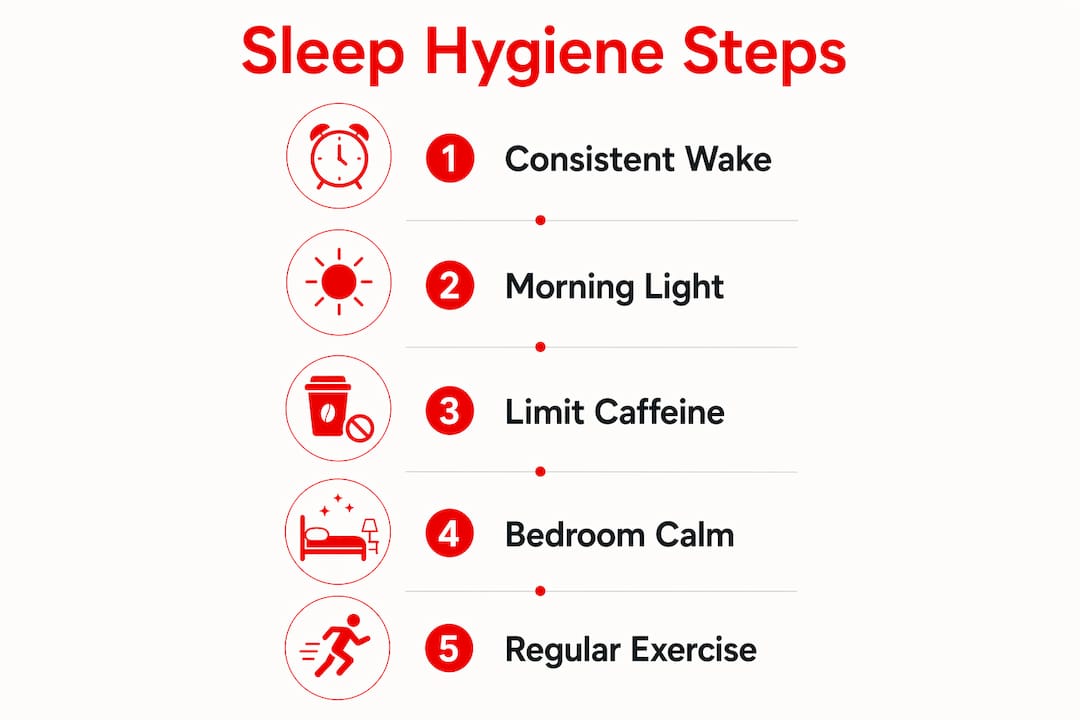
- Consistent wake time. A stable wake time anchors your circadian rhythm more effectively than any other single habit. Keep it the same every day, including weekends.
- Bed for sleep only. Using your bed for wakeful activities like working, scrolling, or watching TV weakens the mental link between your bed and rest. Reserve it for sleep and intimacy only.
- Dark, cool, quiet bedroom. Temperature, light, and noise all affect how easily you fall and stay asleep. A cool room (around 65–68°F) and blackout curtains make a measurable difference.
- Morning light exposure. Getting bright light within the first hour of waking, for at least 10 minutes, helps set your internal clock for the day ahead.
- Wind-down routine before bed. Dim the lights, step away from screens, and give your nervous system 30–60 minutes to slow down before you expect to sleep.
- Avoid stimulating activities late at night. Intense conversations, work emails, and action-heavy content all signal your brain to stay alert.
Pro Tip: If you can only commit to one change, make it your wake time. Keeping it consistent, even after a rough night, is the single most powerful lever for improving sleep quality over time.
The circadian rhythm is your body’s internal 24-hour clock. It regulates when you feel alert and when you feel sleepy. Consistent light exposure and a fixed wake time are the two strongest external signals that keep it calibrated. When those signals are irregular, your sleep quality suffers, even if you spend plenty of hours in bed.

How do lifestyle habits affect sleep quality?
Your daytime choices shape your nighttime sleep far more than most people realize. What you eat, drink, and do in the hours before bed either supports or disrupts the sleep process.
Here are the key lifestyle factors to address:
- Cut caffeine early. Caffeine has a half-life of roughly 5–6 hours. A 3:00 PM coffee can still be active in your system at 9:00 PM. Shift your last cup to before noon if sleep onset is a problem.
- Avoid alcohol close to bedtime. Alcohol may help you fall asleep faster, but it fragments sleep in the second half of the night. You wake up feeling less rested, not more.
- Finish meals at least 3 hours before bed. Eating too close to bedtime raises core body temperature and can trigger acid reflux, both of which disrupt sleep onset.
- Stop exercise at least 2 hours before bed. Vigorous exercise within 2 hours of bedtime raises heart rate and body temperature, making it harder to fall asleep. Morning or early afternoon workouts are ideal.
- Keep your phone out of reach at night. The blue light from screens suppresses melatonin. More importantly, the mental stimulation of checking notifications keeps your brain in alert mode.
- Go to bed only when you feel sleepy. There is a real difference between feeling tired and feeling sleepy. Tired is a physical sensation of fatigue. Sleepy is the biological urge to sleep. Going to bed only when truly sleepy prevents the frustrating cycle of lying awake and building anxiety around bedtime.
Pro Tip: Try keeping a simple sleep log for one week. Note your caffeine intake, exercise time, and when you actually felt sleepy versus when you went to bed. Patterns show up fast, and they are usually surprising.
Nicotine is another underappreciated disruptor. Like caffeine, it is a stimulant. People who smoke often experience lighter sleep and more nighttime awakenings. Addressing nicotine use is a legitimate part of improving your sleep hygiene practices.
What are the biggest misconceptions about sleep hygiene?
Sleep hygiene is often misunderstood as either a cure-all or a pointless collection of tips. Neither view is accurate. Sleep hygiene is foundational to overall sleep health, but it does not treat clinical sleep disorders like insomnia disorder, sleep apnea, or restless leg syndrome. Those conditions require medical evaluation and often targeted therapies like cognitive behavioral therapy for insomnia (CBT-I).
Here is what people commonly get wrong:
- Perfection is not the goal. Missing one night of good habits does not undo your progress. Consistency over weeks matters far more than any single night.
- More time in bed does not mean better sleep. Oversleeping or going to bed too early can actually fragment your sleep and reduce its quality.
- Daytime symptoms are a signal. Fatigue and mood shifts during the day can indicate poor sleep quality even when your nights feel normal. Do not wait for dramatic insomnia to take your sleep habits seriously.
- Forcing sleep makes things worse. If you lie in bed awake for more than 20–30 minutes, get up and do a calm activity until you feel genuinely sleepy. Staying in bed while awake trains your brain to associate the bed with wakefulness.
“Sleep hygiene focuses on creating the right circumstances for sleep, not forcing sleep itself. Perfection is not necessary to benefit. Persistent sleep problems despite good hygiene suggest underlying conditions that need medical evaluation and possibly cognitive behavioral therapy.”
If you have followed solid sleep practices for several weeks and still struggle consistently, talk to a doctor. Persistent sleep issues often point to underlying conditions that behavioral habits alone cannot resolve.
How to build effective sleep hygiene into your daily routine
Building better sleep habits works best when you start with a few high-impact changes rather than overhauling everything at once. Medical experts recommend starting with core sleep hygiene habits before adding supplements or more complex interventions.
| Habit | What to do | When |
|---|---|---|
| Morning light | Step outside or sit by a bright window | Within 1 hour of waking |
| Consistent wake time | Set one alarm, no snooze | Every day including weekends |
| Wind-down routine | Dim lights, no screens, light reading or stretching | 30–60 minutes before bed |
| Bedroom environment | Cool temperature, blackout curtains, white noise if needed | Every night |
| Avoid stimulants | No caffeine after noon, no alcohol within 3 hours of bed | Daily |
Your bedroom environment deserves real attention. Consistent morning light exposure and limiting light at night supports natural melatonin production. That means dimming overhead lights after 8:00 PM and using warm-toned bulbs in the evening. Blackout curtains or a sleep mask handle early morning light, which is especially disruptive in summer months.
A few practical steps to protect your bedroom as a sleep space:
- Remove work materials, laptops, and chargers from the bedroom
- Use your phone’s “do not disturb” mode from 9:00 PM onward
- Keep a notepad by the bed to offload racing thoughts before sleep
- Consider a relaxation routine before bed that includes slow breathing or gentle stretching
The goal is to make your bedroom feel like a place your body automatically associates with calm and rest. That association builds over time, and it is one of the most underrated benefits of good sleep hygiene.
Key Takeaways
Good sleep hygiene is the most accessible and effective foundation for better sleep quality, built on consistent habits rather than perfect nights.
| Point | Details |
|---|---|
| Define your wake time first | A consistent wake time anchors your circadian rhythm more than any other single habit. |
| Protect your bed association | Use your bed only for sleep and intimacy to strengthen the mental link between bed and rest. |
| Address daytime habits | Caffeine, alcohol, late meals, and screen use all directly affect how well you sleep at night. |
| Hygiene is not a disorder treatment | Persistent sleep problems despite good habits require medical evaluation, not more tips. |
| Start simple, stay consistent | Begin with two or three core habits and build from there rather than changing everything at once. |
What I have learned from watching people struggle with sleep
I have seen a pattern repeat itself more times than I can count. Someone reads about sleep hygiene, commits to every tip at once, has two rough nights, and gives up entirely. That is the wrong approach, and I understand why it happens. When you are exhausted, you want results fast. But sleep hygiene is preparatory work. It builds the conditions for rest. It does not deliver instant results the way a sleeping pill might.
What actually works is picking one or two habits and holding them for two full weeks before judging the outcome. The wake time is always my first recommendation. It feels counterintuitive to wake up at the same time after a terrible night, but that consistency is what gradually pulls your sleep drive into alignment. I have also noticed that people underestimate how much their daytime behavior matters. The connection between sleep and skin health is a good example. Poor sleep shows up on your face, in your mood, and in your energy long before you notice it at night.
The other thing I want to be honest about: sleep hygiene has real limits. If you have been consistent for a month and still cannot sleep well, that is not a willpower problem. It is a signal to see a doctor. Good habits lay the groundwork. They are not a substitute for clinical care when clinical care is what you need.
— From
Sleep support that works alongside your habits
Good sleep hygiene creates the conditions for rest. Sometimes, your body needs a little extra support to get there, especially during stressful periods or when your schedule has been disrupted.

Fromwithin’s sleep aid is designed to complement the habits you are already building, not replace them. It supports natural relaxation without creating dependence, so you wake up feeling rested rather than groggy. For those who want a fuller picture of their wellness routine, the vitamins and supplements collection covers sleep, skin, and overall vitality in one place. Pair good habits with the right support, and you give your body the best possible chance at the rest it needs.
FAQ
What is sleep hygiene in simple terms?
Sleep hygiene is the collection of habits and bedroom conditions that help you fall asleep, stay asleep, and wake up feeling rested. It includes things like keeping a consistent wake time, avoiding caffeine late in the day, and keeping your bedroom dark and cool.
How long does it take for sleep hygiene to work?
Most people notice meaningful improvement within two to four weeks of consistently applying core sleep habits. The key word is consistency. Sporadic effort produces sporadic results.
Can sleep hygiene cure insomnia?
Sleep hygiene supports better sleep but does not treat clinical insomnia disorder. Persistent insomnia requires medical evaluation and often cognitive behavioral therapy for insomnia (CBT-I), which is the gold-standard clinical treatment.
What is the single most important sleep hygiene habit?
A consistent wake time is the most critical habit. Keeping your wake time stable every day, including weekends, anchors your circadian rhythm and improves sleep quality faster than any other single change.
Does deep sleep improve with better sleep hygiene?
Yes. Consistent sleep schedules, reduced stimulant use, and a calm bedroom environment all support deeper, more restorative sleep stages. Better sleep hygiene practices directly increase the time your body spends in the most beneficial phases of sleep.
