

on September 12, 2026

If you want to fall asleep faster tonight, your best bet is combining a body-calming breathing technique with a short wind-down routine. Try 4-7-8 breathing or progressive muscle relaxation right now, then commit to a 15 to 30 minute nightly ritual for lasting results. Quick tricks buy you tonight; consistent sleep hygiene is what actually keeps sleep latency low for good.
TL;DR:
- Quick relaxation techniques like shoulder drops or jaw unclenching can reduce physical tension within seconds, helping you fall asleep faster tonight.
- Combining 4-7-8 breathing with guided imagery for about a minute each can calm your nervous system and quiet your mind effectively within a few minutes.
- Maintaining consistent sleep habits, such as a regular schedule and a dark, cool bedroom, is crucial for consistently shortening your sleep latency over time.
- Establishing a 15 to 30-minute wind-down routine that includes screen dimming, hygiene, and relaxation techniques can condition your brain to recognize bedtime cues more rapidly.
- If sleep latency exceeds 30 minutes most nights for three months or more, consulting a healthcare professional about sleep disorders or therapy is advisable.
Table of Contents
- Quick Techniques to Try Right Now
- The Sleep Habits That Actually Shorten Sleep Latency
- A 15 to 30 Minute Wind-Down Routine You Can Repeat Nightly
- Why Won’t I Fall Asleep? When to Get Help
- What the Research Actually Says
- Give It a Few Weeks Before You Judge It
- A Non-Habit-Forming Option Worth Knowing About
- Sources
- FAQ
Quick Techniques to Try Right Now
Not every trick works at the same speed. Some calm your body in seconds. Others take a few minutes to quiet a racing mind. Here’s what to reach for depending on how much time you’ve got before you need to be asleep.
In 10 to 30 seconds: Drop your shoulders away from your ears, unclench your jaw, and let your forehead go soft. This tiny reset interrupts the low-grade tension most people carry into bed without noticing it.
In about 60 seconds: Try 4-7-8 breathing, a paced breathing method rooted in pranayama. Inhale quietly through your nose for 4 seconds, hold for 7 seconds, then exhale audibly through your mouth for 8 seconds. Repeat the cycle four times. This pattern is designed to calm the nervous system by slowing your breathing rate. Skip it, or shorten the hold, if you have asthma, COPD, or another condition that makes breath-holding uncomfortable.
In 5 to 15 minutes, try one of these:
- Progressive muscle relaxation (PMR): Tense each muscle group for 5 seconds, from your toes up to your face, then release and notice the difference.
- Guided imagery: Picture a specific, detailed scene, like walking a quiet beach, down to the sound and smell of it.
- 5-4-3-2-1 grounding: Silently name 5 things you can hear, 4 you can feel, 3 you can smell, and so on, to pull your mind out of a worry loop.
- Mindful counting: Count backward from 100 by threes. It’s boring on purpose. Boring is the point.
Relaxation methods like these work by lowering physical tension and cognitive arousal, the two things most likely keeping you awake.
If your mind keeps insisting you won’t fall asleep, try paradoxical intention: deliberately tell yourself to stay awake instead of trying to force sleep. It sounds backward, but removing the pressure to perform often lowers the anxiety that was blocking sleep in the first place.
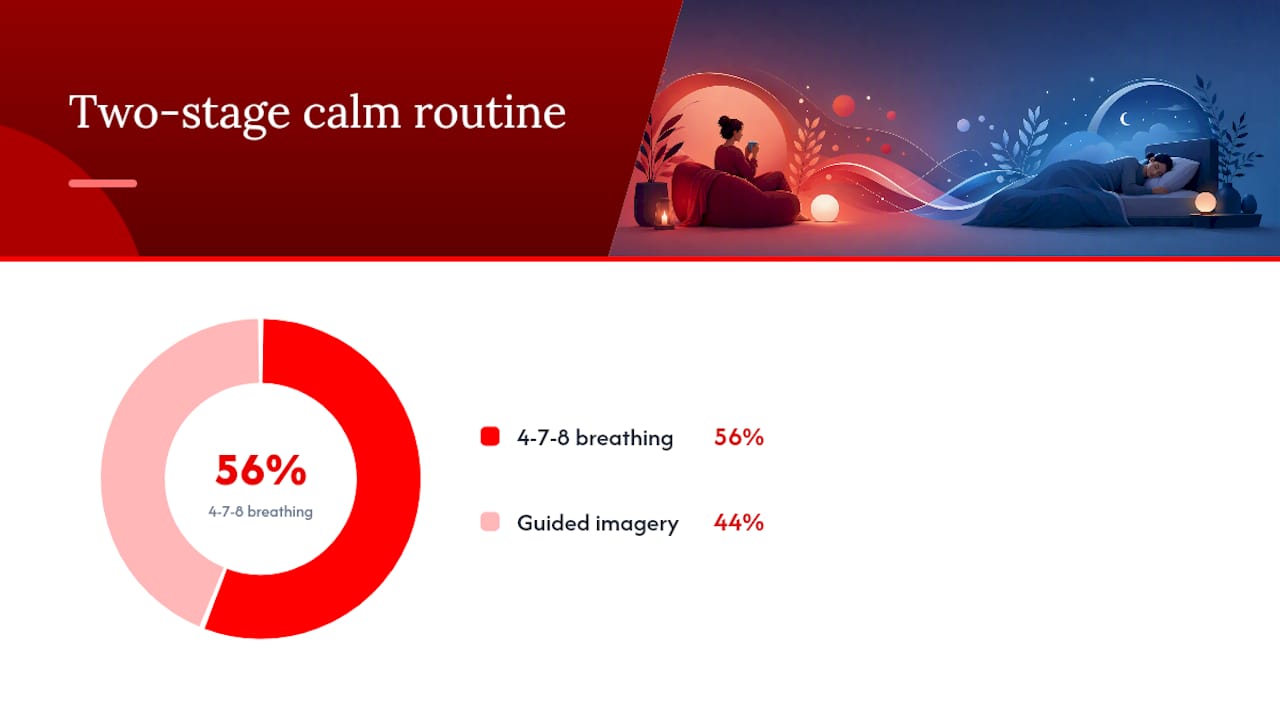
Pro Tip: Pair one full cycle of 4-7-8 breathing with 60 seconds of guided imagery. The breathing calms your body first, then the imagery gives your mind something quiet to hold onto instead of tomorrow’s to-do list.
The Sleep Habits That Actually Shorten Sleep Latency
Quick techniques help you tonight. Sleep hygiene is what keeps working every night after that. The NHS points to a consistent sleep schedule and a cool, dark, quiet bedroom as the two habits with the strongest track record for cutting sleep latency.
Here’s what that looks like in practice:
- Go to bed and wake up within a consistent time window daily, including weekends.
- Keep your bedroom comfortably cool, as a room that is too warm can cause a restless night.
- Block out light. Even a dim charging cable LED can nudge your body clock the wrong direction.
- Cut screens 30 to 60 minutes before bed to reduce blue-light exposure and help your body prepare for sleep.
- Have your last caffeine by early afternoon, and skip alcohol close to bedtime. Alcohol may make you drowsy, but it fragments sleep later in the night.
- Get sunlight and movement earlier in the day. Both help anchor your circadian rhythm so your body knows when night has actually arrived.
- Reserve the bed for sleep and intimacy only. Working, scrolling, or watching television in bed teaches your brain to associate the mattress with alertness, not rest.
Pairing a consistent wind-down cue, like the same dim lamp or the same short playlist, with a relaxation technique each night can help condition your brain to recognize “it’s time to sleep” faster over time.
A 15 to 30 Minute Wind-Down Routine You Can Repeat Nightly
Structure removes decision fatigue at exactly the moment your brain has the least capacity for it. Here’s a routine you can run on autopilot.
- 60 to 90 minutes before bed: Finish any caffeine, alcohol, or heavy meals.
- 30 to 45 minutes before bed: Turn off screens. Dim the lights in whatever room you’re in.
- 15 to 30 minutes before bed: Handle hygiene and skincare, do a light stretch, then close with one relaxation technique, whether that’s PMR, a few minutes of mindfulness, or a 4-7-8 breathing cycle.
If you work shifts or your schedule shifts constantly, don’t try to force a fixed clock time. Anchor the routine to the interval before whatever your actual bedtime is that night. The order matters more than the exact hour.
Pro Tip: Keep the routine identical every single night, including weekends. Your brain learns the sequence faster than it learns any single technique inside it.
For a longer version of this ritual, our evening wind-down routine checklist walks through an expanded nightly sequence.
Why Won’t I Fall Asleep? When to Get Help
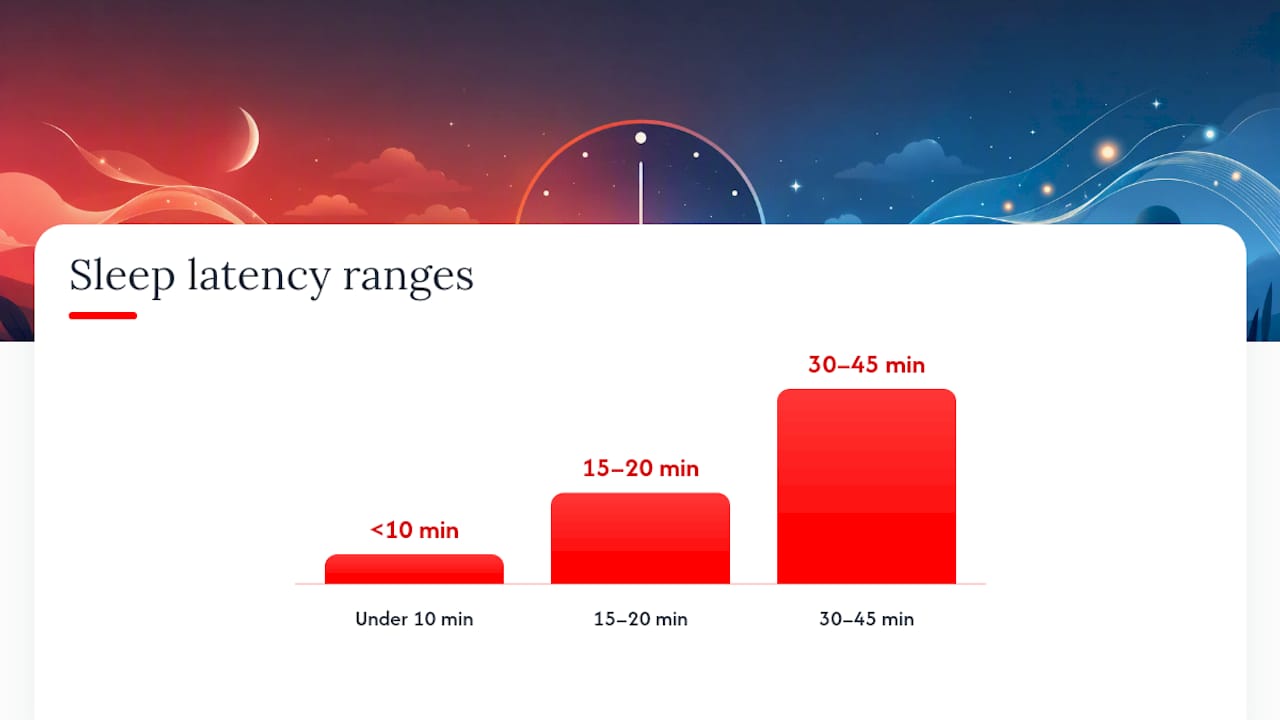
A little context helps you judge whether you’re actually struggling or just having an off night. Healthy sleep latency generally runs about 15 to 20 minutes. Falling asleep in under 10 minutes on a regular basis can actually point to sleep debt, not great sleep. Taking more than 30 to 45 minutes most nights suggests something more persistent is going on.
Common culprits behind a stubbornly awake brain include:
- Stress and anxiety, especially rumination that kicks in the moment your head hits the pillow
- Underlying medical conditions, including sleep apnea
- Medications that interfere with sleep onset
- Late caffeine, alcohol, or nicotine use
If you’re still staring at the ceiling after roughly 20 minutes, get up and do something low-key in dim light, then return when you feel drowsy. This breaks the mental link between your bed and wakefulness, which is often what perpetuates the problem. If poor sleep is happening at least three nights a week for three months or more, a sleep diary and a conversation with your doctor about cognitive behavioral therapy for insomnia (CBT-I) are worth pursuing before reaching for medication long-term.
What the Research Actually Says
The techniques above aren’t guesswork. Paced breathing, progressive muscle relaxation, and mindfulness all show up repeatedly in sleep research because they target the same root problem: a nervous system that’s still running hot at bedtime.
Experts caution that fixating on falling asleep quickly can backfire, creating the very performance anxiety that keeps you awake. A calm, repeatable routine tends to outperform any single trick used under pressure.
Mindfulness practiced at bedtime has been shown to ease the kind of cognitive hyperarousal that keeps your thoughts looping instead of winding down, and CBT-I remains the first-line, evidence-backed approach for anyone whose sleep trouble has become chronic rather than occasional.
Give It a Few Weeks Before You Judge It
Nobody’s sleep improves in one perfect night, and that’s normal. Some people notice a difference within days; others need a few weeks of the same routine before their body starts to trust it. Busy professionals often see quicker shifts when they pair a consistent wind-down with something that supports relaxation directly. Pick one routine, run it nightly for two to three weeks, and then decide honestly whether you need more support.
— From
A Non-Habit-Forming Option Worth Knowing About
If you’ve tried the breathing exercises, tightened up your bedroom environment, and built a wind-down routine but still feel wired at night, that’s exactly the point where an adjunct, not a fix-all, can help. Fromwithin’s sleep aid is formulated without melatonin or hormones, built on clinically researched, transparently listed ingredients meant to support natural relaxation rather than force sedation.

The idea isn’t to replace the habits above. It’s to give your body extra support while those habits take hold, especially on the nights stress or a late night at work throws your routine off. Take it as part of the same wind-down window you’ve already built, alongside the same dimmed lights and breathing cycle you use every night. For guidance on folding a supplement into that routine without leaning on it as a crutch, our bedtime supplement best practices guide walks through exactly how to pair the two. If tonight is the night you want backup, start with the sleep aid page and see if it fits your evening.
This article is general information, not a substitute for advice from a qualified doctor. Consult a qualified healthcare professional about your own circumstances before acting on anything here.
Sources
- NHS Every Mind Matters: How to fall asleep faster and sleep better
- Sleep Foundation — How to fall asleep fast
- NIE wellness centre — calming and revitalizing practices
- Psychology Today — A counterintuitive trick to help you fall asleep fast
FAQ
How Can I Fall Asleep Faster Right Now?
Try one full round of 4-7-8 breathing (inhale 4 seconds, hold 7, exhale 8) four times, then move into a slow body scan from your toes to your forehead, releasing tension as you go.
What Is the 10-3-2-1-0 Sleep Rule?
It’s a popular shorthand for timing your evening: no caffeine early in the day, no heavy meals or alcohol close to bedtime, screens off 30 to 60 minutes before bed, and avoiding snoozing in the morning. It’s a memorable framework, though the exact numbers work as general guidelines rather than strict medical cutoffs.
Is There a 5-Minute Trick to Fall Asleep Fast?
The closest evidence-backed option is 4-7-8 breathing combined with progressive muscle relaxation, both of which can meaningfully calm your body within about 5 minutes, though results vary by person.
What Is the Japanese Trick to Sleep Fast?
Many articles describe this as a full-body progressive muscle relaxation sequence, tensing and releasing muscle groups from your feet upward. It overlaps closely with standard PMR rather than being a separate, distinctly documented method.
How Long Should It Take to Fall Asleep?
A healthy range is about 15 to 20 minutes. Falling asleep in under 10 minutes regularly can signal sleep debt, and consistently taking more than 30 to 45 minutes may point to insomnia worth discussing with a doctor.
