

on August 10, 2026

If you’re a light sleeper, the single most effective thing you can do tonight is create a dark, cool, quiet sleep environment: a fitted eye mask, earplugs or noise-canceling headphones, and a thermostat set between 60–67°F. That combination addresses the three most common triggers for nighttime awakenings before you change anything else.
Here’s your starting checklist for tonight:
- Block all light. A fitted eye mask is faster and more reliable than hunting down every glowing LED in your room. Router lights, appliance standby indicators, and alarm clocks are frequent culprits for sensitive sleepers.
- Reduce noise. Foam earplugs (NRR 32–33) are the lowest-cost, highest-impact option. If you find them uncomfortable, try noise-canceling headphones instead.
- Cool the room. Set your thermostat to 65°F as a starting point. Most people sleep best somewhere in the 60–67°F range recommended by sleep-health organizations.
- Set a consistent bedtime. Pick a time and stick to it, even on weekends. Irregular schedules fragment sleep architecture over time.
- Dim screens 60 minutes before bed. Blue light delays melatonin release, making it harder to reach the deeper sleep stages where you’re least vulnerable to disturbances.
Pro Tip: Measure success the next morning by asking yourself two questions: How many times do you remember waking? How alert do you feel by 10 AM? Track both for three nights before changing anything else.
Key Takeaways
The most effective light sleeper solutions combine an optimized sleep environment with consistent behavioral habits, and supplements work best as a final layer, not a first step.
| Point | Details |
|---|---|
| Start with environment | A dark, cool (60–67°F), quiet room addresses the most common awakening triggers immediately. |
| Match noise strategy to noise type | Earplugs recovered >70% of N3 deep sleep lost to intermittent noise in the DLR 2026 lab study; pink noise reduced REM. |
| Give behavioral changes time | Consistent sleep schedules and caffeine cutoffs take 2–4 weeks to stabilize sleep architecture. |
| See a doctor if red flags appear | Loud snoring, witnessed apneas, or excessive daytime sleepiness warrant evaluation, not just better earplugs. |
| Fromwithin sleep aid as a complement | Fromwithin’s non-melatonin, non-hormonal sleep aid supports natural relaxation alongside environmental fixes; consult your doctor before starting. |
Table of Contents
- What does it actually mean to be a light sleeper?
- What causes light sleeping, and when should you be concerned?
- What are the most effective strategies for light sleepers?
- What does the research actually say about noise masking?
- When should you see a doctor about your sleep?
- What supplements and OTC options actually help light sleepers?
- Fromwithin’s non-melatonin sleep support is worth a look
- Sources
What does it actually mean to be a light sleeper?
Being a light sleeper isn’t a personality quirk. It’s a measurable biological state: your arousal threshold, the amount of stimulation required to pull you out of sleep, is lower than average. A door closing two rooms away, a partner shifting in bed, or a streetlight flickering through a curtain gap can be enough to bring you fully awake.
Sleep isn’t a single state. According to the National Institute of Neurological Disorders and Stroke (NINDS), your brain cycles through four stages across the night:
- N1 (light sleep): The transition from wakefulness. Lasts just a few minutes. You’re easily woken here.
- N2 (light-to-moderate sleep): Heart rate slows, body temperature drops. Sleep spindles appear during this stage.
- N3 (deep sleep): The most restorative stage. Tissue repair, immune function, and memory consolidation happen here. Hardest to wake from.
- REM sleep: Dreaming, emotional processing, and cognitive repair. Arousal threshold is lower than N3 but higher than N1.
Sleep spindles are brief bursts of neural activity during N2 that act like a sensory filter, suppressing incoming signals so they don’t reach your conscious brain. Research on sleep spindles shows that people with lower spindle activity have less effective sensory gating, which means more sounds and light changes reach the brain’s arousal centers. That’s one reason why “being a light sleeper” can run in families and tends to worsen with age as spindle activity naturally declines.
Think of a typical sleep cycle as a wave: you descend from N1 through N2 into N3, then rise back toward REM before the next cycle begins. Light sleepers spend more time in the shallower parts of that wave, and their cycles are more easily interrupted at the peaks. Understanding this isn’t just reassuring. It tells you exactly where to focus your efforts: protecting N3 and REM by reducing the stimuli that reach your brain during those vulnerable transitions.
What causes light sleeping, and when should you be concerned?
Light sleeping has many contributors, and knowing which ones apply to you makes the fix much more targeted. Some are environmental and fixable tonight. Others are behavioral and take a few weeks. A few are medical and need professional attention.
Common contributors include:
- Environmental noise and light (traffic, neighbors, partner snoring, LED glow)
- Room temperature above 67°F or below 60°F
- Stress and anxiety, which elevate cortisol and keep the brain in a lighter vigilance state
- Caffeine consumed within 8–10 hours of bedtime (caffeine’s half-life is roughly 5–7 hours)
- Alcohol near bedtime, which fragments sleep in the second half of the night even though it speeds sleep onset
- Certain medications, including some antidepressants (SSRIs, SNRIs), beta-blockers, corticosteroids, and decongestants
- Shift work or irregular schedules, which disrupt circadian rhythm
- Aging, which naturally reduces N3 time and spindle activity
- Hormonal changes (perimenopause, postpartum, thyroid fluctuations)
- Underlying sleep disorders, particularly sleep apnea and restless legs syndrome
Pro Tip: Before assuming a medication is disrupting your sleep, bring a full medication list (including OTC drugs and supplements) to your next appointment. Some sleep-disrupting effects are dose-dependent and can be managed by adjusting timing rather than switching drugs.
Stress is worth calling out specifically. Chronic anxiety keeps the hypothalamic-pituitary-adrenal axis activated, raising baseline cortisol. That physiological state makes N3 harder to reach and easier to exit. Addressing the stress itself, through therapy, structured wind-down, or exercise, often does more for sleep quality than any device or supplement.
What are the most effective strategies for light sleepers?
The good news: most light sleeper problems respond well to a layered approach. Start with environment, add behavioral changes, then consider devices and supplements if needed. Here’s how to work through it systematically.
1. Environmental controls
Blackout curtains are worth the investment. Budget options start around $25–$40 per panel; premium thermal-lined versions run $60–$100 but also reduce noise and regulate room temperature.
LED masking is faster than blackout curtains for small light sources. A strip of black electrical tape over a router light or a small piece of opaque tape over an alarm clock indicator takes 30 seconds and eliminates a common awakening trigger for sensitive sleepers. A fitted silk eye mask is the portable version of the same fix.
Temperature. Set the thermostat to 65°F as a starting point and adjust by one degree per night until you find your sweet spot. If a thermostat adjustment isn’t possible, a cooling mattress pad (such as those with water-circulating technology) achieves a similar effect at the bed level.
Bedding. Breathable materials like bamboo or percale cotton reduce heat retention. If you sleep hot, a lighter duvet with a separate blanket for layering gives you more control than a single heavy comforter.
2. Noise controls
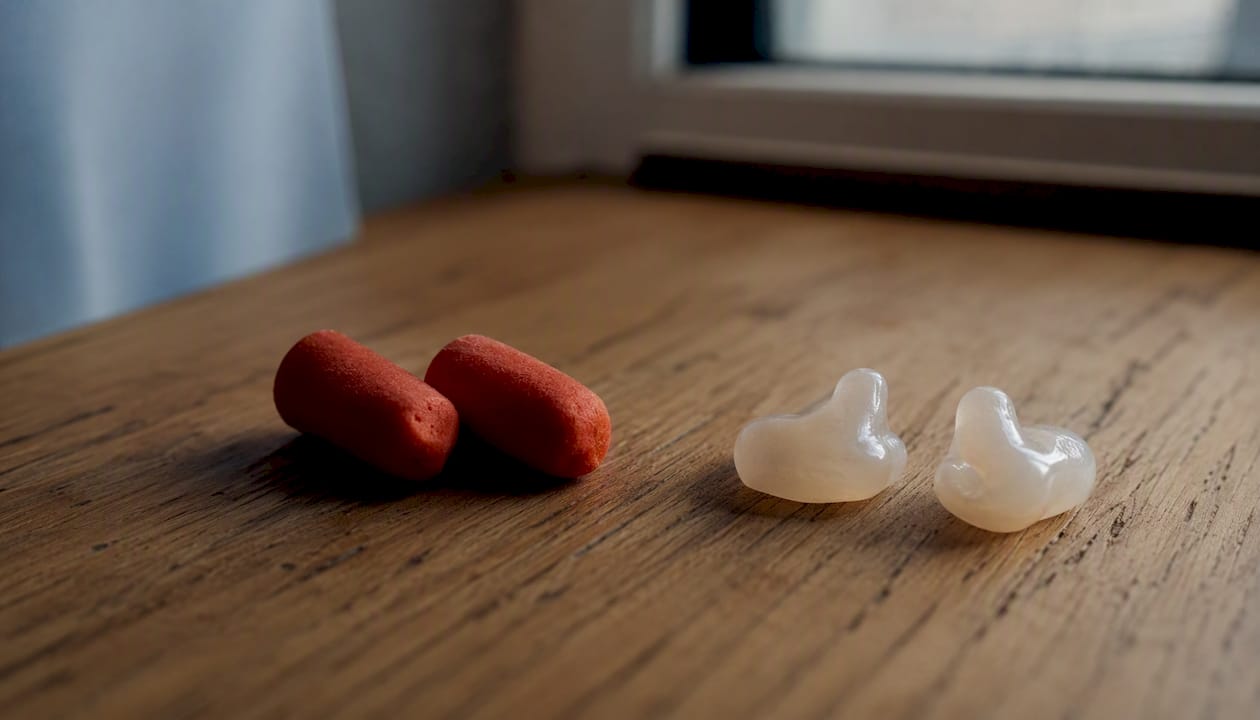
Foam earplugs remain the most cost-effective noise reduction tool available, with NRR ratings of 32–33 reducing ambient noise by roughly 15–20 dB in real-world use. If foam feels uncomfortable, wax or silicone moldable earplugs conform better to the ear canal.
Neuroscientist Dr. Jaime Tartar recommends noise-canceling headphones for sensitive sleepers and travelers specifically because they actively cancel ambient frequencies before the brain registers them, rather than simply muffling sound after it enters the ear. For side sleepers, flat-profile sleep headphones (a soft headband with embedded speakers) are more comfortable than over-ear models.
Basic soundproofing doesn’t require renovation. Door sweeps ($10–$20) block under-door noise. Acoustic window seals or secondary glazing film reduce street noise. Heavy rugs on hardwood floors absorb impact sound from upstairs neighbors.
3. Behavioral and routine changes
A consistent sleep schedule is the single most evidence-supported behavioral change for sleep quality. Going to bed and waking at the same time seven days a week stabilizes your circadian rhythm and deepens sleep architecture over two to four weeks.
A 2019 systematic review found that a warm shower or bath taken within two hours of bedtime improved both sleep onset time and sleep efficiency. The mechanism is the post-bath drop in core body temperature, which signals the brain that sleep time is approaching.

Caffeine cutoff at 8–10 hours before bed, no alcohol within three hours of sleep, and morning light exposure (10–15 minutes outside within an hour of waking) are the three behavioral levers with the most consistent evidence behind them.
For a ready-to-use nightly routine, the evening wind-down checklist from Fromwithin walks through each step in order.
4. Devices and tech
White noise machines, pink noise apps, and multiaudio devices all have a role, but the research is more nuanced than most product pages suggest (covered in detail in the next section). The practical starting point: try a simple box fan before investing in a dedicated machine. It produces broadband noise, moves air, and costs nothing extra if you already own one.
Timeline expectations:
- Tonight to 3 nights: Environmental fixes (eye mask, earplugs, temperature) show results almost immediately.
- 2–4 weeks: Behavioral changes (consistent schedule, caffeine cutoff) begin to stabilize sleep architecture.
- 6–8 weeks: CBT-I (Cognitive Behavioral Therapy for Insomnia), a structured six-to-eight-session program, produces durable improvements in sleep quality for chronic insomnia.
Pro Tip: Change one variable per week and keep a two-line sleep log each morning: number of awakenings and morning alertness on a 1–5 scale. Without a log, it’s easy to attribute improvement (or regression) to the wrong change.
What does the research actually say about noise masking?
This is where it gets interesting, and where most advice oversimplifies. Not all masking sounds work the same way, and some can affect sleep architecture in ways that matter.
A 2026 polysomnographic lab study from the German Aerospace Center (DLR) tested 25 healthy adults under four conditions: no noise, intermittent environmental noise (EN), pink noise (PN) masking, and earplugs. That is a meaningful distinction. Earplugs didn’t just muffle sound. They protected sleep architecture in a way that continuous pink noise did not.
A separate systematic review of 34 studies involving 1,103 participants found that white noise had the lowest proportion of positive findings (33%), while pink noise showed positive findings in roughly 82% of studies and multiaudio approaches (combinations of noise colors and music) in about 67%. But the review also noted that overall evidence quality was limited and study designs varied widely.
“Noise-canceling headphones prevent the brain from registering ambient disturbances before they can interrupt a sleep cycle.” — Dr. Jaime Tartar, neuroscientist, Nova Southeastern University
Practical implications:
- If your noise problem is intermittent (traffic bursts, a neighbor’s door, a partner getting up), earplugs are likely your best first option.
- If your noise is continuous (highway hum, HVAC, a loud fan in another room), a masking sound may help, but try pink or multiaudio rather than white noise, and monitor whether you feel less rested after a few nights.
- Multiaudio approaches, where you can choose the combination that feels right, showed the best adherence and lowest bias in the systematic review.
Your 3-step noise trial:
- Nights 1–2: Characterize your noise. Is it intermittent or continuous? Note the times and types.
- Nights 3–5: Try earplugs alone if the noise is intermittent; try pink or multiaudio masking if it’s continuous.
- Nights 6–8: Compare your sleep log. Which condition produced fewer awakenings and better morning alertness?
When should you see a doctor about your sleep?
Most light sleeper problems respond to the strategies above within a few weeks. But some sleep disruptions are symptoms of conditions that self-help won’t fix.
Seek medical evaluation if you experience:
- Excessive daytime sleepiness despite seven or more hours in bed
- Loud snoring, gasping, or witnessed pauses in breathing during sleep
- Waking with headaches, dry mouth, or a feeling of not having slept at all
- Sudden, uncontrollable urge to sleep during the day (possible narcolepsy)
- Confusion or disorientation on waking that lasts more than a few minutes
- Significant cognitive changes (memory, concentration) that you attribute to poor sleep
- Sleep problems that persist beyond six weeks despite consistent environmental and behavioral changes
What a clinical evaluation typically involves:
- Primary care visit (1–2 weeks to schedule): medication review, sleep history, and a sleep diary assessment.
- Home sleep apnea test or in-lab polysomnography (2–8 weeks to schedule): rules out obstructive sleep apnea, the most commonly missed cause of fragmented sleep.
- CBT-I referral (6–8 sessions with a trained therapist): the most evidence-supported non-pharmacologic treatment for chronic insomnia, recommended by major sleep organizations over long-term medication use.
Pro Tip: Ask your primary care provider whether your insurance covers a home sleep apnea test before scheduling an in-lab study. Home tests are often covered at a lower cost-share and can rule out apnea in most straightforward cases.
Cost expectations: A primary care visit runs $100–$300 without insurance. Home sleep tests typically cost $150–$500; in-lab polysomnography can run $1,000–$3,500 before insurance. CBT-I with a licensed therapist costs $100–$200 per session, though digital CBT-I programs (such as Sleepio or Somryst) are available at lower price points and are increasingly covered by insurers.
What supplements and OTC options actually help light sleepers?
Supplements can support better sleep, but they work best alongside environmental and behavioral changes, not instead of them. Here’s an honest look at the most common options.
Melatonin is the most widely used sleep supplement in the United States. It’s most effective for circadian rhythm issues (jet lag, shift work, delayed sleep phase) rather than for maintaining sleep through the night. Short-term use at low doses (0.5–1 mg) is generally considered safe for most adults; long-term use and higher doses carry less certainty. Always check with your doctor if you take blood thinners, immunosuppressants, or diabetes medications, as melatonin can interact with all three.
Magnesium glycinate has a modest but consistent signal for improving sleep quality, particularly in people who are deficient. It’s generally well-tolerated at 200–400 mg taken 30–60 minutes before bed.
Valerian root has mixed evidence. It’s considered low-risk for short-term use but can cause vivid dreams or morning grogginess in some people.
Herbal blends (passionflower, lemon balm, ashwagandha) have limited but emerging evidence. They’re generally safe for healthy adults but can interact with sedatives, anti-anxiety medications, and thyroid drugs.
A non-melatonin option worth knowing about: Fromwithin’s sleep aid is a clinically researched, non-hormonal formulation designed to support natural relaxation without the dependency concerns associated with prescription sleep medications. It’s built around transparent, proven ingredients and is positioned as a consult-first option, meaning you should review it with your healthcare provider before starting, particularly if you take other medications. For more on how to time and pair supplements with your existing routine, the bedtime supplement best practices guide from Fromwithin is a practical starting point.
Order of precedence for self-treatment:
- Try first: Environmental fixes (darkness, quiet, temperature). No interactions, no side effects, immediate feedback.
- Add next: Behavioral changes (schedule, caffeine, warm bath timing). Two to four weeks to see full benefit.
- Consider then: Magnesium glycinate or melatonin (for circadian issues), with your doctor’s awareness.
- Do not self-treat if sleep apnea is suspected. Supplements will not address the underlying airway obstruction, and delaying diagnosis carries cardiovascular risk.
Pro Tip: If you’re evaluating sleep supplements and feeling lost in the options, the sleep supplement guide from Fromwithin breaks down what to look for in an ingredient list and what to skip.
A realistic perspective on what actually works
Here’s what I’d tell a friend who came to me frustrated about waking up three times a night: the environment fix works faster than almost anything else, and most people skip it because it feels too simple. It isn’t. A dark, cool, quiet room is the foundation that every other intervention builds on.
The sequencing matters. Start with environment, then layer in behavioral changes, then consider supplements if you still need support after four to six weeks. Trying supplements before fixing the room temperature is like taking pain medication before removing the splinter.
Patience is part of the process. Sleep architecture takes two to four weeks to stabilize after a behavioral change. Most people give up after three nights and conclude “it didn’t work.” What actually happened is that they didn’t wait long enough to see the signal through the noise.
Supplements, including Fromwithin’s sleep aid, are genuinely useful for some people, but they’re a complement to a solid sleep environment, not a replacement for one. The research and product details are available to review, and a conversation with your doctor before starting is always the right move.
Fromwithin’s non-melatonin sleep support is worth a look
If you’ve worked through the environmental and behavioral fixes and still find yourself lying awake or waking through the night, a clinically researched supplement may be the missing piece.

Fromwithin’s sleep aid is non-melatonin and non-hormonal, formulated for adults who want support for natural relaxation without the dependency risks that come with prescription options. The ingredient list is fully transparent, and the formulation is designed to complement the environmental and behavioral strategies covered in this article, not replace them. Think of it as the final layer in a well-built sleep routine.
The suggested approach: get your room dark and cool first, establish a consistent wind-down routine, and then add the supplement 30–60 minutes before your target bedtime. If you take any medications or manage a chronic condition, check with your doctor before starting. Sleep quality also connects directly to how your skin repairs and regenerates overnight, so better rest tends to show up in more ways than one.
Ready to try it? Visit the Fromwithin sleep aid page to review the full ingredient list and find the option that fits your routine.
Sources
- Auditory stimulation interventions systematic review (PMC)
- Brain Basics: Understanding Sleep (NINDS)
- Sleep
This article is for general informational purposes only and is not a substitute for professional medical advice. Consult a qualified healthcare provider before starting any supplement or if you have concerns about a sleep disorder.
