

on July 30, 2026

A skin supplement is any ingestible product — a capsule, powder, or liquid — that delivers vitamins, minerals, fatty acids, peptides, or botanical compounds specifically to support skin health or appearance from the inside out. The honest verdict is: Some ingredients have real, measurable evidence behind them, particularly for hydration and modest elasticity gains. None of them reverse aging overnight, and they are not a substitute for a nutrient-rich diet. The American Academy of Dermatology puts it plainly: food comes first, and supplements are most appropriate when a diagnosed deficiency exists or a clinician recommends them for a specific condition.
Here’s what the evidence reliably supports — and what it doesn’t:
- Supported: Improved skin hydration, reduced transepidermal water loss (TEWL), and modest gains in elasticity for certain ingredients (collagen peptides, hyaluronic acid, ceramides) over 8–24 weeks of consistent use.
- Supported with caveats: Anti-inflammatory benefits from omega-3 fatty acids, probiotics, and curcumin, primarily for conditions like eczema, psoriasis, and acne rather than general cosmetic aging.
- Not supported: Dramatic wrinkle reversal, permanent skin transformation, or results in days.
- Safety note: Dietary supplements in the U.S. are not pre-approved by the FDA for safety or effectiveness. Always talk to a clinician before starting any supplement, especially if you take medications or have existing health conditions.
Table of Contents
- What are the main types of skin supplements and how do they work?
- What does the clinical research actually show?
- Who should actually consider taking skin supplements?
- What do you need to know about safety, dosing, and regulation?
- How do you choose a quality skin supplement?
- Key Takeaways
- The case for being honest about what supplements can and can’t do
- Fromwithin’s collagen supplement: built for people who want real results
- Authoritative sources and further reading
What are the main types of skin supplements and how do they work?
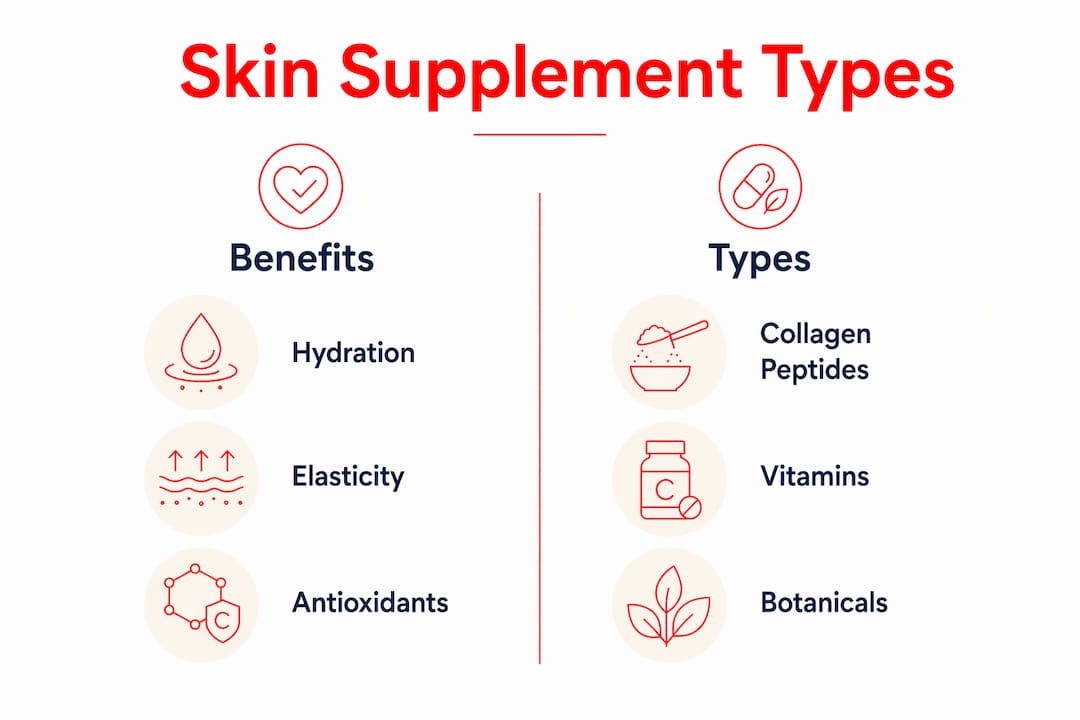
There are quite a few ingredients you’ll see on labels, and they don’t all work the same way. Here’s a clear breakdown of the most common ones, along with an honest signal about the strength of evidence behind each.
-
Collagen peptides. When you take hydrolyzed collagen, it breaks down into small peptides that are absorbed into the bloodstream and may stimulate your skin’s own collagen-producing cells (fibroblasts). Short-term RCTs show modest improvements in hydration, elasticity, and dermal density, though many trials are small and industry-funded. Daily doses in clinical studies vary depending on the formulation and specific product used. Evidence signal: modest, with growing support from clinical research.
-
Ceramides. These are lipid molecules that naturally form part of your skin’s barrier. Oral ceramide supplementation is thought to replenish barrier lipids from within, reducing moisture loss. Randomized controlled trials show measurable improvements in hydration metrics over 8–24 weeks. Evidence signal: modest.
-
Hyaluronic acid (hyaluronan). Hyaluronan holds water in skin tissue. Oral supplementation may increase skin moisture levels by delivering precursors that support hyaluronan synthesis in the dermis. Clinical trials show improvements in hydration and TEWL reduction. Evidence signal: modest.
-
Vitamin C. A cofactor in collagen synthesis and a potent antioxidant that helps neutralize UV-generated free radicals. Vitamin C deficiency directly impairs collagen production, so supplementation matters most when intake is low. Vitamin C’s role in collagen cross-linking is well established. Evidence signal: strong for deficiency correction; modest for cosmetic use in replete individuals.
-
Vitamin E. Works alongside vitamin C as a fat-soluble antioxidant, protecting cell membranes from oxidative damage. Often paired with vitamin C in formulas. Evidence signal: modest; most benefit seen when combined with other antioxidants.
-
Resveratrol. A polyphenol found in grape skins with antioxidant and anti-inflammatory properties. Early research is promising, but human trial data for skin-specific outcomes remains limited. Evidence signal: limited.
-
Omega-3 fatty acids. EPA and DHA from fish oil help modulate skin inflammation and support the lipid barrier. The VA Whole Health Library summarizes evidence for omega-3s in inflammatory skin conditions like eczema and psoriasis. Less evidence exists for cosmetic anti-aging. Evidence signal: strong for inflammatory skin disease; limited for general appearance.
-
Gamma-linoleic acid (GLA). An omega-6 fatty acid found in evening primrose and borage oils. GLA supports the skin’s lipid barrier and has evidence for reducing dryness and inflammation in conditions like atopic dermatitis. Evidence signal: modest for inflammatory conditions.
-
Probiotics. Oral probiotics influence the gut-skin axis, potentially reducing systemic inflammation that shows up as acne, rosacea, or eczema flares. Evidence is growing but still heterogeneous. Evidence signal: modest for inflammatory skin conditions.
-
Curcumin (turmeric). The active compound in turmeric has anti-inflammatory and antioxidant properties. Clinical evidence supports a role in modulating skin inflammation and aiding recovery, though bioavailability is a known challenge. Evidence signal: modest.
-
Multivitamins. A broad-spectrum option that covers multiple micronutrient gaps at once. Useful when dietary intake is genuinely poor, but not a targeted skin solution. Evidence signal: limited for skin-specific outcomes.
-
Biotin. Widely marketed for skin, hair, and nails. Deficiency is rare in healthy adults eating a varied diet, and supplementation in replete individuals has little evidence of benefit. Evidence signal: limited.
-
Zinc. Supports wound healing and has anti-inflammatory properties relevant to acne. Deficiency impairs skin repair. High-dose zinc supplementation can cause copper deficiency. Evidence signal: modest for acne and wound healing.
What does the clinical research actually show?
The short answer: some ingredients genuinely move the needle on measurable skin outcomes, but the effect sizes are modest and the research has real limitations.
A systematic review published in Frontiers in Nutrition found that oral supplementation with collagen peptides, ceramides, hyaluronan, and antioxidant-rich interventions can improve skin hydration and reduce TEWL in clinical settings. The same review noted that antioxidant-rich interventions correlated with improved skin density and reduced wrinkle formation. Most trials ran 8–24 weeks, which is important context: you won’t see results in a week.
Key finding: Collagen peptides, ceramides, and hyaluronan have the most consistent short-term evidence for hydration and barrier support. Antioxidant interventions show promise for skin density. No supplement has demonstrated dramatic or permanent reversal of visible aging in well-controlled trials.
| Ingredient | Measurable outcomes | Evidence quality |
|---|---|---|
| Collagen peptides | Hydration, elasticity, dermal density | Multiple RCTs; some meta-analyses; many industry-funded |
| Ceramides | Hydration, TEWL reduction | RCTs (8–24 weeks); limited long-term data |
| Hyaluronic acid | Hydration, TEWL reduction | RCTs (8–24 weeks); small sample sizes |
| Vitamin C | Collagen synthesis support, antioxidant protection | Strong mechanistic; modest RCT data for cosmetic use |
| Omega-3 fatty acids | Inflammation reduction, barrier support | Strong for inflammatory skin disease; limited for aging |
| Probiotics | Reduced inflammatory skin flares | Growing RCT base; heterogeneous formulations |
| Curcumin | Inflammation modulation, recovery support | Modest; bioavailability challenges |
| Resveratrol | Antioxidant protection | Promising early data; limited human trials |
A word on limitations. The Cleveland Clinic notes that many studies are small, short-term, and sometimes sponsored by manufacturers, creating meaningful risk of bias. Formulations and doses vary widely across trials, making direct comparisons difficult. Long-term safety data beyond six months is sparse for most ingredients. That doesn’t mean the evidence is worthless — it means you should go in with calibrated expectations.
Who should actually consider taking skin supplements?
Not everyone needs them, and that’s worth saying clearly. If you eat a varied, nutrient-dense diet and have no diagnosed deficiencies, supplements usually aren’t necessary for skin health. The AAD’s position is consistent: food first, supplements second.
That said, certain situations make supplements a reasonable conversation to have with your clinician:
- You have a diagnosed nutrient deficiency (e.g., low zinc, vitamin D, or vitamin C) that’s affecting skin health or wound healing.
- A dermatologist has recommended a specific supplement as an adjunct to treatment for a condition like atopic dermatitis, psoriasis, or acne.
- Your diet is restricted — whether by choice (vegan, vegetarian) or circumstance — and you’re not getting adequate omega-3s, zinc, or collagen precursors from food.
- You’re experiencing slow wound healing or persistent skin dryness that hasn’t responded to topical care and dietary adjustments.
What’s a realistic timeline? For collagen peptides, consistent daily use for 3–6 months is typically needed before measurable changes appear. Hydration improvements with ceramides or hyaluronan may show up sooner, within 8–12 weeks. Don’t expect to see anything meaningful in the first few weeks, and don’t assume a lack of dramatic change means the product isn’t working — the changes are often subtle.
Quick self-check — does this sound like you?
- Have you been told by a clinician you have a specific nutrient deficiency? (Yes = supplements may help)
- Do you have a diagnosed inflammatory skin condition your dermatologist is managing? (Yes = ask about adjunct options)
- Are you eating a varied, whole-food diet with adequate protein, healthy fats, and colorful vegetables? (Yes = supplements are likely unnecessary)
- Are you hoping a supplement will replace sunscreen, sleep, or a good diet? (Yes = recalibrate expectations first)
A morning supplement routine can help with consistency once you’ve confirmed the right ingredients for your situation.

What do you need to know about safety, dosing, and regulation?
This is where a lot of people skip ahead too fast. Supplements feel safe because they’re sold next to vitamins at the pharmacy, but “natural” does not automatically mean harmless. Here are the key things to understand:
-
The FDA does not pre-approve dietary supplements. Unlike prescription medications, supplements don’t require proof of safety or effectiveness before they hit shelves. The AAD confirms that product quality varies widely as a result, and label accuracy is not guaranteed.
-
Fat-soluble vitamins (A, D, E, K) accumulate in the body. Over-supplementation can cause toxicity. Vitamin A toxicity, for example, can actually worsen skin and cause hair loss — the opposite of what you’re going for.
-
Biotin interferes with lab tests. High-dose biotin can cause falsely low or high readings on TSH (thyroid) and troponin (cardiac) assays. The American Thyroid Association flags this as a clinically significant concern. Always tell your doctor you’re taking biotin before bloodwork.
-
Zinc at high doses causes copper deficiency. Long-term high-dose zinc supplementation depletes copper, which can affect immune function and neurological health. Stick to doses your clinician recommends.
-
GI side effects are common. Collagen powders, omega-3s, and high-dose zinc can all cause nausea, bloating, or digestive discomfort, especially when taken on an empty stomach.
-
Some supplements trigger or worsen acne. Biotin and iodine-rich supplements have been associated with acne flares in susceptible individuals. If your skin gets worse after starting a new supplement, that’s a signal worth paying attention to.
-
Contamination is a real risk. The PMC review on hair, skin, and nail supplements documents adulteration and labeling inaccuracies as documented concerns in the industry. Third-party testing is your best protection.
-
Always follow clinician direction on dosing. Collagen doses in the literature range from 2.5 g to 15 g daily, but the right amount for you depends on your health status, other medications, and goals.
This article is general information, not medical advice. Confirm dosing and interactions with your clinician or pharmacist before starting any supplement.
How do you choose a quality skin supplement?
Walk into any supplement aisle and you’ll see a lot of bold claims and very little accountability. Here’s how to cut through it.
-
Look for third-party certification seals. USP (U.S. Pharmacopeia), NSF International, and ConsumerLab are the three most recognized in the U.S. These organizations independently verify that a product contains what the label says, in the stated amounts, without harmful contaminants. A USP seal, for example, confirms identity, potency, and purity — it doesn’t verify the health claim, but it confirms you’re getting what you paid for.
-
Check for exact ingredient doses. A label that lists “collagen blend” without telling you how many grams per serving is a red flag. You need to know the dose to evaluate whether it matches what clinical trials actually used.
-
Prefer single-ingredient or transparently dosed formulas. Proprietary blends that list ingredients without individual amounts make it impossible to assess whether any ingredient is present at a clinically relevant dose.
-
Match the ingredient to your actual goal. Collagen peptides for hydration and elasticity. Omega-3s for inflammatory skin conditions. Vitamin C if your diet is genuinely low. Don’t buy a 12-ingredient “skin glow complex” when one well-dosed ingredient is what the evidence supports.
-
Check the manufacturer’s testing practices. Reputable brands publish certificates of analysis (COAs) and test for heavy metals, pesticides, and microbial contamination. If a brand doesn’t share this information, that’s worth noting.
-
Read the marketing claims carefully. The FDA prohibits supplements from claiming to treat or cure diseases, but “anti-aging” and “skin-firming” language is largely unregulated. If a product promises dramatic results with no ingredient evidence, that’s a marketing claim, not a clinical one. Look for clinically tested beauty supplements with transparent ingredient sourcing instead.
Pro Tip: Before buying, search the ingredient name plus “systematic review” or “meta-analysis” in PubMed. If no peer-reviewed human trials exist for the specific outcome the product claims, the evidence simply isn’t there yet.
Pairing a quality supplement with a skincare routine for aging skin that includes sunscreen and topical actives gives you the strongest combined approach.

Key Takeaways
Skin supplements can support hydration and modest elasticity gains for certain ingredients, but diet, clinician guidance, and third-party-tested products are the foundation of any effective approach.
| Point | Details |
|---|---|
| Definition and scope | Skin supplements are ingestible nutrients or compounds formulated to support skin health, not replacements for diet or topical care. |
| Strongest evidence | Collagen peptides, ceramides, and hyaluronic acid have the most consistent short-term evidence for hydration and barrier support. |
| Realistic timeline | Expect several weeks for hydration changes; collagen benefits typically require consistent daily use over months. |
| Safety and regulation | The FDA does not pre-approve supplements; choose products with USP, NSF, or ConsumerLab seals and always consult a clinician. |
| Fromwithin approach | Fromwithin’s collagen products use patented Wellnex® peptides with transparent dosing, designed for readers who want a clinically researched option. |
The case for being honest about what supplements can and can’t do
Here’s my honest take, and I think it’s one most supplement marketing glosses over: the gap between what a supplement can do and what a brand claims it can do is often enormous. The clinical evidence for collagen peptides, ceramides, and hyaluronic acid is real, but the effect sizes are modest. We’re talking about measurable improvements in hydration and elasticity scores in controlled trials, not the kind of visible transformation that fills a brand’s before-and-after gallery.
What I find genuinely underappreciated is the role of individual baseline. Someone with a documented collagen-depleting condition, a restrictive diet, or a diagnosed deficiency will likely see more meaningful results than someone who already eats well and sleeps enough. Supplements are adjuncts, not anchors. The research is clear on this, and the AAD’s diet-first guidance reflects it.
The other thing worth saying: the supplement industry’s regulatory gap is a real consumer risk. Adulteration and mislabeling are documented, not theoretical. Third-party seals aren’t a nice-to-have; they’re the minimum standard for any product you’re putting in your body consistently. And before you start anything new, especially if you’re on thyroid medication or getting regular bloodwork, talk to your clinician. Biotin’s interference with TSH assays alone is reason enough to make that call.
The most useful thing you can do is go in with specific, realistic goals, match the ingredient to the evidence, and give it enough time to actually work.
Fromwithin’s collagen supplement: built for people who want real results
If you’ve read this far and you’re ready to try a collagen supplement with transparent dosing and clinical backing, Fromwithin’s collagen products are worth a look. The formulas use patented Wellnex® peptides, which are absorbed directly into the bloodstream for maximum bioavailability, and every product lists exact ingredient amounts so you know precisely what you’re getting per serving.
No vague “proprietary blends,” no inflated promises. Just a straightforward collagen product formulated to support skin elasticity and hydration, with the kind of ingredient transparency that makes it easy to evaluate against the clinical evidence in this article. Browse the skin-targeted collection or go straight to the collagen product page to check dosing, ingredients, and what to expect.
Authoritative sources and further reading
These are the sources worth bookmarking if you want to go deeper on the evidence or bring specific questions to your clinician.
- American Academy of Dermatology — Should I take vitamins or supplements for my skin? — Dermatologist-reviewed guidance on when supplements are appropriate and the diet-first approach.
- Frontiers in Nutrition — Nutritional Supplements for Skin Health: A Review — Comprehensive review of clinical trial evidence for collagen, ceramides, hyaluronan, and antioxidants.
- VA Whole Health Library — Supplements for Skin Health — Evidence summary for omega-3s, GLA, probiotics, and curcumin in inflammatory skin conditions.
- Cleveland Clinic — Collagen Supplements: Benefits and Side Effects — Clear consumer-facing breakdown of collagen evidence, dosing, and limitations.
- PMC — Benefits and risks of hair, skin, and nail supplements in older adults — Narrative review covering regulatory gaps, adulteration risks, and clinician considerations.
- Healthline — Do You Need Supplements for Better Skin? — Accessible summary of evidence with realistic expectations for common ingredients.
- Linus Pauling Institute, Oregon State University — Skin Health — Deep-dive on micronutrient roles in skin structure, barrier function, and deficiency effects.
- NIH Office of Dietary Supplements — Biotin — Consumer fact sheet on biotin, including lab interference warnings.
- NIH Office of Dietary Supplements — Omega-3 Fatty Acids — Evidence summary for omega-3s across health outcomes including skin.
- NIH Office of Dietary Supplements — Vitamin C — Fact sheet covering vitamin C’s role in collagen synthesis and antioxidant function.
- American Thyroid Association — Clinical guidance on biotin’s interference with thyroid lab assays.
