

on September 02, 2026

Hydrolyzed collagen peptides are likely safe during pregnancy when you keep to modest, food-like doses and skip products with added botanicals. There’s no dedicated pregnancy research proving this outright, so the honest answer is “probably fine, with guardrails.” Choose a plain, third-party-tested collagen peptide powder, stay in a conservative daily range, and run it by your OB/GYN or midwife before you start.
TL;DR:
- Collagen supplements during pregnancy should be limited to food-like doses and free of added botanicals to minimize potential risks.
- There is no pregnancy-specific research proving collagen supplements improve outcomes, but biological plausibility supports cautious use.
- Pregnant women should prioritize complete proteins and consult healthcare providers before adding collagen, especially in the first trimester.
- Third-party tested, single-ingredient hydrolyzed collagen powders are the safest choice, with clear sourcing and no undisclosed fillers.
- Physiotherapy remains a more effective approach than supplements for managing joint and pelvic discomfort during pregnancy.
Table of Contents
- What Is Collagen, and Why Does Pregnancy Change How You Use It?
- What Does the Research Actually Say About Collagen and Pregnancy?
- What Benefits Are Pregnant People Actually Hoping For?
- When Should You Be Cautious or Avoid Collagen Entirely?
- How Much Collagen Should You Take, and In What Form?
- What Should You Look for on a Collagen Product Label?
- How Does Collagen Fit With Your Prenatal Vitamins and Diet?
- What Are Your Alternatives, and What About After Birth?
- Where Fromwithin Stands on Collagen and Pregnancy Safety
- A Straightforward Take on Collagen and Pregnancy
- Try a Collagen You Can Actually Verify
- Sources
What Is Collagen, and Why Does Pregnancy Change How You Use It?
Collagen is the structural protein that holds your skin, tendons, ligaments, and connective tissue together. It’s your body’s most abundant protein, and most supplements come as hydrolyzed collagen peptides, meaning the collagen has been broken down into smaller chains that are easier for your gut to absorb.
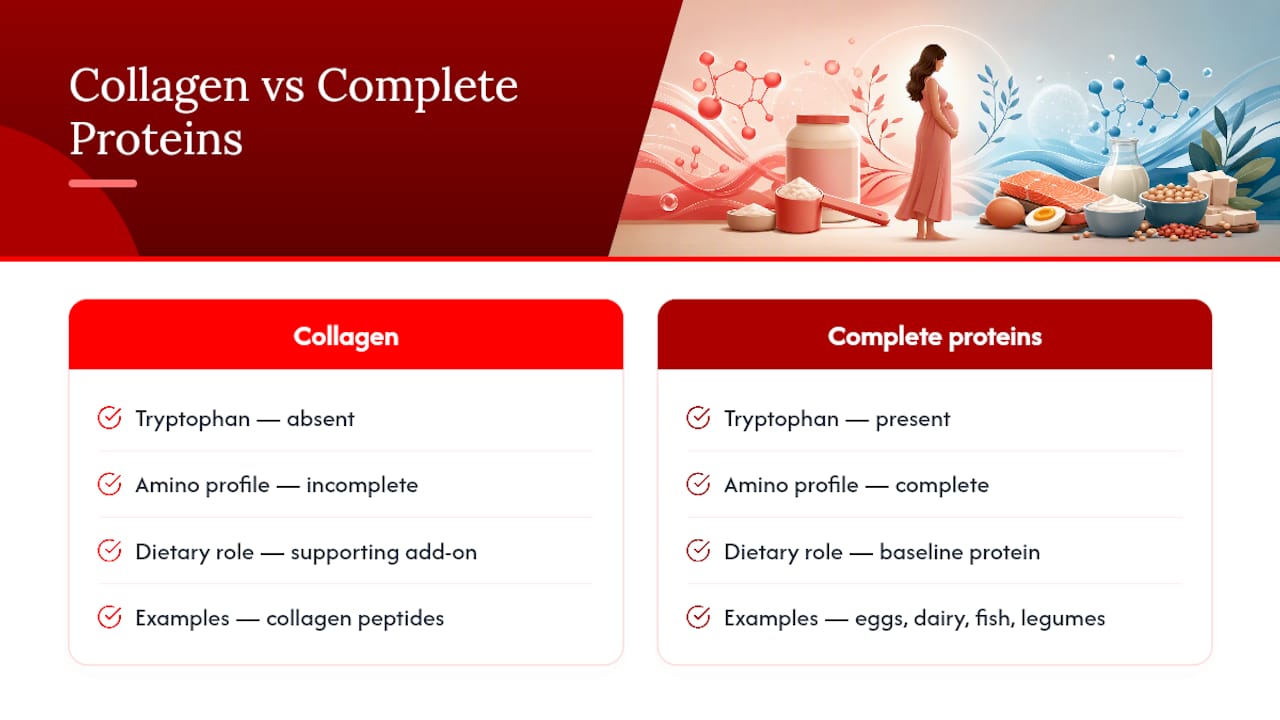
Here’s the catch most wellness articles skip: collagen isn’t a complete protein. It’s missing tryptophan, one of the essential amino acids your body can’t make on its own. That means collagen supplements should sit alongside your regular protein intake, not replace it. Think of it as a targeted add-on for connective tissue, not your main protein source for the day.
Pregnancy puts real, measurable pressure on your connective tissue. Collagen is abundant at the maternal-fetal interface, where it plays a structural role in the placenta and fetal membranes and helps regulate how those tissues remodel as your pregnancy progresses. At the same time, your body releases more of the hormone relaxin, which loosens ligaments and joints to prepare your pelvis for birth. That’s useful for delivery, but it’s also why so many people feel new aches in their hips, lower back, and pelvic floor by the second trimester.
A few things are happening at once during pregnancy:
- Your total protein needs rise to support fetal growth and your own expanding tissue.
- Relaxin loosens ligaments, which can mean less joint stability, especially around the pelvis.
- Skin stretches faster than usual over the belly, breasts, and thighs.
- Collagen turnover in the placenta and fetal membranes increases as those tissues remodel.
None of this proves collagen supplements fix these issues. It does explain why so many pregnant people are curious about them in the first place, and why the biological story behind collagen during pregnancy is more grounded than a passing wellness trend.
What Does the Research Actually Say About Collagen and Pregnancy?
Here’s where you deserve a straight answer instead of marketing spin: there are no large randomized controlled trials testing collagen supplements specifically in pregnant women. That gap isn’t unique to collagen. Pregnant people are routinely excluded from drug and supplement trials for ethical and liability reasons, which leaves an entire category of products, collagen included, without direct pregnancy-specific safety data.
What we do have is a layered picture built from adjacent evidence, and it’s worth understanding the difference between what’s solid and what’s still speculative.
The strongest piece: peer-reviewed research on the maternal-fetal interface confirms collagen’s structural role in placental and fetal membrane tissue, and links disruptions in collagen remodeling to certain pregnancy complications. This tells you collagen matters biologically during pregnancy. It does not tell you that taking a collagen supplement changes those outcomes for the better.
The adult evidence: randomized trials and meta-analyses in non-pregnant adults show modest, measurable improvements in skin hydration and elasticity from hydrolyzed collagen peptides. This is real, replicated data. It’s just not pregnancy data, and hormonal shifts during pregnancy could change how your body responds.
The smaller signals: a handful of cohort and observational studies report improved wound healing and quality-of-life measures in peripartum populations taking collagen. These are worth noting, but the sample sizes are small enough that you shouldn’t treat them as proof of anything. They’re a hint, not a conclusion.
The evidence gap in plain terms: Pregnancy-specific collagen research doesn’t currently exist at the scale needed for firm conclusions. What exists is mechanistic plausibility plus adult trial data, which supports cautious, low-dose use rather than an unqualified green light.
So where does that leave you? Reassured, but not off the hook for checking with your provider. Here’s the honest ranking of evidence strength on collagen during pregnancy:
- Strong and consistent: collagen’s structural role in placental tissue and pregnancy connective tissue.
- Solid but not pregnancy-specific: adult trials showing skin and joint benefits from collagen peptides.
- Suggestive but limited: small peripartum cohort studies on healing and comfort.
- Missing entirely: large-scale randomized trials in pregnant populations.
Some clinicians take a more conservative stance in the first trimester specifically, preferring patients delay non-essential supplements during organogenesis, the window when the baby’s major organs are forming, even when a supplement seems mechanistically low-risk. That’s a reasonable, cautious position, and it’s one more reason this conversation belongs with your provider rather than a supplement label.
What Benefits Are Pregnant People Actually Hoping For?
Most people reaching for collagen during pregnancy are chasing one of four things: smoother skin, fewer stretch marks, steadier joints, or stronger hair. Let’s separate the plausible from the proven.
Skin hydration and elasticity. Collagen peptides are rich in glycine and proline, two amino acids your body uses to rebuild skin’s structural matrix. Adult trials back this up with measurable hydration and elasticity gains, though again, not in pregnant subjects specifically. Given how much your skin stretches over nine months, the mechanism makes sense even if the pregnancy-specific proof is thin.
Stretch marks. This is the benefit everyone wants and the one with the least direct support. Biologically, it’s plausible that better collagen availability could help skin adapt to rapid stretching. But there’s no solid pregnancy trial showing supplemental collagen prevents or reduces stretch marks. Genetics, skin type, and how fast you gain weight play a bigger role than any supplement will.
Joint and pelvic support. Relaxin loosens your ligaments on purpose, and that looseness is exactly what causes pelvic girdle pain and achy hips for a lot of pregnant people. The theory that more collagen availability supports ligament resilience is reasonable, but clinical evidence in pregnancy specifically doesn’t exist yet. If pelvic pain is a real issue for you, don’t rely on collagen alone.
Hair and postpartum recovery. Pregnancy hormones often thicken hair temporarily, then postpartum hormone shifts trigger noticeable shedding around three to four months after birth. Collagen won’t stop that hormonal shedding, but the amino acids it supplies may support the hair and skin recovery that follows.
Pro Tip: If pelvic or hip pain is your main concern, don’t expect a supplement to solve a mechanical problem. A prenatal physiotherapy program built around pelvic stability tends to help more directly than anything you take orally.
When Should You Be Cautious or Avoid Collagen Entirely?
Most of the real risk with collagen supplements has nothing to do with collagen itself. It’s what’s mixed in around it, or who’s using it, that turns a low-risk supplement into a problem.
Allergy sources matter more than people realize. Collagen comes from marine (fish), bovine, or porcine sources. If you have a shellfish or fish allergy, marine collagen is off the table. Check the label carefully. Fromwithin lists its `raw materials clearly, and any product you choose should do the same.
Contamination is the real hazard, not collagen. Heavy metal contamination shows up in poorly sourced collagen products more often than you’d expect. This is why third-party testing and published Certificates of Analysis matter so much during pregnancy, when your tolerance for contaminant exposure is lower.
The uncomfortable truth about pregnancy supplement safety: the ingredient on the front label is rarely the danger. What you can’t see, contaminants, undisclosed fillers, unregulated botanical blends, is where the actual risk lives.
Nutrient interactions to know:
- Collagen doesn’t contain iron, but if you’re taking an iron supplement separately, don’t stack it with high-dose vitamin C at the exact same time; space them out to avoid absorption conflicts.
- If you have kidney disease or hypertension, added protein load from any supplement, including collagen, warrants a conversation with your provider first.
Talk to your clinician before starting collagen if you have:
- Pre-eclampsia or a history of it
- Gestational diabetes
- A history of miscarriage or high-risk pregnancy
- Any form of kidney disease
- A known allergy to fish, bovine, or porcine proteins
If you notice new digestive upset, hives, swelling, or anything that feels off after starting a collagen supplement, stop and call your provider. That’s true at any point in pregnancy, but especially in the first trimester when you want to rule out every variable.
How Much Collagen Should You Take, and In What Form?
Dosing during pregnancy comes down to staying conservative and prioritizing food-grade simplicity over flashy formulations. Here’s how to think through it.
- Keep to a modest daily range. Most clinician-facing guidance points to roughly 5 to 10 grams of hydrolyzed collagen peptides per day as a reasonable, conservative amount. That’s enough to count meaningfully toward your daily protein target without pushing into unstudied territory.
- Be more cautious in the first trimester. Many providers prefer patients hold off on non-essential supplements, collagen included, during the first 12 weeks while major organ development is underway. If you were taking collagen before conception, this is exactly the conversation to have at your first prenatal visit.
- Consider continuing into the third trimester if cleared. Some people continue collagen later in pregnancy as skin stretch and joint laxity peak, since this is when the connective-tissue demand is highest.
- Choose your form deliberately. Hydrolyzed collagen peptide powder mixes easily into coffee, smoothies, or water and lets you control the exact dose. Gelatin and bone broth offer similar amino acids but in less concentrated, less predictable amounts. Capsules are convenient but often deliver a lower dose per serving than a scoop of powder.
- Split your dose if you’re prone to nausea. Taking half your serving in the morning and half in the afternoon can help if a full dose upsets your stomach, which is common in early pregnancy regardless of what you’re taking.
- Pair with vitamin C where it makes sense. Vitamin C supports your body’s own collagen synthesis, so a source of vitamin C around the same time can help your body actually use what you’re supplementing.
What Should You Look for on a Collagen Product Label?
Not all collagen powders are created equal, and during pregnancy, label-reading matters more than usual. Use this as your checklist before you buy anything.
- Third-party test marks. Look for NSF, USP, or Informed Choice certification, or at minimum a brand that publishes its Certificate of Analysis on request. If a brand can’t produce a COA when asked, that’s a red flag, not a technicality.
- Single-ingredient simplicity. The cleanest option is hydrolyzed collagen peptides and nothing else. Skip formulas bulked up with ashwagandha, high-dose vitamin C blends, or “adaptogenic” add-ins unless your clinician has specifically approved them.
- Transparent sourcing. A brand should tell you plainly whether its collagen is bovine, marine, or porcine, and ideally where the raw material comes from. Vague labeling (“premium collagen blend”) without a source is a sign to look elsewhere.
- Minimal flavoring and added sugar. Flavored powders can hide fillers and sweeteners you don’t need during pregnancy. If you want flavor, a plain powder mixed into a smoothie gives you more control.
- Ask directly if you’re unsure. A legitimate brand will answer questions about heavy metal testing and sourcing without hesitation. If you’re browsing collagen supplement options, this is the exact standard to hold every product to.
How Does Collagen Fit With Your Prenatal Vitamins and Diet?
Collagen supplements work best as a supporting player, not the star of your prenatal nutrition plan. Since collagen lacks tryptophan, it can’t replace complete proteins like eggs, dairy, fish, or legumes, all of which give you the full amino acid profile your body and your baby need.
Think of your daily plate like this: complete proteins cover your baseline needs, and collagen adds a targeted boost for skin and connective tissue on top of that. A morning smoothie with Greek yogurt, berries, and a scoop of collagen peptides covers both bases in one go. So does a dinner of legumes and vegetables with a collagen-and-vitamin-C mocktail alongside it.
Timing matters with your other supplements too. If your prenatal includes iron, take that separately from any concentrated vitamin C dose, since large amounts of vitamin C taken at once can influence how nutrients absorb. Collagen itself doesn’t complicate this, but the vitamin C you pair with it for synthesis purposes does need thoughtful timing around iron.
If you’re managing gestational diabetes, a restricted diet, or you’re just not sure how collagen fits into your overall protein targets, a prenatal registered dietitian can map this out with real precision instead of guesswork.
What Are Your Alternatives, and What About After Birth?
If you’d rather skip supplements entirely, food-based collagen support is a legitimate path. Bone broth, glycine-rich foods like chicken skin and slow-cooked meats, and vitamin C-rich produce like citrus and bell peppers all feed your body’s own collagen production. Some people also look to silica-rich foods, like oats and leafy greens, as a supporting nutrient for connective tissue.
For joint and pelvic discomfort specifically, a targeted physiotherapy program usually does more than any supplement, since it addresses the mechanical issue directly rather than hoping a nutrient fixes it indirectly.
Postpartum is actually when a lot of people find collagen most useful, supporting tissue repair after delivery and countering some of the skin laxity that follows pregnancy. If you’re breastfeeding, the same conservative approach applies: modest doses, clean labels, and a quick check with your pediatrician or lactation consultant before restarting.
Where Fromwithin Stands on Collagen and Pregnancy Safety
Fromwithin builds its collagen line around clinically researched ingredients, not trend-chasing formulas. At the center of that approach is Wellnex® peptides, a patented collagen peptide technology designed for direct bloodstream absorption rather than sitting undigested in your gut.
That focus on absorption and transparency lines up directly with the checklist above. Fromwithin’s collagen products are built around single-ingredient hydrolyzed peptides, without the added botanical blends that create most of the real caution flags for pregnant users. Ingredient panels and testing documentation are available on the product page for anyone who wants to verify sourcing before buying.
None of this replaces a conversation with your OB/GYN or midwife. If you’re pregnant or planning to be, bring your prenatal provider into the decision before adding any collagen product to your routine, and don’t hesitate to ask a brand directly for its Certificate of Analysis if it isn’t posted where you can see it.
A Straightforward Take on Collagen and Pregnancy
The honest position on collagen during pregnancy sits between two extremes: it’s not a miracle skin fix, and it’s not something to fear either. The biology is real. Collagen genuinely matters at the maternal-fetal interface, and the demand on your connective tissue during pregnancy is measurable, not marketing talk. What’s missing is the large-scale pregnancy trial that would let anyone say “proven safe” with full confidence.
Given that gap, the smartest move is the boring one: modest doses, plain ingredients, third-party testing, and your provider’s sign-off before you start. Skip the products bundled with ashwagandha or mystery “beauty blends.” A clean, well-tested hydrolyzed collagen peptide, taken at a sensible dose and cleared by your OB/GYN, gives you the plausible benefits without adding risk you can’t see coming.
If a brand can’t show you its testing documentation without hesitation, that tells you something more useful than any marketing claim on the label.
— From
Try a Collagen You Can Actually Verify
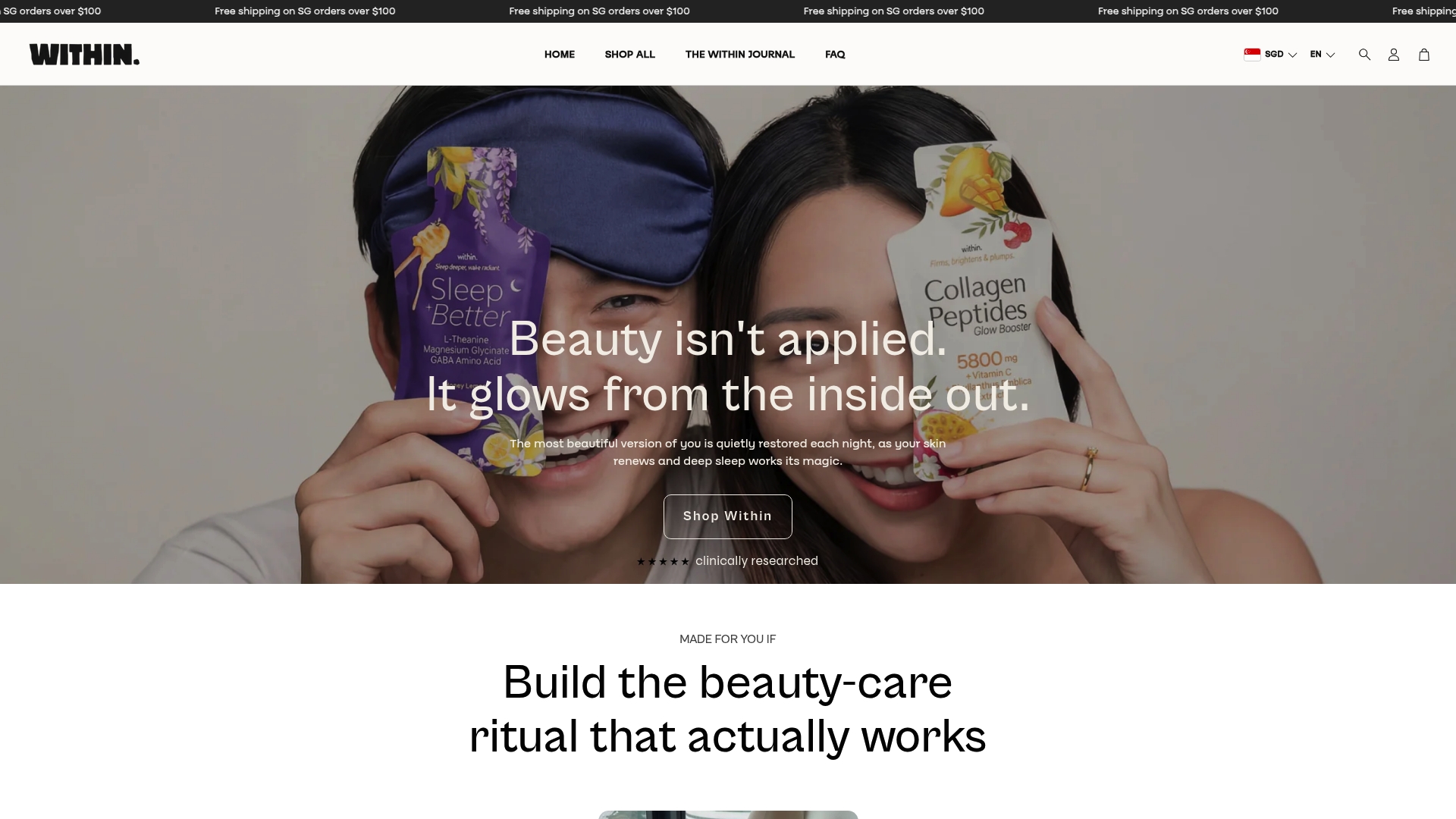
If the checklist in this article, single ingredient, third-party tested, no mystery botanicals, is what you’re looking for, that’s exactly how Fromwithin’s Collagen Peptides Glow Booster is built. It’s formulated around Wellnex® peptides for direct absorption, with sourcing and testing details available for anyone who wants to check before they buy, not after.
Before adding it to your routine, run it by your OB/GYN or midwife, especially if you’re in your first trimester or managing a condition like gestational diabetes or kidney concerns. If you get the green light, start with a modest daily scoop and see how it fits into your existing prenatal routine. You can browse the full collagen category to compare formats, or check ingredient panels directly on the product page before your next order.
This article is general information, not a substitute for advice from a qualified doctor. Consult a qualified healthcare professional about your own circumstances before acting on anything here.
Sources
- Collagen at the maternal-fetal interface in human pregnancy
- Can you take collagen while pregnant? - Fallbrook Medical Center
- Is Collagen Safe During Pregnancy? (evidence review)
- What is NSF certification?
