

on September 05, 2026

Yes, taking collagen before your workout can support skin elasticity, but the timing itself isn’t the magic ingredient. What matters is a clinically researched, low-molecular-weight collagen peptide taken daily, at the right dose, for 8 to 12 weeks or longer. Fit it into your morning routine, your gym bag, or your desk drawer. Consistency does the heavy lifting.
TL;DR:
- Effective collagen doses for skin benefits range from 2.5 to 5 grams daily, with larger doses not necessarily providing proportionally greater results.
- Collagen’s benefits on skin elasticity usually become noticeable after 8 to 12 weeks of consistent daily intake.
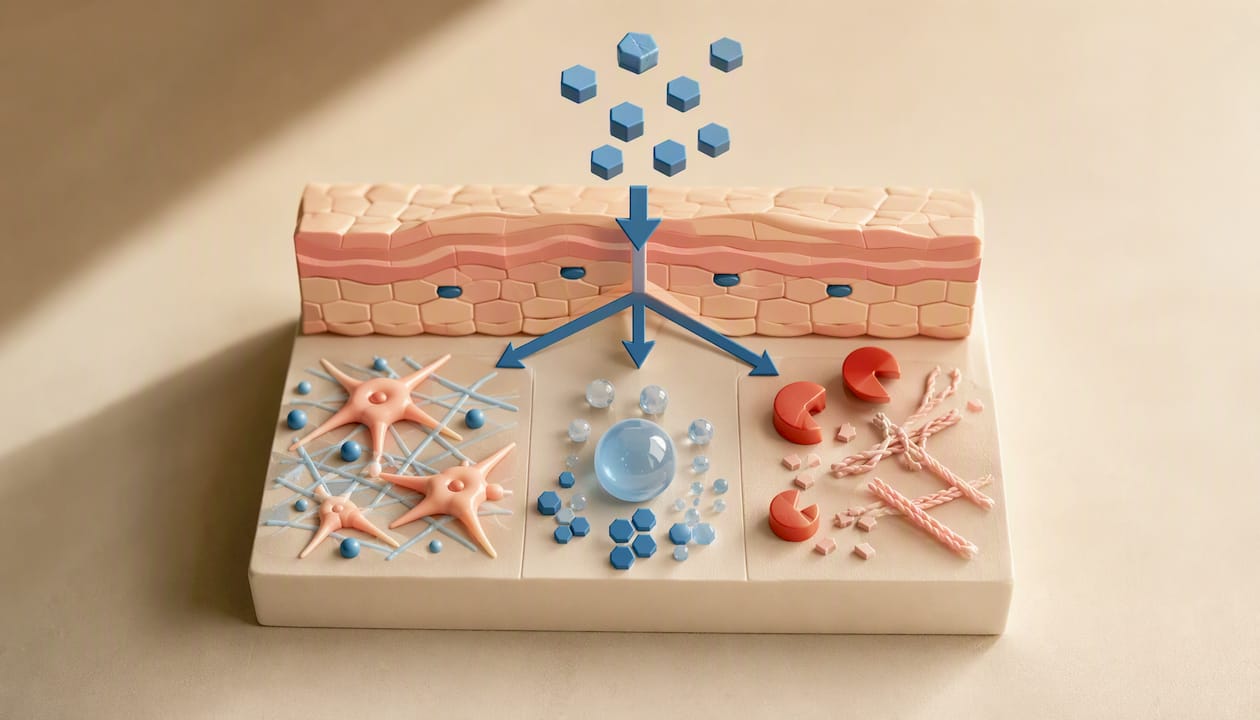
- Bioactive collagen peptides act as signaling molecules, stimulating fibroblast activity and boosting hyaluronic acid production, not just filling space.
- The absorption rate depends on peptide size and formulation, with liquids generally absorbing faster than powders or tablets.
- Choosing a supplement with clinical backing, transparent sourcing, and appropriate peptide size ensures better chances of achieving skin elasticity improvements.
Table of Contents
- What Does the Research Actually Say About Collagen and Skin Elasticity?
- When Should You Take Collagen for Skin Benefits?
- What Dose and Peptide Type Actually Work?
- How Do You Choose a Collagen Supplement That Actually Delivers?
- What Should You Realistically Expect From Collagen Supplementation?
- Ready to Build a Collagen Habit That Actually Sticks?
- Sources
What Does the Research Actually Say About Collagen and Skin Elasticity?
Let’s get one thing straight before you spend another dollar on a supplement: not all collagen research is created equal, and you deserve to know why.
Multiple systematic reviews and meta-analyses report meaningful improvements in skin hydration, with elasticity gains typically showing up after at least 8 to 12 weeks of daily hydrolyzed collagen peptide intake. That’s not a marketing timeline. It’s the window where your skin’s fibroblasts (the cells responsible for rebuilding collagen and elastin) actually have time to respond.
One of the more convincing trials tested a drinkable collagen formulation at 2.5 grams per day, paired with supporting nutrients, and found statistically significant improvements in hydration, elasticity, roughness, and skin density after 12 weeks. Researchers weren’t relying on how skin “looked” in photos. They used objective tools like cutometry (which measures skin bounce and firmness) and ultrasound imaging to track density changes beneath the surface.
Here’s the mechanism worth understanding: bioactive collagen peptides don’t just sit there as protein filler. They act as signaling molecules that stimulate fibroblast activity, boost hyaluronic acid synthesis, and help inhibit the enzymes that break down collagen. Think of it less like pouring in raw material and more like sending your skin a memo that says, “time to rebuild.”
A pooled analysis of 26 randomized controlled trials backs this up, showing that supplementation for a duration commonly longer than 8 weeks produced more consistent elasticity benefits than shorter courses (https://pmc.ncbi.nlm.nih.gov/articles/PMC10180699/).
Now the honest caveat, because you deserve honesty over hype:
- Study quality varies widely, and some meta-analyses lose their significance once industry-funded or lower-quality trials get excluded.
- Elasticity improvements tend to be smaller and more inconsistent across studies than hydration or wrinkle-reduction outcomes.
- Individual response depends on age, baseline skin condition, and how consistently you actually take the supplement.
Reality check: Collagen peptides aren’t a switch you flip. They’re closer to a slow, steady investment your skin cashes in over months, not days.
When Should You Take Collagen for Skin Benefits?
Here’s the question I get asked constantly: “Does it matter if I take my collagen before I hit the gym?” Not really, and that’s actually good news for anyone juggling a packed schedule.
Your skin doesn’t care whether collagen peptides enter your bloodstream at 6 AM before a run or 8 PM before bed. What it cares about is whether you show up every single day for 8 to 12 weeks straight. Timing is about making that daily habit stick, not chasing some optimal biological window.
That said, here’s how the timing options stack up:
- Pre-workout: Convenient if you already have a supplement or protein routine before exercise. No known downside, and it builds a habit around something you’re already doing.
- Morning with breakfast: Easy to remember, pairs naturally with a vitamin C source (think citrus or a fortified juice), which may support collagen synthesis.
- Post-workout: Works well if you’re already mixing a recovery shake, though there’s no evidence this timing outperforms others for skin.
- Evening: Good for anyone who forgets morning supplements, though some prefer mornings to avoid a heavy stomach before bed.
Liquid formulations tend to absorb faster than powders or tablets, which can help if you’re taking collagen close to a workout and want minimal digestive lag. Pair it with a vitamin C source (read more about why vitamin C matters for collagen) and basic skin-protective habits like sunscreen.
Pro Tip: Attach your collagen dose to a habit you never skip, brushing your teeth, making coffee, packing your gym bag. The supplement that gets forgotten never gets a chance to work.
For more on structuring your routine around collagen, this guide on when to take collagen breaks down the tradeoffs by goal.
What Dose and Peptide Type Actually Work?
Most successful trials land in a fairly narrow dose range, and knowing this range can save you from overpaying for a product that promises more without proof to back it up.
- Effective daily range: Roughly 2.5 to 5 grams per day covers most trials showing measurable skin benefits. Some studies push to 10 grams daily, but there’s no strong evidence that doubling the dose doubles your results.
- Peptide size matters: Low-molecular-weight hydrolyzed collagen peptides absorb more efficiently than larger, less-processed collagen molecules. If a label doesn’t mention peptide size or molecular weight at all, that’s a gap worth questioning.
- Format matters too: Liquid or drinkable collagen often shows favorable absorption speed compared to tablets. Powders work fine when mixed properly, but liquids tend to skip a digestive step.
- Safety profile: Collagen peptides are generally well tolerated. Minor digestive upset gets reported occasionally, but serious side effects are rare in the research.
Quick math: If a product’s serving size falls well below 2.5 grams, you’re likely getting a dose that hasn’t been tested at the levels shown to work in the studies above. Want the deeper science on how peptides interact with your skin cells? This piece on collagen’s cellular effects walks through it in plain language.
How Do You Choose a Collagen Supplement That Actually Delivers?
Skip the marketing copy and check these six things instead. This is the checklist I’d want a friend to hand me before I bought anything.
- Clinical evidence behind the specific formula, not just “collagen” in general. Has this exact product, or something very close to it, been tested in a trial?
- Peptide type and molecular weight. Smaller peptides tend to absorb better, and transparent brands will actually tell you this.
- Serving dose. Look for something in the 2.5 to 5 gram range shown to work in trials.
- Formulation format. Liquid, powder, or tablet each has tradeoffs in absorption speed and convenience.
- Complementary nutrients. Vitamin C and zinc support your body’s own collagen production alongside what you’re supplementing.
- Sourcing transparency. Does the brand clearly state where the collagen comes from and how it’s processed?
Pro Tip: If a product page can’t tell you the peptide molecular weight or cite a study, that’s not automatically a dealbreaker, but it should make you ask more questions before buying.
The Collagen Peptides Glow Booster is built around this exact checklist, using peptides designed for direct bloodstream absorption alongside clear ingredient labeling, which is the kind of transparency this list is meant to help you spot.
What Should You Realistically Expect From Collagen Supplementation?
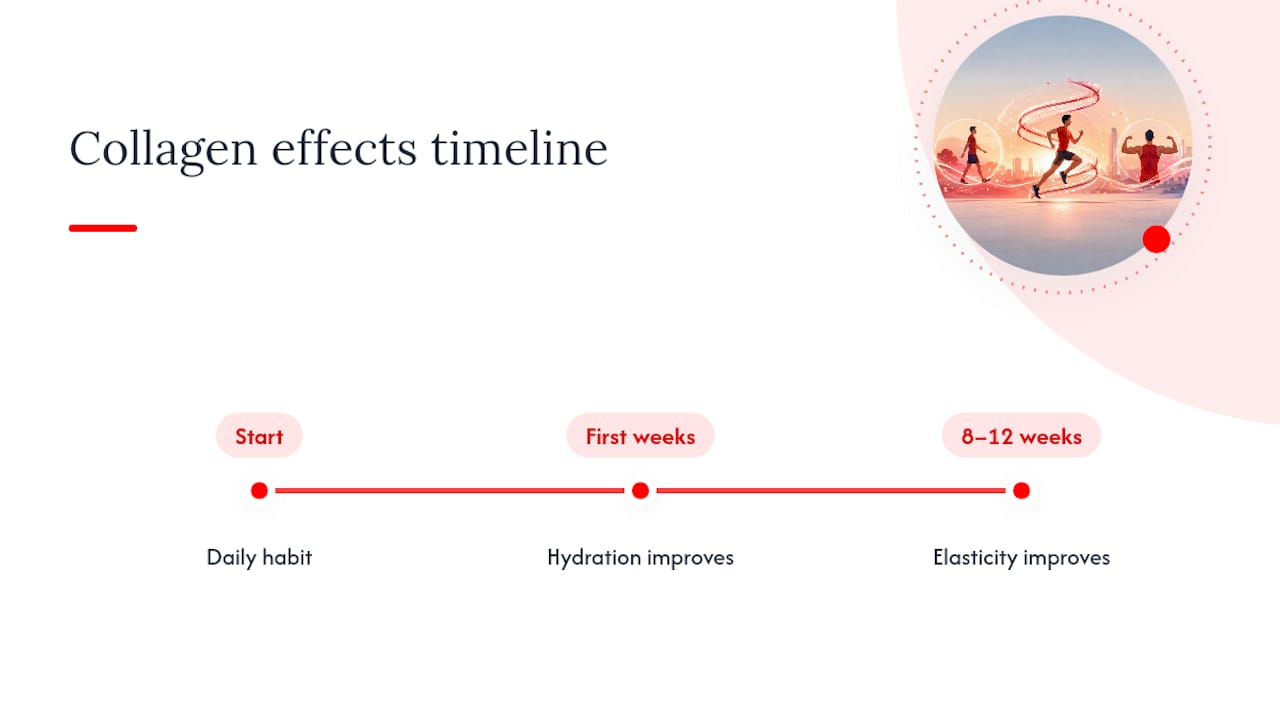
Here’s my honest take after digging through this research: collagen peptides aren’t a quick fix, and anyone promising visible change in a week is overselling it. What the evidence actually supports is a slower, cumulative story, one where skin hydration often improves first, and elasticity follows with consistent use over two to three months or longer.
The Collagen Peptides Glow Booster is built on that same evidence-first premise. It uses peptides formulated for direct bloodstream absorption, because bioavailability is where a lot of collagen products quietly fall short. Busy professionals tend to see the clearest benefit when they treat this as a daily habit stacked onto something they already do, not a occasional fix reached for before a big event.
Set your expectations at 8 to 12 weeks minimum, track your skin honestly rather than hopefully, and give the process the time the research says it needs.
— From
Ready to Build a Collagen Habit That Actually Sticks?
Most collagen products ask you to trust vague claims about “premium peptides” without telling you what that actually means for absorption. The Collagen Peptides Glow Booster takes the opposite approach: peptides formulated for direct bloodstream absorption, paired with ingredient transparency you can actually verify on the label.

If you’ve read this far, you already know what to look for: peptide size, dose in the clinically studied range, and a formula that doesn’t hide behind marketing language. The Collagen Peptides Glow Booster checks those boxes, and it fits into a morning coffee routine or a pre-workout ritual just as easily. Browse the full collagen lineup to see which format suits your schedule, then commit to the 8 to 12 week window your skin actually needs to show results.
Sources
- PubMed entry reporting systematic reviews/meta-analyses on collagen peptide effects (2026)
- A randomized, placebo-controlled trial showing improvements in skin hydration and elasticity (Nutrients/ELASTEN® trial)
- Mechanistic and clinical trial study on bioactive collagen peptides and dermal effects
